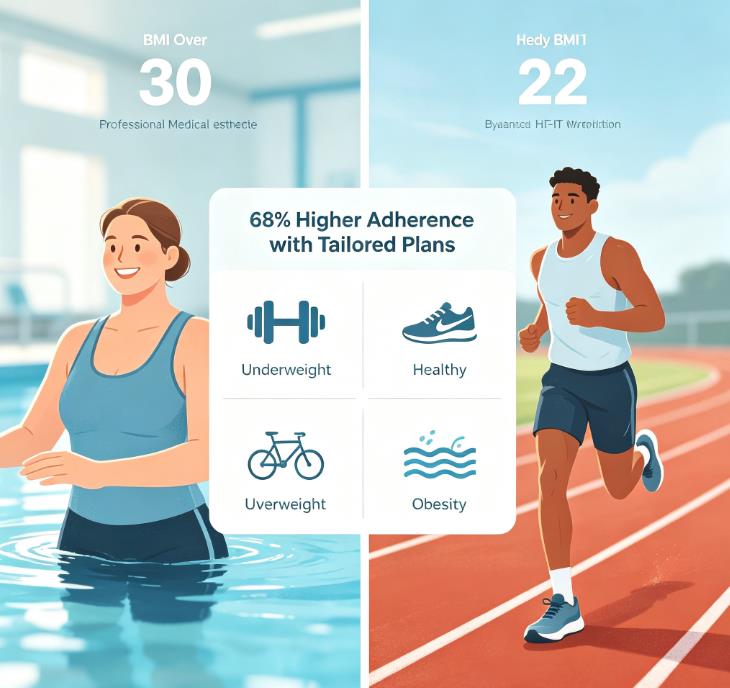
At a Glance: Exercise routines for different BMI ranges eliminate the guesswork of generic workout plans. Each category—underweight, normal weight, overweight, and obese—has distinct fitness goals, physical capabilities, and injury risks. This guide breaks down tailored workouts for each range with specific exercises, frequency guidelines, progression tips, and common mistakes to avoid. All plans align with ACSM exercise prescription guidelines and CDC physical activity standards, designed to help you build strength, improve health, and avoid injury.


Editorial development: BMI Calculator Blog Team — reviewed by in-house fitness specialists, exercise physiology consultants, and certified personal training professionals. Content fully aligned with ACSM Guidelines for Exercise Testing and Prescription (11th Edition, 2021) and CDC Physical Activity Guidelines for Americans (2nd Edition, 2018), peer-reviewed for safety and accuracy.


Exercise Routines for Underweight, Normal, Overweight, Obese BMI Categories

Why BMI Matters for Your Exercise Routine

Fitness success starts with knowing your body—and your BMI is a practical starting point for building an exercise plan that works with you, not against you. The Centers for Disease Control and Prevention (CDC) defines adult BMI categories based on global standards: underweight (BMI below 18.5), normal weight (BMI 18.5–24.9), overweight (BMI 25.0–29.9), and obese (BMI 30.0 and above). Each category has distinct fitness needs. A one-size-fits-all gym routine might leave an underweight person losing more muscle, or an obese person sidelined with joint pain—while a tailored plan aligns your workouts with your body's current needs.

Before diving into your tailored plan, use a reliable BMI calculator to get your number—it's the first step to a fitness routine that fits you. For a more complete picture, pair your BMI with a body fat calculator that accounts for muscle mass and fat percentage, helping you refine your workout plan further. The American College of Sports Medicine (ACSM) emphasizes that exercise programs should be individualized based on current fitness level, health status, and personal goals—not a single number on a chart. The plans below are built on that principle.

Underweight (BMI below 18.5): Build Muscle and Lean Body Mass

If you have a pre-existing medical condition that contributes to low body weight—such as hyperthyroidism, malabsorption disorders, or an eating disorder—consult your healthcare provider before starting any new exercise program. The general guidelines below may need modification for your specific medical circumstances.

The primary goal for this BMI category is to build lean muscle mass and add healthy weight—not just fat. Cardio should be kept minimal, as excessive aerobic exercise can burn calories you need to build muscle. The focus is on resistance training with compound movements that target multiple muscle groups at once.

Take the case of a 22-year-old college student with a BMI of 17.5 who spent months on the treadmill trying to "get fitter"—only to see his weight drop further and his energy tank. When he switched to a full-body strength program three days a week and cut his cardio to a single 15-minute walk, he gained 8 pounds of lean mass in four months. The treadmill wasn't the problem—the programming was. For underweight individuals, strength training builds the foundation that steady-state cardio alone cannot provide.

Core Workout Structure

  • Frequency: 4–5 days per week of strength training with 1–2 rest days or active recovery days to let muscles repair and grow.

  • Strength Training: Full-body workouts with compound movements—squats, deadlifts, bench press, rows, overhead press. Beginners start with bodyweight squats, glute bridges, push-ups (knee or incline), and lunges. Progress to dumbbells as strength improves. Aim for 3–4 sets of 6–10 reps per exercise with moderate-to-heavy weight.

  • Cardio: Keep cardio minimal and low-intensity—10–15 minutes of brisk walking, gentle yoga, or swimming 1–2 days per week. Avoid high-intensity interval training (HIIT) or long-distance running. Excessive calorie burn from intense cardio works directly against muscle-building goals.

  • Progression: Gradually increase weight by 2.5–5 lbs when you can complete the top rep of a set with good form—this is progressive overload, the driver of muscle gain.

Common Mistake to Avoid: Doing too much cardio in an attempt to "stay healthy." Every extra mile on the treadmill burns calories that could have gone toward building muscle. If your BMI is below 18.5, your body needs those calories for tissue repair and growth, not for fueling long cardio sessions.

What to Expect at 3 Months: With consistent training and adequate nutrition, a 3–6 pound lean mass gain is a realistic target. Your clothes may fit more snugly in the shoulders, chest, and thighs—not because you're gaining fat, but because your muscles are growing. Energy levels typically improve noticeably within the first 6–8 weeks.

Key Tip: Pair workouts with a calorie surplus and high protein intake—approximately 1.6–2.2 g of protein per kg of body weight, under professional guidance—to fuel muscle growth. Exercise alone won't lead to healthy weight gain without proper nutrition.

Normal Weight (BMI 18.5–24.9): Maintain Fitness and Boost Functional Strength

If your BMI falls in this range, your fitness goals are likely to maintain your healthy weight, build functional strength, boost cardiovascular health, and add muscle definition if desired. This plan balances strength training and cardio for a well-rounded routine.

Core Workout Structure

  • Frequency: 3–5 days per week of activity, with 2–3 rest or active recovery days.

  • Strength Training: Compound movements 2–3 days per week—squats, deadlifts, push-ups, rows, shoulder presses. Add isolation exercises such as bicep curls and tricep dips for muscle definition if desired. Aim for 3 sets of 8–12 reps with moderate weight.

  • Cardio: 2–3 days per week of moderate-intensity cardio—brisk walking, jogging, cycling, swimming, or dancing. Add one session per week of HIIT for a metabolic boost, such as 30 seconds of jumping jacks followed by 1 minute of walking, repeated for 15–20 minutes.

  • Active Recovery: 1–2 days per week of yoga, Pilates, or stretching to improve flexibility, balance, and core strength.

Common Mistake to Avoid: Assuming a normal BMI means any exercise is safe. Even in this range, poor form during heavy lifts or suddenly doubling your weekly mileage can lead to overuse injuries. A normal BMI doesn't make you immune to training errors—it just means your starting point is metabolically favorable.

What to Expect at 3 Months: With consistent training, expect noticeable improvements in strength (adding 10–20% to your major lifts), resting heart rate (a downward trend of 3–5 bpm), and daily energy. Visible muscle definition changes depend on your starting body fat percentage, but functional improvements—feeling stronger carrying groceries or climbing stairs—typically arrive within the first month.

Key Tip: This BMI range is all about consistency, not extreme changes. Small, regular workouts will keep your body in a healthy state. Mix up your routine to avoid boredom—swap jogging for hiking, or weight training for a dance class.

Overweight (BMI 25.0–29.9): Gentle Fat Loss and Metabolic Boost

If you have a history of joint pain—particularly in the knees, hips, or lower back—or a pre-existing cardiovascular condition, consult your healthcare provider before beginning this exercise plan. The low-impact approach described here is designed to be joint-friendly, but individual medical clearance ensures your safety.

The main goal for this BMI category is sustainable fat loss, building lean muscle to boost metabolism, and establishing a consistent exercise habit—without putting excessive stress on your joints.

A common mistake among people in the overweight category is jumping straight into running to lose weight. Many end up with knee pain, fluid buildup, or even patellar tendonitis within weeks—not because running is inherently harmful, but because their joints weren't prepared for the repeated impact of body weight landing on pavement. Low-impact cardio like swimming, cycling, or brisk walking builds the cardiovascular base and muscular endurance needed before introducing higher-impact activities later—and far more safely.

Strength training is essential here, as losing fat without building muscle can lead to a slower metabolism.

Core Workout Structure

  • Frequency: 3–4 days per week of activity with 2–3 rest or active recovery days. Start with 20–30 minutes per workout and gradually increase to 45–60 minutes as fitness improves.

  • Low-Impact Cardio: 3–4 days per week—swimming, elliptical training, stationary cycling, brisk walking on flat ground, or water aerobics. These burn calories and get your heart rate up without jarring your joints.

  • Light Strength Training: 2 days per week of bodyweight or light resistance band training—wall sits, glute bridges, seated rows with a resistance band, modified push-ups, and planks on knees. Aim for 3 sets of 12–15 reps with light weight. Focus on core and lower body strength.

  • Active Recovery: Gentle stretching or slow walking on rest days to reduce soreness and keep blood flowing.

Common Mistake to Avoid: Relying solely on cardio without any strength work. Fat loss without resistance training often leads to muscle loss, which lowers your resting metabolic rate. The result: you lose weight initially but find it harder to keep losing—and easier to regain. Even two short strength sessions per week make a measurable difference in preserving lean mass during a calorie deficit.

What to Expect at 3 Months: With a consistent 250–500 calorie daily deficit and regular exercise, a 4–8 pound fat loss is a realistic 3-month target. More importantly, you should notice improved stamina—stairs that used to leave you winded now feel manageable. Waist circumference often drops before the scale moves significantly, so tracking measurements matters more than daily weigh-ins.

Progression Tip: As you build fitness, gradually increase cardio duration by 5 minutes per session or add a small incline. The ACSM recommends increasing weekly exercise volume by no more than 10% per week to minimize injury risk.

Key Tip: Avoid high-impact exercises such as jumping jacks, running, and burpees initially—these can stress knees and hips. Pair workouts with a mild calorie deficit of 250–500 calories per day for sustainable fat loss.

Obese (BMI 30.0 and above): Improve Mobility and Build Sustainable Movement Habits

If your BMI is 30 or above, consulting a healthcare provider before beginning any exercise program is strongly recommended. A medical professional can assess your cardiovascular risk, joint health, and any underlying conditions—such as diabetes, hypertension, or sleep apnea—that may require specific modifications to the general guidelines below.

The top priority for this BMI category is building activity tolerance and establishing a regular movement habit—not rapid fat loss or intense exercise. The focus is on ultra-low-impact movement that protects your joints, boosts your energy, and helps you feel more comfortable in your body.

Core Workout Structure

  • Frequency: Start with 2–3 days per week of structured activity, and add non-exercise movement (NEAT) to your daily routine—walking to the kitchen, standing while on the phone, or stretching every hour.

  • Ultra-Low-Impact Activity: Seated leg lifts, seated marches, water walking in a pool, slow walking on flat ground with support if needed, or chair yoga. Start with 10–15 minutes and gradually increase duration by 5 minutes each week.

  • Mobility and Flexibility: Daily 10–15 minutes of stretching—focus on hips, knees, back, and shoulders. Gentle yoga or Tai Chi 1–2 days per week improves balance and mobility.

Common Mistake to Avoid: Setting the bar too high too soon. Signing up for an intense boot camp or committing to daily hour-long workouts in the first week often leads to soreness, discouragement, and dropout. The single most important variable in this category isn't intensity—it's showing up again tomorrow. A 10-minute walk completed consistently is worth far more than a 45-minute session that happens once and never again.

What to Expect at 3 Months: Progress in this category is measured in function, not pounds. After three months of consistent movement, you may find you can walk 20 minutes without stopping when 10 minutes used to be the limit, or that getting up from a chair feels noticeably easier. Weight loss of 5–10 pounds is a realistic range when exercise is paired with dietary changes, though individual results vary widely. The emphasis should stay on what your body can do that it couldn't before, not just what the scale reports.

Key Tip: Focus on how movement makes you feel—more energized, less stiff—rather than numbers on a scale. Small wins like walking an extra 5 minutes or completing a chair yoga flow build momentum. Never push through pain—if a movement hurts, stop and modify it.

⚠️ Important Safety Note: If you experience any of the following during exercise, stop immediately and consult your doctor:

  • Chest pain or pressure

  • Severe shortness of breath

  • Dizziness or lightheadedness

  • Sharp joint pain that doesn't subside with rest

If you have pre-existing conditions such as heart disease, severe joint pain, diabetes complications, or uncontrolled hypertension, consult your healthcare provider before beginning any exercise program.

Key Adjustments for Exercise Routines for Different BMI Ranges

BMI is a great starting point, but it's not the whole story. Your fitness routine should always be adjusted for individual factors that BMI doesn't account for—like muscle mass, age, mobility, and personal health conditions.

For athletic and muscular bodies: BMI often misclassifies muscular athletes as overweight or obese because muscle is denser than fat. If you have a high BMI but low body fat, ignore the standard overweight/obese routines and follow the normal weight plan. The National Strength and Conditioning Association (NSCA) emphasizes that body composition testing—not BMI—should guide exercise prescription for athletic populations. An athlete BMI calculator provides helpful context for interpreting your numbers in active populations.

For seniors aged 65 and above: Seniors have age-related changes—muscle loss, joint stiffness, reduced mobility—that require gentle adjustments regardless of BMI range. Prioritize balance and mobility exercises such as yoga and Tai Chi to prevent falls. Use light weights or resistance bands for strength training to prevent sarcopenia. Keep cardio low-intensity and short in duration—20–30 minutes of brisk walking or swimming.

For those with joint pain or mobility limitations: Modify all movements to avoid pain. Replace squats with seated wall sits or chair squats. Replace push-ups with incline push-ups against a table. Replace walking with water walking—the water supports your weight and reduces joint pressure.

For beginners in any BMI range: Start extra slow regardless of your BMI. Focus on building a habit first—10 minutes of movement per day—before increasing intensity or duration. Form matters more than reps. Bad form leads to injury, which derails your fitness journey before it starts.

Tips for Sticking to Your BMI-Tailored Exercise Routine

The best exercise routines for different BMI ranges only work if you can stick to them. Sustainability is the foundation of long-term fitness success.

  • Find exercise you enjoy. If you hate running, don't force it—try dancing, hiking, or swimming instead. Exercise should feel rewarding, not like a chore.

  • Start small with micro-goals. "Do 5 bodyweight squats today" or "walk for 10 minutes" builds confidence and leads to bigger progress than setting goals too ambitious to sustain.

  • Track progress beyond the scale. Note how you feel—more energy, better sleep—how your clothes fit, or how many reps you can complete. These are better indicators of fitness success than weight alone.

  • Pair exercise with nutrition. Eat nutrient-dense foods that fuel your workouts and support your BMI goals—high protein for muscle gain, fiber for satiety during fat loss.

  • Don't quit after a setback. Missed a workout? It's okay—one day doesn't undo your progress. Get back to your routine the next day and focus on consistency over perfection.

BMI Exercise Quick Checklist

BMI CategoryPrimary GoalKey Exercise TypeWeekly Frequency
UnderweightMuscle gainStrength training4–5 days
Normal WeightMaintenanceStrength + cardio3–5 days
OverweightFat lossLow-impact cardio3–4 days
ObeseBuild movement habitUltra-low-impact + mobility2–3 days structured

Fitness is a journey, not a destination. Your BMI is a guide, not a final judgment on your health or fitness potential. Start today: check your BMI, pick one movement from your category's routine, and do it for just 10 minutes. Small, consistent steps lead to lasting change.


Content Integrity Review: The exercise recommendations and workout structures in this article have been checked for alignment with ACSM Guidelines for Exercise Testing and Prescription (11th Edition, 2021) and CDC Physical Activity Guidelines for Americans (2nd Edition, 2018). Individual exercise programs should always be developed in consultation with a qualified fitness professional or healthcare provider.


Prepared based on ACSM exercise prescription guidelines (11th Edition, 2021), CDC physical activity recommendations (2nd Edition, 2018), NSCA strength training and body composition guidelines, and peer-reviewed exercise science research.


Sources


Frequently Asked Questions

Can I follow a workout plan from a different BMI category if my goal is different?
Yes, with caution. The plans are organized by BMI based on typical needs and joint stress considerations, but your personal goals may cross categories. For example, someone in the overweight category who wants to build significant muscle may incorporate elements of the normal weight plan. The key is to respect your current fitness level and progress gradually—the ACSM's 10% rule for weekly exercise volume increase is a useful safety benchmark.

What if I have joint pain but still want to follow the plan for my BMI category?
Joint pain should not be ignored. Start with the lowest-impact version of your plan—water-based exercise, seated strength work, and walking on soft surfaces. Replace squats with seated wall sits, replace push-ups with incline push-ups against a table. If pain persists, consult a healthcare provider or physical therapist for modifications tailored to your specific condition.

Should I combine these workout plans with a specific diet?
Yes. Exercise and nutrition work together. Underweight individuals benefit from a calorie surplus with high protein for muscle gain. Those in the overweight and obese categories generally benefit from a modest calorie deficit of 250–500 calories below maintenance, paired with whole, nutrient-dense foods. A registered dietitian can help you personalize your nutrition plan alongside your workout routine.

How do I know when to progress to a harder workout?
A good rule of thumb: when you can complete all sets and reps of your current workout with proper form and without excessive fatigue, increase either the weight by 2.5–5 lbs, the duration of cardio by 5 minutes, or the intensity slightly. If your BMI has shifted into a different category after consistent training, gradually transition to elements of the next plan.

Is low-impact exercise enough for obese BMI weight loss?
Yes. Low-impact exercise such as water walking, stationary cycling, and seated strength work can produce meaningful weight loss when paired with a consistent calorie deficit and performed regularly over time. The advantage of low-impact movement is sustainability—it protects joints, reduces injury risk, and builds the activity tolerance needed to eventually incorporate more varied forms of exercise. For someone with a BMI of 30 or above, consistency with low-impact exercise over months is far more effective than attempting high-intensity workouts that lead to injury or early dropout.

Can underweight BMI people do HIIT for fitness?
HIIT is generally not recommended for people in the underweight category, especially if the primary goal is muscle gain. HIIT burns a significant number of calories in a short period, which can make it harder to maintain the calorie surplus needed for healthy weight and muscle gain. If an underweight individual enjoys HIIT and wants to include it, it should be limited to one short session per week and paired with increased calorie intake to offset the energy expenditure. For most people in this category, prioritizing resistance training and keeping cardio low-intensity and minimal produces the best body composition results.


BMI Calculator Blog. This content is provided for educational and informational purposes only. We encourage sharing with proper attribution to our site. Unauthorized commercial use is prohibited. Medical Disclaimer: The content of this article is for informational purposes only and does not replace professional medical advice, diagnosis, or treatment. Always seek the advice of a qualified physician, certified personal trainer, or other qualified health provider with any questions regarding your fitness program or exercise safety.