Quick summary: One medium sweet potato (about 130g, baked with skin) delivers roughly 112 calories, 26g of carbohydrates, 4g of fiber, and over 100% of your daily vitamin A needs. Per USDA data, 100g of raw sweet potato provides 86 calories. But calories are just the start. How you cook it changes everything—boiling preserves more resistant starch and lowers the glycemic impact, while baking concentrates natural sugars. This guide breaks down the numbers, the cooking science, and how this root vegetable fits into a balanced diet.
One medium sweet potato (about 5 inches long, 130g, baked with skin) contains roughly 112 calories. A small one (under 4.5 inches) runs about 74 calories. A large one can hit 162 or more. Size matters. So does preparation. All nutrition values for baked sweet potato (130g) in this section are sourced from USDA FoodData Central.
Here is the nutrition breakdown for one medium baked sweet potato with skin (130g):
Calories: 112
Carbohydrates: 26g
Fiber: 4g (about 16% of your daily need)
Protein: 2g
Fat: 0g
Vitamin A: Over 100% of Daily Value
Vitamin C: 3mg
Potassium: 438mg
The fiber and protein balance the carbohydrates. That makes sweet potatoes a complex carb, not a simple sugar spike. The fiber also slows digestion. You feel full longer. One medium sweet potato provides nearly 20% of the daily fiber recommendation for most adults.
Vitamin A is the standout nutrient. One medium sweet potato gives you more than your entire daily requirement. That beta-carotene converts to vitamin A in your body. It supports immune function, skin health, and eye health. Vitamin C adds antioxidant protection. Potassium supports blood pressure regulation.
Want to know exactly how sweet potatoes fit your daily calorie target? Use our calorie calculator to see your personalized needs, then adjust your portion size accordingly.
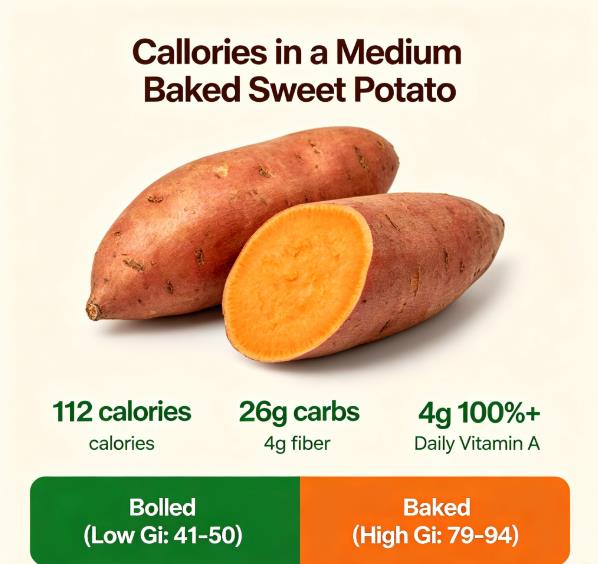
How cooking methods alter sweet potato calories and glycemic index
Cooking method changes the glycemic index (GI) — how quickly the carbs hit your bloodstream. According to data compiled from multiple studies, boiled sweet potatoes have a GI of roughly 41 to 50. That is low. Baked or roasted sweet potatoes have a GI of 79 to 94. That is high.
The difference comes down to water content. Baking concentrates the natural sugars. Boiling retains water and preserves more resistant starch, a type of fiber that resists digestion. Boiling also helps retain more antioxidants by breaking down cell walls and making nutrients more accessible.
For blood sugar management, boiling is the better choice. Boiled sweet potatoes cause a slower, steadier rise. Baked versions hit faster. Neither is "bad." But the preparation method gives you control over the metabolic effect.
Individual blood sugar responses vary; those managing diabetes should monitor glucose levels even when consuming boiled sweet potatoes.
Sweet potatoes and weight management
The fiber and water content in sweet potatoes promote fullness. That can lead to eating fewer calories overall. Animal model research indicates sweet potato extract may support slower weight gain; human clinical trials remain limited. Purple sweet potatoes, in particular, contain anthocyanins that may help reduce fat accumulation, though this effect has been observed primarily in research settings and does not guarantee equivalent results from daily consumption. Clinical evidence also supports sweet potato consumption for improved glucose control.
Compared to white potatoes, sweet potatoes have a lower glycemic index. They also pack more vitamin A and fiber. White potatoes have more vitamin C and potassium (per USDA data for both varieties). Both can fit into a healthy diet. The choice depends on your goals.
If you are tracking your weight and want to know how sweet potatoes fit your plan, try our BMI calculator to get your baseline and set realistic goals.
How many sweet potatoes should you eat based on your BMI?
Your ideal portion depends on your body size and activity level. Use this general guide based on your BMI category:
BMI below 18.5 (underweight): One medium sweet potato (112 calories) can be a healthy addition to a calorie-surplus diet. Pair with protein and healthy fats.
BMI 18.5–24.9 (healthy weight): One medium sweet potato fits easily into a balanced 1,800–2,200 calorie daily pattern. Enjoy it 3–4 times per week.
BMI 25–29.9 (overweight): Stick to one small sweet potato (74 calories) or half a medium one. Boil rather than bake to keep the glycemic impact lower.
BMI 30+ (obesity): Consult a healthcare provider for personalized advice. A half-serving (about 56 calories) can be a nutritious side when paired with lean protein and non-starchy vegetables.
Get your exact BMI number using our Adult BMI Calculator and adjust your portions accordingly.
References & Sources
USDA FoodData Central: Sweet potato, raw, unprepared (FDC ID: 168482)
Healthline: Sweet Potato Glycemic Index — Boiled, Roasted, Baked, and Fried
Frequently Asked Questions About Sweet Potato Calories
How many calories are in one medium sweet potato?
About 112 calories when baked with skin. Size and cooking method can shift this number slightly. Per USDA data, raw sweet potato has 86 calories per 100g.
Does boiling vs. baking change the calorie count?
Not significantly. The calorie difference is minimal. What changes is the glycemic index — boiling keeps it lower.
Is a sweet potato healthier than a white potato?
They are different. Sweet potatoes have more vitamin A and fiber. White potatoes have more vitamin C and potassium. Both are nutritious.
Can I eat sweet potatoes on a weight loss diet?
Yes. The fiber promotes fullness. One medium sweet potato has about 112 calories and 4g of fiber. Pair it with protein for a balanced meal.
Are sweet potatoes good for blood sugar?
It depends on cooking method. Boiled sweet potatoes have a lower glycemic index. Baking raises the GI. Monitor your individual response if you have diabetes.
How much vitamin A is in one sweet potato?
One medium sweet potato provides over 100% of your daily vitamin A needs through beta-carotene.
Should I eat the skin?
Yes. The skin contains fiber and nutrients. Scrub it well before cooking.
Related Articles
Calories in a Banana by Size: What They Really Mean for Your Health and Workout Fuel
Low Calorie Snacks: 15 Healthy and Satisfying Options Under 150 Calories
Calories in 1 Apple: 95 Calories, 4.4g Fiber, and Why It Beats Processed Snacks
BMI Calculator Blog. This content is provided for educational and informational purposes only. We encourage sharing with proper attribution to our site. Unauthorized commercial use is prohibited. Medical Disclaimer: This content does not replace professional medical advice, diagnosis, or treatment. Always seek the advice of a qualified physician or other licensed health provider with any questions regarding your body composition, weight status, or health goals.