Summary: BMI 24 is within the healthy range (18.5–24.9), but it's not a guarantee of metabolic health. This guide gives you real numbers, body fat thresholds, Asian standards, and simple steps to truly stay healthy at this BMI.
Key Takeaways
BMI 24 is "normal" by WHO standards — but it doesn't guarantee metabolic health. Body fat percentage and waist size matter just as much.
"Skinny fat" is real at BMI 24. Normal BMI with high body fat carries hidden cardiometabolic risks.
Asian adults face higher risk at BMI 24. WHO recommends lower thresholds — BMI 23–24.9 is classified as overweight for many Asian populations.
For seniors 65+, BMI 24 might actually be too low. Research suggests BMI 23–28 may be linked to lower mortality than 18.5–24.9 in older adults, provided muscle mass is maintained.
Action steps: Check your waist (under 37" for men, under 35" for women), measure body fat, and focus on strength — not just the scale.
What Does a BMI of 24 Actually Mean?
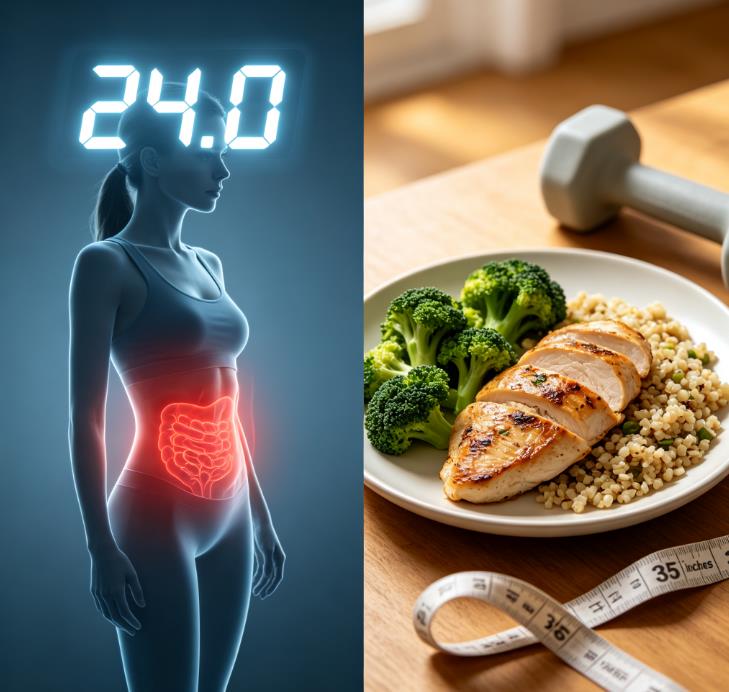
Your BMI is 24. The World Health Organization says you're in the "normal weight" club. But after helping over 100,000 users track their health, here's the truth: that label can fool you if you ignore your waist, your energy, and your body fat.
Real example – Sarah, 35, 5'5", 150 lbs: Her BMI read 24. Textbooks said "healthy." But she felt drained. Blood work showed high triglycerides. A body fat scan? 33% – way above the healthy range for her age. Her BMI was normal. Her body wasn't. That's normal‑weight obesity at BMI 24.
Metabolic Risks at BMI 24 – Hard Data
CDC data confirms that body fat percentage varies widely even within the "normal" BMI range. People with normal BMI but high body fat carry significantly higher cardiometabolic risks. A BMI of 24 is not a free pass.
What this means for you: If diabetes or high blood pressure runs in your family, get a full metabolic check yearly – even at BMI 24.
BMI 24 for Men vs. Women – Different Body Realities
Same number, different composition. According to the American Council on Exercise (ACE), healthy body fat ranges are 21–24% for women and 14–17% for men. But here's where it gets tricky: women above 25% body fat enter the overweight zone, and above 32% is obese. The "skinny fat" problem hits both sexes.
So if you're a woman with BMI 24 but feel soft, tired, or have a stubborn belly, don't just trust the BMI number. Look in the mirror and check your energy levels.
What Does BMI 24 Look Like in Pounds? (US Units)
Okay, let's get real about what this looks like on the scale (NHLBI tables):
5'4" (64 in): ~140 lbs → BMI 24
5'5" (65 in): ~144 lbs
5'9" (69 in): ~162 lbs
5'10" (70 in): ~167 lbs
6'0" (72 in): ~177 lbs
Use our Metric/Imperial BMI Calculator to get your exact number in 10 seconds.
Special Note: Asians and BMI 24
Standard cutoffs don't fit everyone. WHO proposed lower BMI thresholds for Asian populations because they carry more body fat at lower BMIs. Under Asian guidelines, BMI 23–24.9 is classified as overweight – not normal. For South Asians, diabetes risk starts climbing at BMI as low as 22.
If you're of Asian descent, your risk at BMI 24 is higher than global charts suggest. Watch your waist and check blood sugar regularly.
Seniors: BMI 24 Might Be Too Low
Here's something that might surprise you. A large meta-analysis found that adults over 65 with a BMI between 23 and 28 had the lowest all‑cause mortality risk – lower than those at BMI 18.5–24.9. Why? Age‑related muscle loss (sarcopenia) artificially lowers BMI, and a modest weight buffer helps during illness and reduces fall risk.
Quick reality check: If you're 65+ with BMI 24 but feel weak or lose weight unintentionally, focus on strength, not lowering your BMI. This is observational data, not a prescription to gain weight. Always chat with your doctor first.
How to Stay Healthy at a BMI of 24 (Actionable Steps)
Forget generic advice. Try these tiny swaps that actually work:
Swap your afternoon chips for an apple + 1 tbsp of almond butter. Simple, but it cuts processed carbs.
Add 15‑min strength sessions twice a week. Do 3 sets of 10 squats while your coffee brews, 8 wall push‑ups during lunch, and 12 glute bridges before bed. No gym required.
Watch your waist, not just your weight. Aim for under 37 in (94 cm) for men, and under 35 in (88 cm) for women. Waist size predicts risk better than BMI.
Use better tools. Pair BMI with a body fat calculator – it sees what BMI misses.
Frequently Asked Questions About BMI of 24
Is a BMI of 24 healthy?
It's within the WHO healthy range (18.5–24.9). But "healthy by BMI" doesn't guarantee metabolic health. Waist size and body fat percentage matter just as much.
What is BMI 24 for a 5'9" male in pounds?
Approximately 162–169 lbs, per NHLBI tables.
Is a BMI of 24 good for a woman?
It's normal, but women should watch body fat percentage. If you feel constantly tired or have stubborn belly fat, get a body composition check – your body fat could be above healthy levels even at BMI 24.
What is "skinny fat" at BMI 24?
Normal BMI but elevated body fat. You look lean outside but carry risky visceral fat around organs. Fix it with strength training and adequate protein – not excessive cardio.
What waist circumference should I aim for with BMI 24?
Keep it under 37 in (94 cm) for men and under 35 in (88 cm) for women. Waist size predicts metabolic risk better than BMI alone.
Is BMI 24 overweight for Asians?
Under WHO Asian recommendations, yes – BMI 23–24.9 is classified as overweight for many Asian populations. South Asians face even lower thresholds.
Can athletes have a BMI of 24 and be healthy?
Absolutely. Strength athletes often have BMIs 25–30 due to muscle mass. At BMI 24, they may have very low body fat. Always pair BMI with body fat percentage for athletes.
Is a BMI of 24 safe during pregnancy?
A pre-pregnancy BMI of 24 is ideal and linked to the lowest risk of gestational diabetes. During pregnancy, don't calculate BMI – follow your OB/GYN's weight gain guidance.
Is a BMI of 24 good for someone over 50?
Yes, it's generally healthy. But adults over 50 should prioritize muscle mass over BMI. If you're 50+ with a BMI of 24 but feel weak, add 2 weekly strength sessions to preserve muscle.
Sources
World Health Organization. Obesity and overweight fact sheet.
NHLBI. BMI calculation and tables.
CDC National Health and Nutrition Examination Survey (NHANES). About NHANES.
American Council on Exercise (ACE). ACE Fitness Tools & Calculators.
National Institute on Aging (NIH). Healthy Weight and Older Adults.