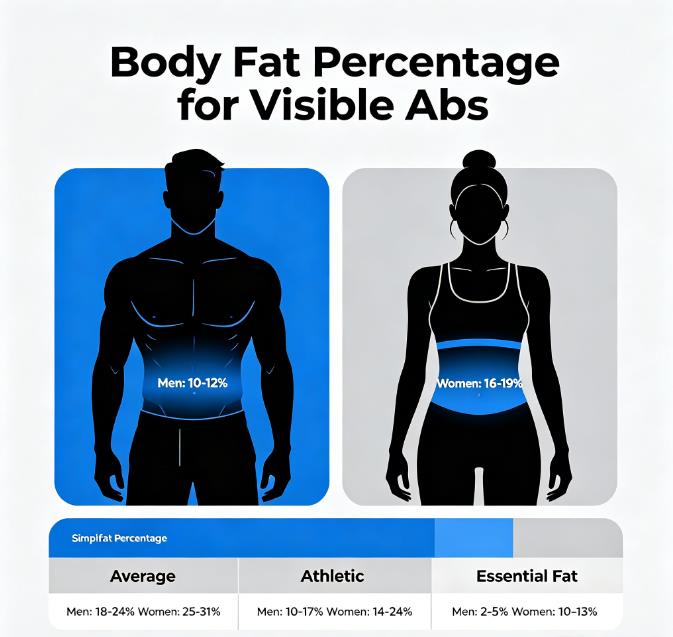
Quick summary: The body fat percentage required for visible abs in men and women is roughly 10-12% for men and 16-19% for women. These numbers vary based on genetics, muscle development, and where your body stores fat. Below these thresholds, definition emerges. Above them, the subcutaneous fat layer simply obscures the muscle. This guide breaks down the exact numbers, why they differ by gender, and what actually works to get there.
The percentage of body fat needed to see abs depends on your gender. For men, the typical visibility range is 10-12% body fat. For women, it is 16-19%. These are not arbitrary numbers. They represent the point where the subcutaneous fat layer over the abdominal muscles becomes thin enough for the rectus abdominis to show through.
Ab visibility exists on a spectrum. Men begin to see initial definition around 14-15%, primarily in the upper abs. At 12-14%, moderate definition appears. Below 10%, maximum definition with deep muscle separation becomes visible. For women, slight definition may appear at 22-24%, with moderate definition around 19-21%, and clear definition below 16%.
Here is a quick reference based on American Council on Exercise (ACE) standards:
Essential Fat: Men 2-5% | Women 10-13% — minimum fat for basic physiological function.
Athletes: Men 6-13% | Women 14-20% — abs visible; optimal for performance.
Fitness: Men 14-17% | Women 21-24% — some ab definition possible.
Average: Men 18-24% | Women 25-31% — no visible abs.
Several factors influence when your abs show. Genetics determine where your body stores fat. Some people carry fat evenly. Others store it stubbornly around the midsection. That means two people at the same body fat percentage can have very different ab visibility. Muscle thickness also matters. Well-developed abdominal muscles push through the fat layer earlier than underdeveloped ones. Age shifts the equation too. Body fat percentages naturally increase with age due to muscle loss and metabolic changes.
Measuring body fat accurately matters because guesswork is unreliable. Several methods exist. Skinfold calipers measure subcutaneous fat at specific body sites. Bioelectrical impedance scales send a weak electrical current through the body. DEXA scans provide the most accurate reading but require professional equipment. The Navy tape method uses circumference measurements — neck, waist, and hips — to estimate body fat percentage. For a simpler approach, use a body fat calculator to get an estimate based on standard measurements.
Achieving visible abs requires a calorie deficit. You cannot spot-reduce fat from your stomach. The body loses fat systematically, not locally. A deficit of roughly 300-500 calories per day produces steady fat loss. Experts generally recommend aiming for a 1-2% body fat loss per month to preserve muscle mass and ensure sustainability Protein intake matters too. Aim for adequate protein to preserve muscle while losing fat. Strength training, particularly compound movements like squats and deadlifts, builds the abdominal muscle thickness that helps definition show through.
Before starting any fat loss plan, get your baseline numbers. Use a free online BMI calculator to understand your current weight category. Then pair it with body fat measurements for a complete picture. A body fat calculator gives you a starting point and helps track progress over time.
Important health note: Body fat percentages below essential levels carry real risks. For men, dropping below 6% may be considered dangerously low. For women, going below 14% may disrupt menstrual cycles and bone density. If you aim to drop body fat below athlete ranges, consult a registered dietitian to avoid long-term hormonal and immune damage. Visible abs are an aesthetic goal, not a health requirement. The "fitness" range — men 14-17%, women 21-24% — offers a balance of definition and sustainable health.
For most people, a realistic goal is to reach the athlete range — men 6-13%, women 14-20% — where abs become visible. This range is achievable and sustainable without the health risks of going below essential fat levels. If you are a recreational lifter or general fitness enthusiast, targeting the lower end of the fitness range (men 14-17%, women 21-24%) may be more practical and maintainable long-term.
References & Sources
American Council on Exercise (ACE): Body Fat Percentage Averages for Men & Women (2024)
InBody USA: What Body Fat Percentage Do You Need to See Abs? (2025)
Healthline: Body Fat Percentage for Abs — What's the Magic Number?
Verywell Fit: Body Composition — What It Is and Why It Matters
Frequently Asked Questions About Body Fat Percentage and Abs
What body fat percentage do you need to see abs for men?
Men typically see initial definition around 14-15%, with a clear six-pack appearing at 10-12%. Below 10% maximizes definition but carries health risks[reference:15].
What body fat percentage do you need to see abs for women?
Women usually see definition starting around 22-24%, with clear abs appearing at 16-18%. Below 15-16% can disrupt hormonal function[reference:16].
Why do women need higher body fat for abs than men?
Women require higher essential fat levels (10-13%) for reproductive health and hormone function[reference:17]. Men's essential fat is 2-5%. This biological difference shifts the entire visibility range upward.
Can you have abs at 20% body fat?
Unlikely for most men. At 20%, the subcutaneous fat layer typically obscures abdominal definition. Some women may see slight upper ab outlines at 20-22% with developed muscles[reference:18].
Why can't I see my abs even at a low body fat percentage?
Several reasons: underdeveloped abdominal muscles, genetics that store fat unevenly, or inaccurate body fat measurements[reference:19]. Building muscle thickness through resistance training helps definition show through.
How long does it take to get visible abs?
Depending on starting point, most people need 6 months to over a year of consistent calorie deficit and strength training. A safe rate is 1-2% body fat loss per month[reference:20][reference:21]. The leaner you get, the slower and harder the process becomes.
Is it healthy to maintain the body fat percentage needed for visible abs?
For men, the 10-12% range is sustainable for many. For women, the 16-18% range is achievable but requires careful nutrition[reference:22]. Going below essential fat levels for either gender creates health risks[reference:23]. The "fitness" range offers a better balance for long-term health[reference:24].
What's the safest way to lower body fat percentage?
A calorie deficit of 300-500 calories per day, combined with adequate protein intake and strength training, produces steady fat loss while preserving muscle. Aim for 1-2% body fat loss per month and monitor progress with regular body fat measurements[reference:25].
Related Articles
How to Measure Body Fat Percentage: 6 Methods Ranked from a Tape Measure to DEXA
How to Calculate Body Fat: 7 Proven Methods (Navy, Calipers, DEXA)
BMI vs Body Fat Percentage: Key Differences and How to Use Both for Real Health Insights
BMI Calculator Blog. This content is provided for educational and informational purposes only. We encourage sharing with proper attribution to our site. Unauthorized commercial use is prohibited. Medical Disclaimer: This content does not replace professional medical advice, diagnosis, or treatment. Always seek the advice of a qualified physician or other licensed health provider with any questions regarding your body composition, weight status, or health goals.