Quick summary: Body fat percentage is the amount of fat you carry compared to muscle, bone, and organs. It's a sharper health lens than BMI — especially if you're active or carry muscle. Here's how to measure it at home or with pros.
Two people with the same BMI can look totally different. One might be lean, the other soft around the middle. That's why learning how to calculate body fat percentage gives you the real story.
Body fat percentage = (fat mass ÷ total body weight) × 100. Example: 150 pounds with 30 pounds of fat = 20% body fat. The rest is lean mass — muscle, bones, organs, water. Fat itself isn't bad. You need essential fat to cushion organs and store energy. Trouble starts when fat creeps too high.
Want a quick starting point? Use a Free BMI Calculator — it's not perfect, but it gives you a baseline.
Six Ways to Measure (Ranked by Accuracy)
Each method has trade‑offs. Here's what I've learned from measuring hundreds of people over the years.
DEXA Scan — gold standard. Accuracy within 1–2%. Takes 15 minutes. Costs $100–$300. A full‑body X‑ray that shows exactly where fat lives (arms, legs, trunk). I did one myself last year — seeing my visceral fat number was a wake‑up call. Worth doing once a year if you can swing it.
BOD POD (air displacement). Accuracy within 1.5–3%. About 10 minutes. $40–$50. You sit in an egg‑shaped chamber. No radiation, no discomfort. Great middle option.
Hydrostatic weighing (underwater). Accuracy within 1.5–3%. Takes 45–60 minutes. Around $50. You get dunked after exhaling completely. Not fun, but accurate. The old school gold standard.
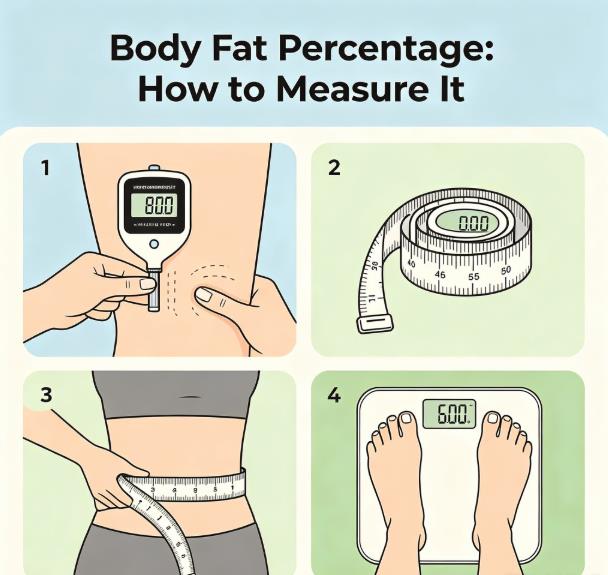
Skinfold calipers — best home option if you practice. Accuracy within 3–5%. About 10 minutes. Calipers cost around $125. Here's the catch: results depend on who's pinching. The first time I used calipers, I pinched the wrong spot and got 4% body fat. Spoiler: I was not 4%. Consistency with the same tester matters more than a single number.
Navy tape measure method — best free option. Accuracy within 3.5%. Takes 5 minutes. Just need a tape measure. Men measure neck + waist. Women measure neck + waist + hips. The math looks scary, but an online calculator does it for you.
Bioelectrical impedance (BIA) — smart scales. Accuracy within 4–5%. Takes 1 minute. Home scales: $30–$100. Big limitation: hydration swings the reading. Drink 16 ounces of water and watch it drop 2–3%. Use it to track trends over months, not as gospel.
Skip the manual math — try our body fat calculator. Enter a few measurements and get an instant estimate.
Body Fat Percentage Categories (ACE Standards)
The American Council on Exercise (ACE) publishes the most widely used classification. These are general guidelines, not rigid rules.
| Category | Women (%) | Men (%) |
|---|---|---|
| Essential fat | 10–13% | 2–5% |
| Athletes | 14–20% | 6–13% |
| Fitness | 21–24% | 14–17% |
| Acceptable (healthy) | 25–31% | 18–24% |
| Obese | ≥32% | ≥25% |
Essential fat is the minimum for survival. Women naturally carry more (10–13% vs. 2–5%) due to reproductive biology. A quick note: maintaining body fat below the essential range for a long time can mess with hormones, bone density, and immune function. Those levels are for elite athletes under professional supervision — not everyday folks.
Healthy Ranges by Age (What the Data Actually Shows)
Here's what the CDC's national survey found. Before you compare yourself, take a breath. These are population averages — not personal targets. Your number depends on genetics, activity, and life stage.
Ages 8–11: Boys ~28.0% / Girls ~31.9%
Ages 12–15: Boys ~25.2% / Girls ~32.5%
Ages 16–19: Boys ~22.9% / Girls ~34.8%
Ages 20–39: Men ~26.1% / Women ~37.8%
Ages 40–59: Men ~28.6% / Women ~40.5%
Ages 60–79: Men ~30.8% / Women ~42.4%
Ages 80+: Men ~30.7% / Women ~40.4%
If your number is significantly above or below these averages, don't panic. Just consider having a conversation with a healthcare provider for a personalized assessment — especially if you notice rapid changes.
Navy Method: Step‑by‑Step (Do It Now)
You need a flexible tape measure. Measure first thing in the morning, bare skin, after using the bathroom.
For men (two measurements): Neck (just below Adam's apple) + waist (at navel, relaxed, don't suck in).
For women (three measurements): Neck + natural waist (narrowest part) + hips (widest around glutes, feet together).
Then plug into the formula or use our online body fat calculator. The military trusts this method because it's free and good enough for screening.
Frequently Asked Questions (Real questions I get all the time)
1. My smart scale says 22%, but calipers say 18%. Who's right?
Neither is perfect. BIA scales are hydration‑sensitive — drink two glasses of water and the number drops. Trust calipers more if the tester knows what they're doing. For the real answer, DEXA is the tiebreaker. Research shows BIA can underestimate body fat by about 14% compared to DEXA in some populations.
2. I'm a 48‑year‑old woman at 34% body fat. Is that bad?
Let's look at data. For women 40–49, the "acceptable" ACE range goes up to 33%. At 34%, you're one point over. But the average American woman in her 40s sits at about 40.5% (CDC). So 34% is actually below average. Not ideal, but not a crisis. Focus on the trend: if it's been going down, you're winning.
3. BMI vs. body fat percentage — what's the real difference?
BMI is just height vs. weight. A muscular athlete and a sedentary person with the same height and weight can have identical BMIs but totally different body fat percentages. Body fat separates lean mass from fat. It's the better metric if you lift weights or play sports. See our full BMI vs body fat guide.
4. Can I measure body fat without any equipment?
Rough estimate: the waist‑to‑height rule. Your waist (at navel) should be less than half your height. If you're 5'6" (66 inches), waist under 33 inches. It's not precise, but it's free and takes two seconds.
5. What's the best time of day to measure?
First thing in the morning, after peeing, before eating or drinking. That's when hydration and food affect readings the least. Measure every two weeks — not every day. Daily swings will drive you crazy.
6. I'm an athlete with 10% body fat (male). Should I worry?
For men, 6–13% is the athlete range per ACE. 10% is fine if you feel good, have normal energy, and your blood work looks okay. But staying under 5% for extended periods can suppress testosterone and hurt bone density. Elite levels need medical oversight.