At a Glance: Smart snacking can support weight management without leaving you hungry. This guide breaks down low calorie snacks that actually satisfy—think protein-packed Greek yogurt, fiber-rich veggies, and portion-controlled treats. Learn what makes a snack truly low calorie (under 150 calories), how to avoid hidden calorie traps, and build a snack drawer that keeps you on track.
Editorial content by the BMI Calculator Blog team, drawing on expertise from registered dietitians and public health nutritionists. Sources: USDA FoodData Central, CDC nutrition guidelines, Academy of Nutrition and Dietetics, American Heart Association.
What counts as a low calorie snack – and why it matters
A true low calorie snack typically contains 150 calories or less while providing some nutritional value – protein, fiber, or healthy fats that keep you full until your next meal. According to the USDA What We Eat in America survey, the average American eats about 400-500 calories from snacks daily, and much of that comes from chips, cookies, and sugary drinks. (Note: Men generally consume slightly more snack calories than women – about 450-550 vs. 350-450 – but the healthy snack principles are the same for both.) Swapping just two high-calorie snacks for low calorie alternatives can create a daily deficit of 300-400 calories – based on the standard 3,500 calories per pound of body fat guideline, that's enough to lose over 30 pounds in a year without changing meals.
According to the CDC, strategic snacking helps control hunger, prevents overeating at meals, and provides energy between longer gaps. But not all low calorie snacks are created equal. A 100-calorie cookie pack is still mostly sugar and refined flour – it won't keep you full. The goal is snacks that work for your body, not just your calorie budget.
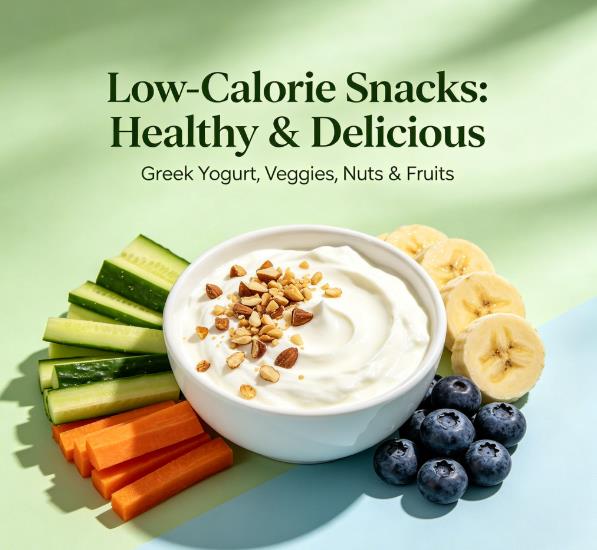
The anatomy of a satisfying low calorie snack
Three elements make a snack truly satiating: protein, fiber, and water content. Protein triggers satiety hormones (like PYY and GLP-1) that signal fullness. Fiber slows digestion and stabilizes blood sugar. Water adds volume without calories. The most effective low calorie snacks combine at least two of these.
Examples: an apple (fiber + water) with a tablespoon of no-added-sugar, no-added-salt natural peanut butter clocks in around 150 calories. Unsweetened nonfat plain Greek yogurt (protein) with berries (fiber) – about 120 calories. Vegetables with hummus – roughly 100 calories for a cup of veggies plus two tablespoons of hummus.
The USDA FoodData Central database confirms that whole foods naturally deliver these satiety factors, while processed “diet” snacks often remove fat and fiber, leaving you hungry an hour later.
⚠️ Allergy & safety note: Many low calorie snacks contain common allergens: nuts, dairy, eggs, soy, and gluten. If you have food allergies, always read ingredient labels carefully. For nut-free alternatives, try sunflower seed butter, roasted chickpeas, or pumpkin seeds. For dairy-free, choose coconut yogurt, tofu-based snacks, or nutritional yeast for a cheesy flavor.
Top 15 low calorie snacks under 150 calories (with real portions)
Here are dietitian-approved options you can grab at any grocery store. Portions matter – a “serving” isn't the whole bag.
Hard-boiled egg (1 large) – 70 calories, 6g protein. Prep a batch on Sunday.
Unsweetened nonfat plain Greek yogurt (½ cup) – 65 calories, 12g protein. Add cinnamon or vanilla extract, not sugar.
Cottage cheese (½ cup, 1% milkfat) – 80 calories, 14g protein. Top with black pepper or berries.
Apple (medium) – 95 calories, 4g fiber. Eat with 1 tbsp natural peanut butter (+95 cal) or alone.
Banana (small) – 90 calories. Slice and freeze for creamy “nice” cream.
Baby carrots (3 oz / about 20 pieces) – 35 calories. Pair with 2 tbsp hummus (+70 cal).
Cucumber slices (1 cup) – 16 calories. Sprinkle with everything bagel seasoning.
Cherry tomatoes (1 cup) – 27 calories. With a sprinkle of salt and pepper.
Air-popped popcorn (3 cups) – 90 calories. Skip the butter; use nutritional yeast or chili powder.
Rice cake (1 plain) – 35 calories. Top with 1 tbsp light cream cheese (35 cal) and smoked salmon (small piece).
Turkey roll-ups (2 slices low-sodium deli turkey + mustard) – 50 calories. Add a pickle spear inside.
Edamame (½ cup in shell) – 90 calories, 8g protein. Steam frozen from a bag.
Roasted chickpeas (½ cup, canned, rinsed and roasted) – 130 calories, 7g fiber. Season with paprika.
String cheese (1 stick) – 80 calories, 7g protein. Pair with a small apple.
Frozen grapes (1 cup) – 62 calories. Freeze for a sweet, chewy treat.
🌱 Vegan & vegetarian low calorie snacks (all under 150 cal)
Roasted chickpeas (½ cup) – 130 cal, 7g fiber. Season with smoked paprika.
Edamame (½ cup shelled) – 90 cal, 8g protein.
Apple slices with 1 tbsp sunflower seed butter – 140 cal.
Rice cake topped with mashed avocado (2 tbsp) and everything bagel seasoning – 120 cal.
Coconut yogurt (unsweetened, ½ cup) – 100 cal, 3g protein. Add a few berries.
Roasted seaweed snacks (whole sheet) – 30-50 cal per pack. Low-calorie, salty crunch.
Many of these snacks also support weight management goals when paired with an overall balanced diet. Tracking your food intake using a Calorie Calculator can help you see how snacking fits into your daily energy needs.
Low calorie snacks to buy (read the label carefully)
Not all packaged “low calorie” claims are trustworthy. A package may say “100 calories” but the serving size is tiny. Always check the label for protein and fiber content. Also, check the sodium content – aim for less than 140mg of sodium per serving to align with American Heart Association recommendations. Choose low-sodium versions of deli turkey, roasted chickpeas, and cottage cheese when possible.
Here are store-bought options that pass the test:
Good Culture cottage cheese single serve – 80-110 calories, 14g protein.
Siggi’s nonfat plain yogurt – 70-90 calories, 15g protein.
That’s It fruit bars (apple + berry) – 100 calories, 3g fiber, no added sugar.
SeaPoint Farms roasted edamame – 130 calories per ¼ cup, 14g protein.
Biena roasted chickpeas – 130 calories per serving, 6g fiber.
Avoid: “low fat” cookies, rice cakes with sugary coatings, granola bars (often 200+ calories with little protein), and veggie straws (mostly starch and oil).
Snack traps: how 100 calories becomes 300 without noticing
Mindless eating is the enemy. Common pitfalls:
Eating directly from a large bag – you'll eat 2-3 servings. Pour one portion into a bowl.
Liquid calories – a “small” flavored latte can have 200+ calories. Stick to black coffee, tea, or water.
“Healthy” nut butters – two tablespoons of peanut butter is 190 calories. Measure, don't eyeball.
Trail mix – healthy ingredients but calorie-dense. A quarter cup is 150-180 calories.
If you're tracking your weight, use a Adult BMI Calculator periodically to see how your snacking changes affect your body composition over weeks, not days.
Your 5-minute low calorie snack prep (do this once a week)
Prevent impulsive junk food choices by setting up a snack station. Every Sunday, do this:
Portion nuts and trail mix into 1-ounce bags (about 160 calories).
Hard-boil 6 eggs – grab one when you need protein.
Wash and cut veggies – carrots, celery, bell peppers. Store in water in the fridge to keep crisp.
Make single-serve Greek yogurt cups by dividing a large tub of unsweetened yogurt into small containers. Add frozen berries.
Pop a batch of plain popcorn – store in airtight bags (3 cups per bag).
When hunger strikes, you won't default to the vending machine.
Low calorie snacks for late night cravings
Evening snacking doesn't have to wreck your progress. Choose snacks that are low in sugar and easy to digest:
Warm skim milk (1 cup) – 80 calories, 8g protein. The warmth signals relaxation.
Decaf herbal tea – 0 calories. Flavors like peppermint or chamomile curb sweet cravings.
Half a banana with cinnamon – 50-60 calories. Freeze for a “nice cream” texture.
Small bowl of plain popcorn – 30 calories per cup – with salt and nutritional yeast.
Avoid heavy fats or large portions late – they can disrupt sleep quality.
Common myths about low calorie snacking
Myth: “Low calorie” means you can eat unlimited amounts. Fact: Calories add up. Two “100-calorie” packs is 200 calories – that's a meal for some people. Stick to one portion.
Myth: Fruit is too high in sugar. Fact: Whole fruit's fiber slows sugar absorption. A whole apple is better than 100-calorie fruit gummies.
Myth: Snacking is bad for weight loss. Fact: Strategic snacking prevents binge eating. The problem is what and how much, not the act of snacking.
Myth: All low calorie snacks are healthy. Fact: A 100-calorie pack of cookies has no nutrients. Prioritize protein and fiber.
Frequently Asked Questions (FAQ)
What is the lowest calorie snack that actually fills you up?
Non-starchy vegetables (cucumber, celery, bell peppers) are extremely low in calories (less than 10 per cup) but lack protein. For fullness, add a protein source like a hard-boiled egg (70 cal) or 2 tbsp hummus (70 cal). Together, a veggie plate with hummus and egg totals about 150 calories and keeps you satisfied for hours.
How many low calorie snacks can I eat per day?
Most adults can have 1-2 snacks per day (150-300 total snack calories) within a standard 1800-2200 calorie diet. If you're using a calorie calculator to track, aim to keep snacks to about 10-15% of your daily intake.
Are rice cakes a good low calorie snack?
Plain rice cakes are low calorie (35 each) but low in fiber and protein. They won't keep you full alone. Top with cottage cheese, mashed avocado, or tuna salad to add staying power. Avoid flavored rice cakes – they often have added sugar.
What low calorie snacks are best for weight loss?
Snacks high in protein and fiber are most effective. Greek yogurt, cottage cheese, hard-boiled eggs, edamame, and fresh vegetables with hummus are top choices. They control hunger hormones and reduce overall calorie intake at subsequent meals.
Can I eat low calorie snacks on a keto or low-carb diet?
Yes, but choose different options. For low-carb, focus on cheese sticks, hard-boiled eggs, cucumber slices with cream cheese, or a small handful of almonds (measure first). Avoid fruit, popcorn, and rice cakes, which are higher in carbs.
What low calorie snacks are safe for people with diabetes?
Choose snacks with less than 15g of carbohydrates per serving, such as hard-boiled eggs, string cheese, cucumber with cream cheese, or ½ cup of edamame. Avoid dried fruit and flavored yogurts, which can spike blood sugar. Always monitor your blood glucose levels after trying new snacks.
Are there any special considerations for seniors choosing low calorie snacks?
Seniors should prioritize protein-rich snacks to prevent muscle loss, such as Greek yogurt, cottage cheese, or turkey roll-ups. Choose soft, easy-to-chew options if dental issues are a concern, and stay hydrated by pairing snacks with water.
Do men and women need different low calorie snacks?
Men generally need more total calories (2500-3000/day) than women (2000-2400/day), so a 150-calorie snack is a smaller percentage for men. However, the snack principles – protein, fiber, and portion control – are identical. Choose the same healthy options; just adjust the number of snacks based on your total calorie target.
What about people with nut allergies?
Replace nut-based snacks with seed butters (sunflower, pumpkin), roasted chickpeas, or dairy-based proteins. Always read labels for cross-contamination warnings. Many of the snacks listed (hard-boiled eggs, veggies, cheese, yogurt) are naturally nut-free.
Sources
Content Integrity Review: This article has been reviewed by the BMI Calculator Blog editorial team for alignment with USDA, CDC, and AHA nutrition guidelines. Individual dietary needs vary; consult a registered dietitian for personalized advice.
About the BMI Calculator Blog Editorial Team
We are health educators, registered dietitians (holding Academy of Nutrition and Dietetics credentials), and public health nutritionists with over 15 years of combined clinical and community nutrition experience. Our team translates evidence-based guidelines into practical, reader‑friendly content. Every article is fact‑checked against current nutritional science.
Want to see how your snacking choices add up? Track your progress with our Gender Adjusted BMI Calculator – it helps you monitor body composition changes over time.
BMI Calculator Blog. This content is provided for educational and informational purposes only. Medical Disclaimer: The content of this article is for informational purposes only and does not replace professional medical advice, diagnosis, or treatment. Always seek the advice of a qualified physician or other health experts with any questions regarding medical conditions or health goals.