At a Glance: BMI for children is a pediatric screening tool that differs fundamentally from adult BMI. Rather than using fixed numeric ranges, the Centers for Disease Control and Prevention (CDC) interprets a child's BMI through age- and sex-specific percentiles, comparing growth against a reference population of healthy U.S. children. This guide explains the CDC percentile categories—underweight, healthy weight, overweight, obesity, and severe obesity—and outlines how to accurately calculate and track your child's BMI over time. Growth charts confuse most parents at first glance. You're not alone. Many parents wonder: what does this percentile actually mean? The answer is simpler than it looks, and understanding it can help you feel more confident at your child's next checkup. You'll also learn why muscular builds can skew results, why growth trajectories matter far more than any single reading, and how to support a healthy BMI for children with evidence-based, family-focused habits.
Key Takeaways
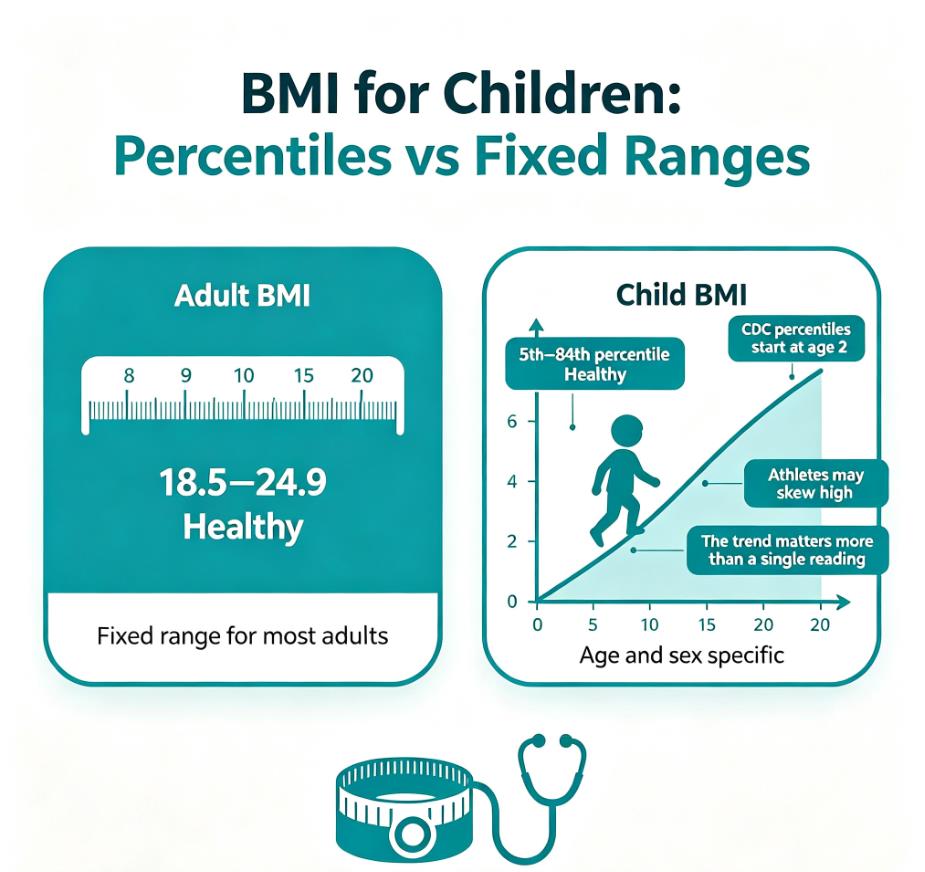
Children use percentiles, not fixed numbers. A healthy BMI for kids falls between the 5th and 84th percentiles — it's about where they rank compared to peers of the same age and sex.
BMI screening starts at age 2. Before that, pediatricians track weight-for-length using WHO growth standards.
Severe obesity has specific thresholds. BMI at or above 120% of the 95th percentile, or BMI ≥35 kg/m², signals severe obesity requiring intensive intervention.
Muscle mass can skew results. Active, athletic kids may land in higher percentiles without excess body fat. Always pair BMI with waist measurement and activity level.
The trend matters more than any single reading. A child who stays in their percentile range over years is growing perfectly — even if that percentile is 70th or 80th.
What Makes BMI for Children Different from Adult BMI?
Adults use a fixed BMI scale—18.5 to 24.9 for a healthy weight—that applies broadly regardless of age (outside seniors). BMI for children is a completely different metric, and for good reason: kids grow at wildly different rates. Girls and boys hit growth spurts and puberty at distinct ages, and their body composition changes constantly as they develop. A BMI number that is "normal" for a 5-year-old girl might signal underweight for a 10-year-old girl, and vice versa. Fixed numeric ranges simply do not apply.
Instead, the CDC uses a percentile system that is the global gold standard for pediatric BMI screening. This system compares your child's BMI to a large reference population of healthy U.S. children, creating gender- and age-specific benchmarks. The CDC recommends starting BMI screenings at age 2; before that, rapid infant and toddler growth makes BMI calculations unreliable, and pediatricians track weight-for-length ratios instead.
The data shows there's no "perfect" percentile for any child. What matters is that they're growing steadily along their own curve, eating well, and staying active. A percentile is not a test score—it's simply a signpost on your child's unique growth journey.
The CDC Percentile System for Children Aged 2 to 19
The entire foundation of BMI for children is the percentile ranking. This number tells you where your child falls on the growth chart relative to peers of the same age and sex. For example, a 7-year-old boy with a 75th percentile BMI has a higher BMI than 75% of 7-year-old boys in the reference group. This is not a marker of superiority or inferiority—it is simply a data point that, when tracked over time, reveals the trajectory of your child's growth.
The CDC's official BMI-for-age percentile categories are universal for kids and teens aged 2 to 19. The table below summarizes the classifications and clinical actions. The AAP's 2023 Clinical Practice Guideline—the first comprehensive pediatric obesity guideline in 15 years—reinforces these categories and emphasizes that children are unlikely to outgrow obesity without intervention, which is why early screening matters.
| Percentile Range | Weight Status | Clinical Guidance |
|---|---|---|
| Below 5th | Underweight | May indicate malnutrition or underlying growth issues; consult a pediatrician. |
| 5th to 84th | Healthy Weight | Optimal range for growth and development. |
| 85th to 94th | Overweight | Elevated risk of chronic conditions; lifestyle adjustments recommended. |
| 95th and above | Obesity | High risk; requires a personalized plan from a pediatrician or dietitian. |
| ≥120% of 95th percentile or BMI ≥35 kg/m² | Severe Obesity | Highest risk; warrants comprehensive intervention including medical evaluation, behavioral therapy, and in some cases medication or bariatric surgery for adolescents. |
The AAP further classifies severe obesity into Class 2 (120% to less than 140% of the 95th percentile, or BMI 35 kg/m² to less than 40 kg/m²) and Class 3 (140% of the 95th percentile or greater, or BMI 40 kg/m² or greater), both of which require intensive medical intervention. Adolescents with BMI at or above the 95th percentile have a substantially elevated risk of carrying obesity into adulthood, which is why the AAP guideline explicitly recommends against "watchful waiting."
For quick and precise results, using a dedicated kids BMI percentile tool eliminates manual chart referencing and ensures accuracy. For older teens, a teen BMI calculator can also provide percentile-based assessments tailored to adolescent growth.
How to Calculate BMI for Children Accurately
The math behind BMI for children is identical to the adult formula: weight divided by height squared. For metric units: weight in kilograms divided by height in meters squared. For imperial units: (weight in pounds divided by height in inches squared) multiplied by 703. However, the critical step is translating that raw number into a percentile using CDC growth charts—a process that is easy to get wrong manually.
Here's a concrete example to make this real. A 7-year-old boy who is 4 feet tall (48 inches, or 122 cm) and weighs 60 pounds (27.2 kg) has a BMI of approximately 17.6. On CDC growth charts, this falls at the 75th percentile—solidly within the healthy range. Now consider a 12-year-old girl who is 5 feet tall (60 inches, or 152 cm) and weighs 136 pounds (61.7 kg). Her BMI is approximately 26.6, which places her at the 96th percentile—in the obesity category. Same calculation, vastly different interpretations based on age and sex.
For parents, the most reliable method is to use a specialized child BMI calculator that automatically applies the CDC's age and sex adjustments and returns both the numeric BMI and the percentile ranking. These tools support both metric and imperial units, so you can use whichever measurement system you prefer.
If you do need to calculate manually, follow these steps and always cross-check with a percentile tool:
Weigh your child in kilograms (kg) or pounds (lb) without heavy clothing or shoes, first thing in the morning after using the bathroom if possible.
Measure their height in meters (m) or inches (in). If using centimeters, divide by 100 (e.g., 120 cm = 1.2 m). To get the most accurate results: have your child stand barefoot against a flat wall, heels together, head level, and mark the wall at the top of their head.
Calculate BMI: Metric = weight (kg) ÷ (height (m) × height (m)); Imperial = (weight (lb) ÷ (height (in) × height (in))) × 703.
Plot the BMI value on the CDC age- and sex-specific growth chart to determine the percentile. You can also use the CDC's official Child and Teen BMI Calculator to verify your results.
Key Considerations for Interpreting BMI for Children
BMI for children is a powerful screening tool, but it has limitations. Here are the most important factors to consider when evaluating your child's results.
Muscle Mass Can Elevate BMI Percentiles
Consider an 8-year-old soccer player whose BMI is at the 88th percentile. His parents might worry he's overweight, but if his body composition shows low body fat and high muscle mass, his pediatrician may simply continue monitoring his growth trajectory without any dietary restrictions. BMI alone doesn't distinguish between muscle and fat. If your child is active and has a higher percentile, your pediatrician will look at their overall growth, activity level, and body shape—not just the BMI number—to assess health.
Growth Trajectory Trumps a Single Reading
A single BMI reading is far less meaningful than tracking the trend over time. A child who stays consistently in the 60th percentile for years is growing healthily, even if their BMI number shifts slightly with age. A child who moves from the 50th to the 75th percentile over two years is generally growing normally. But a jump from the 50th to the 90th percentile in six months may signal excessive weight gain that requires attention. Similarly, a steep drop—from the 70th to the 10th percentile—could indicate inadequate nutrition or an underlying health issue. Both scenarios warrant a conversation with a pediatrician.
Accurate Measurements Are Essential
Even a small error in height or weight can distort BMI for children results. For the most accurate readings: measure height standing straight against a wall with no shoes, and weigh on a calibrated digital scale—ideally in the morning before eating or drinking. For younger children, ensure the head is level and do not round measurements. A height of 118 cm is not 120 cm—that 2 cm difference matters when the number is squared in the BMI formula.
Why Monitoring BMI for Children Matters for Long-Term Health
Tracking BMI for children from age 2 onward is one of the best ways to catch potential weight issues early—before they become chronic health problems. Childhood overweight and obesity are linked to a higher risk of type 2 diabetes, high blood pressure, sleep apnea, joint pain, asthma, and depression. These issues often track into adulthood. The NIH reports that childhood obesity is a strong predictor of adult obesity and is linked to elevated risk of cardiovascular disease and many obesity-related cancers later in life. Even a 5–10% reduction in excess body weight during childhood can significantly improve metabolic markers.
On the other side, a BMI percentile consistently below the 5th can indicate malnutrition, iron deficiency, or growth disorders needing early intervention to prevent stunted development or anemia. But BMI for children isn't just about identifying problems—it's about confirming healthy growth. For kids in the healthy weight range, regular BMI checks validate that diet, activity, and sleep habits are on track. If a slight upward trend appears, small adjustments—like adding more vegetables to meals or increasing outdoor play—can be made before larger interventions are needed.
Evidence-Based Tips to Support a Healthy BMI for Children
The goal is not to target a specific percentile but to support a healthy growth trajectory. These family-focused habits, aligned with CDC and AAP recommendations, are designed to work for children of all body types.
Encourage 60 minutes of daily physical activity. This doesn't require structured sports—outdoor play, bike rides, dance parties, or a family walk after dinner all count. For children aged 2–5, limit screen time to 1 hour per day of high-quality programming. For kids 6 and older, aim for less than 2 hours of recreational screen time daily—this doesn't include schoolwork.
Serve balanced, nutrient-dense meals. Emphasize fruits, vegetables, whole grains, lean proteins, and healthy fats. Avoid sugary drinks, processed snacks, and frequent fast food—these are major contributors to excess calorie intake in children. Why this matters: sugary beverages alone can add hundreds of empty calories daily without triggering fullness signals.
Prioritize adequate sleep. Children aged 6–12 need 9–12 hours of sleep per night; teens need 8–10 hours. Poor sleep disrupts the hunger hormones ghrelin and leptin, making kids more likely to reach for high-calorie snacks the next day. A consistent bedtime routine is one of the most overlooked tools for maintaining a healthy weight.
Lead by example. Children mimic adult behaviors. If you eat well, stay active, and limit screen time, your child is far more likely to do the same.
Talk about health, not weight. Frame conversations around energy, strength, and feelings rather than numbers. For instance, "Eating these veggies helps you run faster at the park" rather than discussing diet or body size. Negative weight talk can contribute to body image issues in children and teens. One common mistake I see parents make is putting their child on a strict diet because their BMI is slightly above the 85th percentile. This can backfire, leading to disordered eating patterns and slowed growth. Never restrict calories for children under 12 without medical supervision, as this can interfere with growth and development.
Family-Friendly Weekly Meal Plan Example
To make healthy eating practical, here is a simple, balanced weekly dinner rotation that supports a healthy BMI for children. Each meal uses accessible ingredients and can be adjusted for allergies or preferences. Lunch ideas can be leftovers or a simple combination of protein, whole grains, and a fruit or vegetable.
| Day | Dinner | Quick Tips |
|---|---|---|
| Monday | Grilled chicken breasts with roasted broccoli and quinoa | Let kids help season the chicken—they're more likely to eat what they help prepare. |
| Tuesday | Whole-wheat pasta with turkey meatballs and a side salad | Sneak grated zucchini or carrots into the meatball mixture for extra veggies. |
| Wednesday | Fish tacos with corn tortillas, cabbage slaw, and avocado | Set up a taco bar so each child can build their own—control over food reduces resistance. |
| Thursday | Lentil soup with whole-grain bread and carrot sticks | Lentils are an affordable, high-fiber protein that keeps kids full longer. |
| Friday | Homemade pizza on whole-wheat pita with tomato sauce, part-skim mozzarella, and vegetable toppings | Offer a rainbow of veggie toppings and let each child design their own pizza face. |
| Saturday | Grilled salmon with sweet potato wedges and steamed green beans | Sweet potatoes are rich in vitamin A and naturally sweet—no added sugar needed. |
| Sunday | Stir-fried tofu with mixed vegetables (bell peppers, snap peas, carrots) over brown rice | A great meatless option that's high in protein. Use low-sodium soy sauce. |
Pair these meals with water or milk, and aim for fruit as dessert. The goal is to make healthy eating normal, not a chore, and to remove the power struggle around food.
What to Ask Your Pediatrician If Your Child's BMI Is Outside the Healthy Range
If your child's BMI percentile falls into the underweight, overweight, or obese category, your next step is a conversation with your pediatrician. Being prepared with the right questions can turn an anxiety-provoking visit into a constructive, collaborative plan. Consider asking the following:
"Can you show me my child's growth trajectory over time?" Seeing the trend line—not just a single point—provides perspective and helps rule out normal growth spurts.
"Are there any medical reasons for this change in BMI?" Certain conditions, such as hypothyroidism, genetic syndromes, or medication side effects, can influence weight. Ask if further testing is warranted.
"What is a realistic and safe goal for my child's weight or BMI over the next 6–12 months?" For many children, especially younger ones, the goal may be weight maintenance while height catches up, rather than weight loss.
"What specific diet and activity changes would you recommend for our family?" Request concrete, actionable advice rather than general statements like "eat less, move more." A referral to a registered dietitian specializing in pediatrics can be invaluable.
"How can we approach this sensitively to avoid negative body image or disordered eating?" A good pediatrician will help you frame changes around health, strength, and family wellness rather than weight or restriction.
"How often should we follow up?" Depending on the severity, a follow-up plan every 4–12 weeks may be appropriate to monitor progress and adjust strategies.
Remember, your pediatrician is your partner in this journey. The conversation should leave you feeling supported, not shamed, and equipped with a clear, evidence-based next step.
Frequently Asked Questions
At what age should I start tracking my child's BMI?
The CDC recommends starting BMI screenings at age 2. Before that, pediatricians use weight-for-length measurements to assess growth, as BMI is not reliable during infancy and early toddlerhood.
What does it mean if my child's BMI is in the 85th percentile?
An 85th to 94th percentile is classified as overweight. It does not automatically mean your child is unhealthy, but it signals an elevated risk for conditions like type 2 diabetes and high blood pressure. Your pediatrician may recommend small lifestyle adjustments such as increased physical activity or reduced sugary beverages rather than restrictive dieting.
Can a muscular child be misclassified as overweight by BMI?
Yes. Muscle is denser than fat, so athletic children may have a higher BMI percentile without excess body fat. If your child is active and has a high percentile, their pediatrician will evaluate overall body composition, growth trends, and fitness level rather than relying on BMI alone.
How often should I check my child's BMI?
For routine monitoring, children aged 2–6 should have their BMI percentile checked every 6 months, and those aged 7–19 once per year, typically during well-child visits. More frequent checks may be recommended if your child is outside the healthy range.
Is the BMI formula different for boys and girls?
The calculation is identical, but interpretation differs because boys and girls have different growth patterns. The CDC provides separate growth charts for each sex to account for these differences.
Special Populations: When Standard BMI Guidance Doesn't Fit
For children with high muscle mass (athletes): A higher BMI percentile may reflect muscle, not fat. Evaluate body composition and overall fitness with your pediatrician before labeling a child as overweight.
For children of Asian descent: Research indicates that Asian children and adolescents may experience elevated metabolic risks—including higher truncal fat, glycemic markers, and lipid abnormalities—at lower BMI percentiles compared to non-Asian children. Some studies suggest that lower cutoffs targeting the 80th percentile for overweight and the 90th percentile for obesity may improve early detection of metabolic risks in Asian pediatric populations. Discuss ethnic-specific screening with your pediatrician, especially if there is a family history of type 2 diabetes or cardiovascular disease.
For children with a history of eating disorders: Frequent weighing and BMI tracking can be triggering. Work with a mental health professional and a pediatric dietitian to find a safe monitoring approach.
For infants and toddlers under 2: Use WHO growth standards based on weight-for-length, not BMI. The transition to CDC BMI percentiles begins at age 2.
Sources
CDC: Child and Teen BMI Categories — Use of BMI-for-Age as a Screening Measure
CDC: Extended BMI-for-Age Growth Charts — Monitoring Above the 97th Percentile
CDC: 2000 Growth Charts — BMI-for-Age Percentile Curves for Children and Teens 2 Through 19
BMI Calculator Blog. This content is provided for educational and informational purposes only. We encourage sharing with proper attribution to our site. Unauthorized commercial use is prohibited. Medical Disclaimer: The content of this article is for informational purposes only and does not replace professional medical advice, diagnosis, or treatment. Always seek the advice of a qualified pediatrician or other qualified health provider with any questions regarding your child's growth or health.