Quick Summary: Your BMI category is a starting point for a workout plan that fits your body. Underweight (BMI < 18.5) needs muscle-building resistance training with minimal cardio. Normal weight (18.5–24.9) benefits from a balanced mix of strength and cardio. Overweight (25–29.9) responds best to low-impact cardio plus strength training to boost metabolism. Obesity (30+) calls for ultra-low-impact movement to build consistency without joint stress. All recommendations align with CDC physical activity guidelines and ACSM exercise prescription principles.
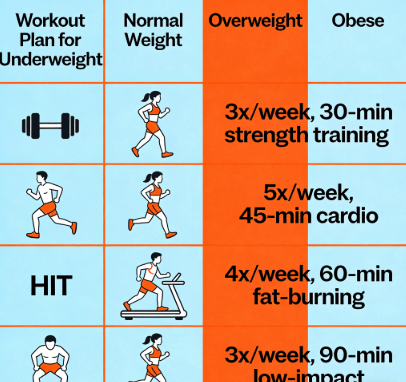
Why Your BMI Category Matters for Your Workout Plan
Fitness is not one-size-fits-all. Your Body Mass Index is a simple, effective starting point to craft a workout routine that aligns with your body's current needs, goals, and physical capabilities. Whether you're looking to gain muscle, maintain a healthy weight, shed excess fat, or build foundational fitness, workout plans by BMI category ensure you're not pushing too hard too fast—or not hard enough to see progress.
The Centers for Disease Control and Prevention (CDC) defines adult BMI categories based on global standards: underweight (below 18.5), normal weight (18.5–24.9), overweight (25.0–29.9), and obese (30.0 and above). Each category comes with distinct fitness priorities. Before diving into your tailored plan, use a reliable BMI calculator to get your number—it's the first step to a fitness routine that works for your body. For a more complete picture, pair your BMI with a body fat calculator that accounts for muscle mass and fat percentage.
The American College of Sports Medicine (ACSM) emphasizes that exercise prescription should be individualized based on current fitness level, health status, and personal goals—not a single number on a chart. The plans below are built on that principle. The same guidance reinforces that any movement is better than none, and consistency matters more than intensity when building a new habit.
Underweight (BMI Below 18.5): Workout Plan for Muscle Gain and Healthy Weight Gain
If your BMI falls below 18.5, the priority shifts from burning calories to building tissue. The primary goal is to build lean muscle mass and add healthy weight—not just fat. Cardio should be kept minimal here, as excessive aerobic exercise can burn calories you need for muscle growth. Focus on resistance training with compound movements that target multiple muscle groups at once.
How to structure your training:
Frequency: 3–4 days per week with rest days in between for muscle recovery. Muscles grow during rest.
Type: Full-body strength training. Compound lifts are key—squats, deadlifts, bench press, rows, overhead press.
Rep/Set Range: 3–4 sets of 6–10 reps per exercise with moderate-to-heavy weight. This rep-and-set combination works well for building lean muscle mass.
Cardio: 10–15 minutes of light cardio such as walking or slow cycling, 1–2 days per week only if desired. No high-intensity cardio.
Progression: Gradually increase weight by 2.5–5 lbs when you can complete the top rep of a set with good form—this is progressive overload, the driver of muscle gain.
Beginner Friendly Adjustment: If you're new to strength training, start with bodyweight exercises—bodyweight squats, push-ups on your knees, bent-over rows with light dumbbells—and focus on mastering form before adding heavy weight. Aim for 3 sets of 8–12 reps to build foundational strength first.
Key Tip: Pair this workout plan with a calorie surplus and high protein intake (approximately 1.6–2.2 g of protein per kg of body weight, under professional guidance) to fuel muscle growth. Exercise alone won't lead to healthy weight gain without proper nutrition.
Normal Weight (BMI 18.5–24.9): Workout Plan for Maintenance, Strength, and Overall Fitness
If your BMI falls in this range, you're already in a good spot. Your fitness goals are likely to maintain your healthy weight, build functional strength, boost cardiovascular health, and add muscle definition if desired. This workout plan is balanced, combining strength training and cardio to keep your body versatile and healthy.
Your weekly schedule at a glance:
Frequency: 4–5 days per week, split between strength and cardio for variety.
Type: Split strength training plus mixed cardio. Strength 2–3 days, cardio 2–3 days. Combine light strength and cardio on one day if short on time.
Strength: A mix of compound lifts for full-body strength and isolation exercises for muscle definition—bicep curls, tricep dips, lateral raises. 3 sets of 8–12 reps with moderate weight.
Cardio: A mix of steady-state (30 minutes of walking, jogging, swimming, cycling) and high-intensity interval training (HIIT—20 minutes alternating 30 seconds sprint with 1 minute walk). Alternate for variety.
Active Recovery: 1–2 days per week of yoga, stretching, or light walking to keep blood flowing and reduce muscle soreness.
Adjust for your goal: If you want more muscle definition, add an extra strength day and reduce steady-state cardio. If you want better cardiovascular fitness, increase cardio to 3 days per week while keeping strength training at 2 days.
Key Tip: This BMI range is all about consistency, not extreme changes. Small, regular workouts will keep your body in a healthy state.
Overweight (BMI 25.0–29.9): Workout Plan for Sustainable Fat Loss and Metabolic Boost
Building muscle raises your resting metabolic rate—your body burns more calories at rest. That makes fat loss more sustainable than cardio alone. The main goal for this BMI category is sustainable fat loss, building lean muscle to boost metabolism, and establishing a consistent exercise habit—without putting excessive stress on your joints.
The workout pattern that works:
Frequency: 5 days per week—3 cardio days, 2 strength days, with active recovery on the other 2 days.
Type: Low-impact cardio plus bodyweight and light resistance strength training.
Cardio: 30–45 minutes of low-impact movement such as brisk walking, elliptical, swimming, or cycling. Keep your heart rate at 60–70% of your maximum—a pace where you can talk but not sing. This burns fat without straining joints.
Strength: Full-body bodyweight or light dumbbell training—squats, glute bridges, wall push-ups, bird-dogs for core, banded rows. 3 sets of 12–15 reps with light weight and high reps. Focus on core and lower body strength.
Active Recovery: Yoga, water walking, or 20 minutes of slow walking to reduce soreness.
Progression Tip: Gradually increase cardio duration by 5 minutes per session or add a small incline. For strength, add light weights when bodyweight exercises feel easy—this keeps your metabolism rising.
Key Tip: Fat loss requires a moderate calorie deficit—approximately 300–500 calories below maintenance, paired with nutrient-dense foods to sustain energy for workouts. Extreme restriction often leads to muscle loss and metabolic slowdown.
Obese (BMI 30.0 and Above): Workout Plan for Foundational Fitness and Low-Impact Movement
When BMI reaches 30 or above, the smartest first move isn't a heavy workout at all—it's showing up for 10 minutes of movement. The top priority is building activity tolerance and establishing a regular movement habit—not rapid fat loss or intense exercise. Excessive intensity can lead to injury, burnout, or discouragement. Focus on ultra-low-impact movement that protects your joints, boosts your energy, and helps you feel more comfortable in your body.
Your starting routine:
Frequency: Daily movement, 6–7 days per week. Short, manageable sessions are better than long, exhausting ones.
Type: Ultra-low-impact movement plus gentle mobility work.
Movement: Start with 10–15 minutes of slow walking, water walking in a pool, or chair-based exercises such as chair squats and seated leg lifts. Gradually increase duration by 5 minutes each week.
Mobility: 5–10 minutes of gentle stretching or chair yoga after each movement session, focusing on hips, knees, and shoulders.
Rest: No formal rest days, but scale back to 5 minutes of movement if fatigued. Consistency matters more than duration.
Progression Tip: Once you can comfortably complete 30 minutes of low-impact movement, add small challenges like slightly faster walking, arm movements while marching, or water aerobics classes. Introduce very light strength training such as water bottle arm lifts as your body adapts.
Key Tip: Focus on how movement makes you feel—more energized, less stiff—rather than numbers on a scale. Walking an extra 5 minutes or completing a chair yoga flow are genuine wins that build momentum.
Safety Note: If you experience any of the following during exercise, stop immediately and consult your doctor: chest pain or pressure, severe shortness of breath, dizziness or lightheadedness, sharp joint pain that doesn't subside with rest. If you have pre-existing conditions such as heart disease, severe joint pain, diabetes complications, or uncontrolled hypertension, consult your healthcare provider before beginning any exercise program.
Nutrition Synergy: What to Eat for Your BMI Category
Exercise and nutrition work together. Here's a simple guide to pairing your workout plan with the right fuel:
Underweight: Calorie surplus of 300–500 calories daily. Protein focus at 1.6–2.2 g per kg of body weight. Meal timing matters—eat within 30 minutes post-workout. Sample snack: Greek yogurt with nuts and honey.
Normal Weight: Maintenance calories with balanced macronutrients. Protein at 1.2–1.6 g per kg of body weight to support muscle maintenance. Focus on whole foods with plenty of fruits and vegetables for micronutrient support.
Overweight: Moderate calorie deficit of 300–500 calories below maintenance. Protein priority at 1.2–1.6 g per kg to preserve muscle during fat loss. Fiber focus at 30 g daily to manage hunger. Hydration at 3–4 liters of water daily.
Obese: Modest calorie deficit under professional guidance. Protein at 1.2–1.6 g per kg to preserve lean mass. Focus on nutrient-dense, high-volume foods such as vegetables and lean proteins that provide satiety without excess calories. Hydration at 3–4 liters of water daily.
The most overlooked variable isn't the workout—it's the post-workout meal timing. The protein and calorie ranges above have been reviewed against current sports nutrition guidance. A registered dietitian can help you personalize your nutrition plan alongside your workout routine based on your specific health profile and goals.
Final Notes for Every BMI Category
Your BMI is a guide, not a final judgment on your health or fitness potential. Every body is different: an athlete with high muscle mass may have a higher BMI but low body fat, while someone with a normal BMI may struggle with low energy or muscle weakness. That's why pairing your BMI with body fat percentage and listening to your body is so important.
No matter which BMI category you fall into, the most important part of any workout plan is sustainability. If you hate running, don't force it—choose an activity you enjoy, whether that's dancing, hiking, swimming, or cycling. If strength training feels intimidating, start with 10-minute at-home sessions. Start with the lowest recommended frequency. Add 5 minutes or 2.5 lbs when it feels easy. That is progress.
Always consult a healthcare provider or certified personal trainer before starting a new workout routine, especially if you have pre-existing health conditions, joint pain, or haven't exercised in a long time. They can help you adjust these workout plans by BMI category to your unique needs and ensure you're exercising safely.
Frequently Asked Questions
Can I follow a workout plan from a different BMI category if my goal is different?
Yes—with a few guardrails. The plans are organized by BMI category based on typical needs and safety considerations, but your personal goals may cross categories. For example, someone in the overweight category with a primary goal of muscle building may incorporate elements of the normal weight plan. The key is to respect your current fitness level and joint stress limitations while progressing toward your specific goal.
How do I know when to progress to a harder workout?
Simple test: can you finish every rep with good form and no excessive fatigue? If yes, bump the weight 2.5–5 lbs, add 5 minutes of cardio, or nudge the intensity slightly. If your BMI has shifted into a different category after consistent training, reassess and consider elements of the next plan.
Should I combine these workout plans with a specific diet?
Exercise and nutrition are partners, not rivals. Underweight individuals benefit from a calorie surplus with high protein for muscle gain. Those in the overweight and obese categories generally benefit from a modest calorie deficit of 300–500 calories below maintenance, paired with whole, nutrient-dense foods. A registered dietitian can help you personalize your nutrition plan alongside your workout routine.
Can I start these workout plans if I've never exercised before?
Absolutely—and that's exactly who these plans are built for. Each plan includes beginner-friendly adjustments. If you're completely new to exercise, start with the lowest frequency and duration recommended, focus on mastering form, and gradually increase intensity over weeks—not days. Consistency matters far more than intensity when you're building a new habit. If you have pre-existing health conditions, consult your healthcare provider before starting.
Sources
Related Articles
BMI-based Fitness Plans: Safe Workout Routines for All 4 BMI Categories
Exercise Routines for Different BMI Ranges: Step-by-Step Plans from Underweight to Obesity
BMI Calculator Blog. This content is provided for educational and informational purposes only. Medical Disclaimer: The content of this article does not replace professional medical advice, diagnosis, or treatment. Always seek the advice of a qualified physician, certified personal trainer, or other qualified health provider with any questions regarding your fitness program or exercise safety.