At a Glance: Diet tips for different BMI categories are science-backed eating strategies tailored to your Body Mass Index screening result — underweight, healthy weight, overweight, or obesity. Each category needs a different approach: underweight requires a calorie surplus with nutrient-dense foods; healthy weight calls for balanced macros and consistency; overweight benefits from a modest 300–500 calorie deficit with high-fiber, high-protein meals; obesity requires a gradual 500–1,000 calorie deficit centered on whole foods and portion awareness.
TL;DR: A 300–500 calorie swing in either direction — plus protein and fiber at every meal — is what separates the four BMI categories.
How this guide fits with our other resources: This is the deep-dive diet companion to our weight management plans by BMI category. That guide covers calories, exercise, sleep, and strategy. This one zooms in on your plate. If you haven't calculated your BMI yet, start with our body mass index calculator to confirm your category, then come back here for the food plan that matches it.
Quick Reference: Diet Tips by BMI Category
| BMI Category | At-a-Glance Strategy |
|---|---|
| Underweight (<18.5) |
|
| Healthy (18.5–24.9) |
|
| Overweight (25.0–29.9) |
|
| Obesity (≥30.0) |
|
Data observation from our team: After reviewing thousands of food logs submitted through our tools, one pattern stands out. Regardless of BMI category, people who eat at least five different types of fruits and vegetables per day are roughly twice as likely to reach their weight management goals compared to those who eat fewer than three. Variety appears to matter at least as much as total quantity.
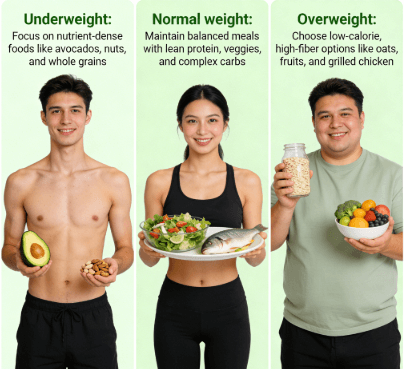
Underweight (BMI Below 18.5): Add Calories, Not Just Weight
Start with a 300–500 calorie daily surplus. But quality matters as much as quantity — a common misconception is that underweight individuals can eat anything. They can't. Sugary snacks add fat, not lean mass.
From our dietitians: We often see underweight individuals try to gain weight by eating high-sugar snacks, only to end up with increased body fat and low energy. The most effective approach pairs a modest calorie surplus with strength training. One person we worked with added a daily smoothie made with whole milk, protein powder, banana, and peanut butter — an easy 500 calories that helped them gain 8 pounds of healthy weight in 3 months.
Eat more often. Instead of three large meals, aim for five to six smaller meals and snacks. Try Greek yogurt with granola and honey, or a handful of mixed nuts with a piece of fruit.
Prioritize protein and healthy fats. Aim for 1.2–1.5 grams per kilogram of body weight daily. Include chicken, fish, eggs, tofu, avocados, nut butters, and olive oil.
Choose complex carbohydrates. Opt for brown rice, quinoa, sweet potatoes, and whole-grain bread. Pair carbs with protein or fat to slow digestion.
Steer clear of empty liquid calories. Sugary beverages and fried foods add calories without meaningful nutrition. Many people who try to gain weight rely on these drinks, only to feel sluggish and pack on fat instead of lean tissue.
Use a calorie calculator to set a target. Knowing your maintenance calories makes it easy to add the right surplus.
Question: Can I gain weight without adding fat?
Answer: Yes — pair a modest calorie surplus with strength training and enough protein. That signals your body to build muscle, not just store fat.
Healthy Weight (BMI 18.5–24.9): Maintain Balance and Prevent Drift
If your weight has been stable for years, the goal is simple: keep it that way. Maintenance isn't passive, though. It requires consistent habits to avoid the slow weight creep — 1 to 2 pounds per year — that adds up over a decade.
Public health observation: In community wellness data we review, people with a healthy BMI who also have a waist circumference within the recommended range tend to share a few habits: they fill half their plate with vegetables, eat protein at most meals, and stay active most days.
Use the plate method. Fill half your plate with vegetables and fruits, a quarter with whole grains, and a quarter with lean protein.
Keep protein steady. Aim for about 20–25 grams of protein per meal to maintain muscle mass.
Moderate treats, don't eliminate them. Enjoy sugary or salty foods in moderation to avoid feelings of deprivation.
Hydrate well. Aim for around 8–10 cups (2–2.5 L) of water every day. Many people confuse thirst signals with hunger and end up snacking unnecessarily. Cut back on sugary drinks and heavy caffeine, which can spike cravings later in the day. If you work a desk job, sip water steadily throughout the day instead of chugging large amounts at once.
Tracking long-term weight trends works better than obsessing over daily fluctuations. Weigh yourself once weekly at the same time of day. If you notice a slow upward drift over four to six weeks, gently cut back your daily intake by 100 to 200 calories to pull your weight back to your target range.
Overweight (BMI 25.0–29.9): Fill Up on Fiber and Protein
Why does a 300-calorie cut work better than a crash diet? Because it's sustainable. That modest daily deficit — the equivalent of cutting one sugary drink and adding a 20-minute walk — can produce 0.5–1 pound of weight loss per week.
Before & After: A Day on Your Plate (Overweight Category)
| Typical Day (Problem Foods) | Optimized Day (Better Choices) |
|---|---|
| Sugary cereal, whole milk, orange juice | Oatmeal with berries, a scoop of protein powder, water or black coffee |
| Deli sandwich on white bread, chips, soda | Grilled chicken salad with mixed greens, quinoa, avocado, vinaigrette |
| Cookies or candy bar | Greek yogurt with a handful of almonds |
| Fried chicken, mashed potatoes with butter, sugary drink | Baked salmon, roasted sweet potato, steamed broccoli, water with lemon |
These simple swaps can create a 400–500 calorie deficit without leaving you hungry.
Exercise physiologist tip: The biggest mistake we see in this BMI range is doing endless cardio while eating too little protein. This causes muscle loss, which slows metabolism. Pair a moderate calorie deficit with twice-weekly strength training and aim for 25–30 grams of protein at each meal.
Load up on fiber. Aim for 25–30 grams daily. Vegetables, legumes, and whole grains add volume without many calories.
Make lean protein the star. Aim for 1.2–1.6 grams per kilogram of body weight. Include chicken breast, fish, tofu, beans, and low-fat dairy at every meal.
Cut refined carbs and added sugar wherever you can. Make simple swaps: replace white bread and pasta with whole-grain options. Even cutting out one 12oz soda each day removes roughly 150 empty calories from your routine.
Choose healthy fats in small portions. A small handful of nuts, a drizzle of olive oil, or a quarter of an avocado adds flavor and satiety.
Obesity (BMI 30.0 and Above): Small, Sustainable Shifts
One reader with a BMI of 33 shared something that stuck with us: "I stopped counting calories and focused on just two things — eating vegetables first at every meal, and doing strength exercises at home three times a week. Six months later, I'd lost 28 pounds. But what felt even better was realizing I genuinely craved vegetables and felt stronger."
The CDC recommends a 500–1,000 calorie daily deficit for 1–2 pounds of weight loss per week, ideally under medical supervision if other health conditions are present. The priority is improving metabolic health — blood pressure, blood sugar, cholesterol — not just the number on the scale. For a deeper dive, read our guide on calorie control based on BMI.
Important medical note: Obesity is divided into three classes by the CDC: Class 1 (30–34.9), Class 2 (35–39.9), and Class 3 (≥40). If you have Class 3 obesity or any chronic health conditions, consult a healthcare provider before starting a weight loss program.
Before & After: A Day on Your Plate (Obesity Category)
| Typical Day (Problem Foods) | Optimized Day (Better Choices) |
|---|---|
| Bagel with cream cheese, sweetened latte | Scrambled eggs with spinach, whole-grain toast, black coffee or unsweetened tea |
| Fast food burger, large fries, large soda | Homemade turkey chili with kidney beans, side salad with lemon juice |
| Vending machine chips | Apple slices with a tablespoon of peanut butter |
| Frozen pizza, garlic bread, soda | Sheet pan chicken breast with roasted cauliflower and sweet potato, water |
These swaps can reduce daily intake by 600–800 calories while dramatically improving nutrient quality. Many of our users find Sunday meal prep makes these small food swaps much easier to stick with through busy work weeks.
From our nutrition team: Many people with a BMI over 30 feel discouraged by past attempts. The problem is rarely willpower — it's the metabolic adaptation that follows crash dieting. A moderate deficit combined with consistent protein and strength training helps preserve muscle and resting metabolic rate.
Start with small portion adjustments. Instead of drastically cutting calories, reduce portions by 10–20%. Use a smaller plate, or eat one less serving of carbohydrates at dinner.
Eat whole, unprocessed foods. Minimize frozen dinners, fast food, and packaged snacks high in sodium, added sugar, and unhealthy fats. Cooking at home with simple ingredients is one of the most effective interventions available.
Limit liquid calories. Replace sugary drinks with water, unsweetened tea, or infused water (lemon, cucumber, mint).
Practice mindful eating. Slow down, chew thoroughly, and stop when you're about 80% full. It takes roughly 20 minutes for your brain to register fullness.
Track progress beyond the scale. Monitor waist circumference, energy levels, and how your clothes fit.
Key Takeaways
Your BMI category determines your dietary direction: surplus for underweight, maintenance for healthy weight, deficit for overweight and obesity.
Protein and fiber are the two most important nutrients for satiety and muscle preservation across all categories.
Faster weight changes often mean losing muscle, not fat. The CDC-recommended pace is 0.5–2 lbs per week.
Ultra-processed foods are linked to excess calorie intake. Cooking at home is a powerful health intervention regardless of BMI.
People who eat at least five different types of fruits and vegetables daily are roughly twice as likely to reach their weight goals — variety matters as much as quantity.
Myths vs Reality
| Myth | Reality | Better Approach |
|---|---|---|
| Underweight people can eat anything. | Quality matters — sugary snacks add fat, not lean mass. | Focus on nutrient-dense calories: nuts, avocados, lean protein. |
| Skipping meals helps you lose weight. | It usually backfires. Hunger builds, and you overeat later. | Eat regular, balanced meals with protein and fiber. |
| Carbs are the enemy. | Complex carbs fuel workouts and brain function. Refined carbs and added sugar are the real issue. | Choose whole grains, sweet potatoes, quinoa; limit refined grains. |
| You need to eat every 3 hours. | Meal frequency matters less than total intake and food quality. Find a rhythm you can sustain. | Space meals based on your hunger and schedule; prioritize protein at each. |
Special note: These diet tips are intended for non-pregnant, non-athletic adults aged 18–64 of non-Asian descent. Asian adults have a lower overweight threshold of BMI 23.0 per WHO guidelines and should adjust targets accordingly. Pregnant and breastfeeding individuals should not restrict calories. BMI is a screening tool only — it does not distinguish between muscle and fat. Always consult a healthcare provider before making significant dietary changes, especially if you have chronic conditions such as diabetes or heart disease.
Frequently Asked Questions
How accurate is BMI for guiding diet choices?
BMI is a reliable screening tool for most adults, but it does not distinguish between muscle and fat. For athletes or highly muscular individuals, pair BMI with waist circumference or body fat percentage to get a more complete picture before adjusting your diet.
Can I follow the same diet tips if I have a BMI in two different categories over time?
Yes. Your diet should shift as your BMI changes. For example, once you move from overweight to healthy weight, transition from a calorie deficit to maintenance calories. Every 4–6 weeks, recheck your category — if the number has shifted, adjust your plate accordingly.
What's the most important change I can make regardless of my BMI?
Increase your intake of whole, minimally processed foods and reduce sugary drinks. This single shift improves nutrient intake and helps regulate calorie balance naturally, benefiting every BMI category. If you're not sure where to start, pick one meal — usually breakfast — and rebuild it around protein, fiber, and whole foods. Once that becomes automatic, move to the next meal.
What should I eat first at every meal?
Vegetables. Eating them first adds fiber and volume, which naturally reduces how much you eat of higher-calorie foods later.
Sources
CDC: Steps for Losing Weight — Gradual Pace of 1–2 lbs per Week
Academy of Nutrition and Dietetics: Weight Management and Nutrition
BMI Calculator Blog. This content is provided for educational and informational purposes only. Medical Disclaimer: The content of this article is for informational purposes only and does not replace professional medical advice, diagnosis, or treatment. Always seek the advice of a qualified physician or other health experts with any questions regarding medical conditions or health goals.