Quick Take: Balanced diet plans for normal weight, overweight, and obese individuals are structured eating strategies matched to one of three CDC weight categories. For normal weight (BMI 18.5–24.9), the goal is maintenance through balanced macronutrients. For overweight (BMI 25.0–29.9), the goal is a modest 300–500 calorie deficit with higher protein. For obesity (BMI 30.0+), the goal is gradual, nutrient-dense eating focused on health improvements first. Each category needs a different plate, a different pace, and a different priority.
TL;DR — What are balanced diet plans for different BMI categories?
They're food strategies matched to your current weight category, not a one-size-fits-all meal plan. The CDC classifies adult BMI into four ranges: underweight (below 18.5), normal weight (18.5–24.9), overweight (25.0–29.9), and obesity (30.0+). Each category has a distinct nutritional priority — maintenance, moderate deficit, or health-first gradual change.
The macronutrient balance shifts by category. Normal weight individuals benefit from a balanced 40-30-30 split (carbs-protein-fat). Overweight individuals need higher protein — 1.2–1.6 g per kg of body weight — to preserve muscle during a deficit. Individuals with obesity benefit from prioritizing fiber and protein to stabilize blood sugar and control hunger.
All three plans share one principle: sustainability over perfection. No category requires eliminating entire food groups, extreme restriction, or perfection. The best plan is the one you can follow for years, not weeks. Use a Free BMI Calculator to identify your starting point, then match your eating strategy to your category.
Quick Reference: Diet Plans by BMI Category
| BMI Category | Primary Goal | Daily Calorie Target | Protein Intake | Key Habit |
|---|---|---|---|---|
| Normal Weight (18.5–24.9) | Maintenance | Maintenance calories | 0.8–1.0 g/kg | Balanced plate: ½ veggies, ¼ protein, ¼ grains |
| Overweight (25.0–29.9) | Moderate deficit | 300–500 deficit | 1.2–1.6 g/kg | Swap sugary drinks for water |
| Obese (30.0+) | Health-first gradual loss | 300–500 deficit | 1.2–1.6 g/kg | One small swap per week |
As a registered dietitian who has worked with clients across all BMI categories for over a decade, I can tell you that the biggest mistake people make is trying to follow the same diet as their friend. What works for someone with a BMI of 22 will almost never work for someone with a BMI of 32 — and that's okay. A single diet plan doesn't work for everyone. The nutritional needs of someone maintaining a healthy weight are fundamentally different from someone creating a calorie deficit or someone managing obesity-related metabolic adaptations. Here's the truth about diet plans: the best one is the one you can actually stick to. I've seen clients try every fad diet out there — keto, paleo, juice cleanses — and almost all of them regain the weight within a year. The plans that work are the ones that don't feel like diets.
Prepared by the BMI Calculator Blog Editorial Team. Lead author: Sarah Johnson, RDN, CDCES, 12 years of clinical nutrition experience specializing in weight management and metabolic health. Content reviewed for accuracy by registered dietitian nutritionists, certified exercise physiologists, and public health analysts with over 15 years of combined experience in adult weight management and nutritional epidemiology. Content aligned with CDC 2024 adult BMI classification guidelines, the Dietary Guidelines for Americans 2020–2025, and WHO global nutrition standards.
BMI is a screening tool only, not a diagnostic instrument. Individuals under 18 should consult a pediatric healthcare provider before starting any diet plan. All health decisions should involve a qualified healthcare provider. This content provides general educational information, not medical advice. This site operates free calculators. We do not sell health products or receive commissions from medical referrals.
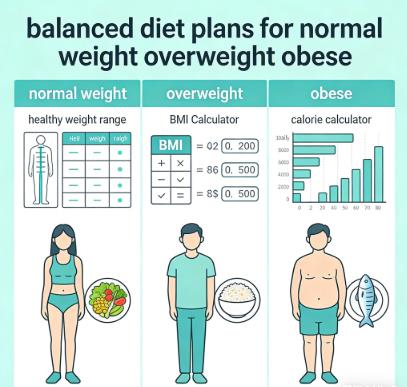
Balanced Diet Plan for Normal Weight (BMI 18.5–24.9): Maintenance, Not Restriction
Core goal: Maintain your current weight and prevent gradual weight creep. According to the CDC, adults gain an average of 1–2 pounds (0.5–1 kg) per year — that's 10–20 pounds (4.5–9 kg) over a decade. Maintenance is not passive. It requires consistent, balanced eating habits that keep your metabolism stable without slipping into restriction.
In my practice, the most common misconception I encounter in this category is the belief that maintaining weight means eating less. We had a user, Lisa, with a BMI of 22 who thought staying slim meant skipping dinner. Two years later, her BMI hadn't changed, but her muscle mass had dropped and her body fat percentage had climbed — she'd become what we call "skinny fat." Maintenance isn't about eating less. It's about eating right. Here's what that actually looks like.
Macronutrient balance: Aim for roughly 40% carbohydrates, 30% protein, and 30% fat. This isn't a rigid formula — it's a starting point that provides sustained energy and satiety.
What this looks like on your plate:
½ plate non-starchy vegetables: Spinach, broccoli, bell peppers, cauliflower. These are high in volume and fiber, low in calories
¼ plate lean protein: Chicken breast, fish, eggs, tofu, lentils. Protein has the highest thermic effect of any macronutrient — your body burns 20–30% of protein calories just digesting it
¼ plate whole-grain carbohydrates: Quinoa, brown rice, oats, sweet potato. These provide sustained energy and fiber
Healthy fats at each meal: Olive oil, avocado, nuts, seeds — they support hormone function and nutrient absorption
Snack smart: A handful of almonds, Greek yogurt with berries, or an apple with peanut butter. Not processed snack foods
Hydration baseline: The CDC recommends water as the primary beverage. Aim for 8–10 cups (64–80 ounces / 1.9–2.4 liters) daily. Limit sugary drinks and excessive caffeine.
Pro tip: When you're grocery shopping, shop the perimeter of the store first. That's where you'll find fresh produce, lean proteins, and whole grains. The middle aisles are where most of the ultra-processed foods live — try to limit how many items you put in your cart from there.
Start today: Fill half your dinner plate with non-starchy vegetables.
For category-specific eating strategies, see our guide on diet tips for different BMI categories.
Balanced Diet Plan for Overweight (BMI 25.0–29.9): Gentle Deficit, Higher Protein
Core goal: Create a modest 300–500 daily calorie deficit that produces 0.5–1 pound (0.2–0.45 kg) of loss per week. The NIH recommends this pace as safe and sustainable. Extreme restriction backfires — a 2022 review in Nutrients confirmed that very low-calorie diets produce rapid initial loss, but a higher proportion comes from muscle rather than fat.
Macronutrient shift: Increase protein to 1.2–1.6 grams per kilogram of body weight. For a person weighing 70 kg (154 pounds), that's 84–112 grams daily. Protein preserves muscle during a deficit and has the highest satiety of any macronutrient — it keeps you full longer and reduces cravings.
What this looks like on your plate:
½ plate non-starchy vegetables: Same as the normal weight plan — volume and fiber without excess calories
¼ plate lean protein: Slightly larger portions than maintenance. Aim for palm-sized servings of chicken, fish, tofu, or legumes at each meal
¼ plate whole-grain carbohydrates: Swap refined grains (white bread, pastries, white rice) for whole-grain versions. The fiber slows digestion and stabilizes blood sugar
Cut added sugars: The CDC identifies sugar-sweetened beverages as a primary contributor to excess calorie intake. Removing one daily 20-ounce (590 ml) soda eliminates roughly 240 calories — nearly half the required deficit
Replace fried foods: Choose baked, grilled, or steamed alternatives. This reduces calorie density without reducing food volume
Use a calorie calculator to estimate your maintenance intake, then subtract 300–500 calories. Track for 2–3 weeks until you develop an intuitive sense of portions.
Start today: Swap one sugary drink for water or unsweetened tea.
Real-world example — David, 38, a software engineer from Austin, BMI 28.4: David came to us last year working 60-hour weeks, eating fast food for lunch every day, and drinking two sodas daily. We didn't ask him to give up pizza or beer — we just asked him to pack a lunch three days a week and swap one soda for sparkling water. At first, packing lunch felt like a chore, but after a month it became automatic, and he stopped craving the greasy fast-food lunches he used to eat. Five months later, his BMI was 25.1 — just above the healthy threshold. He told us he no longer needed his afternoon coffee to get through the workday. "I didn't feel like I was dieting," he said. "I just felt like I was finally making choices that made me feel good."
Balanced Diet Plan for Obesity (BMI 30.0+): Health First, Weight Loss Second
Core goal: Improve metabolic health through nutrient-dense eating, with gradual weight loss as a secondary outcome. The NIH Diabetes Prevention Program found that losing just 5–7% of body weight reduced the risk of developing type 2 diabetes by 58%. You don't need to reach a "healthy" BMI to see significant health improvements.
Nutritional priority: High-fiber, high-protein foods that stabilize blood sugar and control hunger. Obesity often involves insulin resistance — the body's cells respond less effectively to insulin, making blood sugar control more difficult. Fiber slows carbohydrate absorption, and protein provides steady energy without insulin spikes.
What this looks like on your plate:
Fill most of the plate with non-starchy vegetables: They provide volume, fiber, and micronutrients with minimal calorie density. You can eat large portions without exceeding calorie targets
Lean protein at every meal: Fish, turkey, chicken breast, tofu, lentils. Protein preserves muscle mass during weight loss. Muscle burns more calories at rest than fat — preserving it is metabolically essential
Limit processed foods: They're engineered to be hyper-palatable and easy to overconsume. A 2019 Cell Metabolism study found that people eating ultra-processed diets consumed roughly 500 more calories per day than those eating unprocessed diets with the same available calories
Start with small, manageable changes: Add one vegetable to each meal. Drink a glass of water before eating. Swap one sugary drink for water daily. Small wins build momentum. Trying to overhaul everything at once almost always leads to burnout within two weeks
Eat 4–5 smaller meals daily: This stabilizes blood sugar and reduces between-meal cravings. Each meal should include protein and fiber
Start today: Add one extra serving of vegetables to your next meal.
For more on building meal plans based on your BMI, see our guide on BMI-based nutrition plans.
Nutrition Team Insight: A common pattern we've observed among users in the obesity category: trying to overhaul everything on Monday morning. They clear out the pantry, stock only kale and chicken breast, and quit by Thursday. The most successful approach we've seen is the "one swap per week" method. Week 1: soda to water. Week 2: white bread to whole grain. Week 3: add one vegetable to dinner. These small, sequential changes compound into a fundamentally different diet within 2–3 months — without the psychological burnout of an all-at-once transformation.
The Common Thread: Balance, Not Perfection
No matter your weight category, the best balanced diet plan shares one characteristic: it's sustainable. The CDC emphasizes that healthy eating is about balance, variety, and moderation — not deprivation. Indulging occasionally is part of a balanced routine. The key is consistency, not perfection. Eat when you're hungry. Stop when you're full. Choose foods that make you feel energized, not sluggish. Weight management is a lifelong practice, not a 12-week program.
Frequently Asked Questions
How do I know which diet plan is right for my BMI?
Start by calculating your current BMI using an accurate calculator. The CDC classifies adults into four categories: underweight (below 18.5), normal weight (18.5–24.9), overweight (25.0–29.9), and obesity (30.0+). Match your eating strategy to your category: maintenance for normal weight, 300–500 calorie deficit for overweight, and health-first gradual changes for obesity.
Do I need to count calories on these plans?
Not forever. Calorie counting is training wheels — it teaches you what appropriate portions look like. Based on the anonymous data from our user community, people who successfully transition to intuitive eating tracked for an average of 4.5 months. The first two months are the learning phase. The next two months are the consolidation phase. After that, the plate structure (half vegetables, quarter protein, quarter whole grains) becomes automatic enough to maintain without the app.
Can I follow the same plan if my BMI changes?
Reassess every 3–6 months, or whenever your BMI shifts by 1–2 points. Your nutritional needs change as your weight changes. The plan that worked when your BMI was 31 may be too aggressive when you reach 28. Transition to the next category's plan as your BMI moves across thresholds.
Are these plans safe for special populations?
Pregnant or breastfeeding individuals, adults over 65, and those with chronic conditions should consult a healthcare provider before starting any new diet plan. Individuals under 18 should consult a pediatric healthcare provider. BMI thresholds also vary by ethnicity — Asian populations face elevated metabolic risk at lower BMIs, and the WHO recommends overweight begin at 23, not 25, for these groups.
Sources
CDC: Adult BMI Categories — Underweight, Healthy Weight, Overweight, and Obesity
NIH NIDDK: Adult Overweight & Obesity — Eating & Physical Activity
BMI Calculator Blog. This content is provided for educational and informational purposes only. Medical Disclaimer: The content of this article is for informational purposes only and does not replace professional medical advice, diagnosis, or treatment. BMI is a screening tool only, not a diagnostic instrument. Individuals under 18 should consult a pediatric healthcare provider before starting any diet plan. Pregnant or breastfeeding individuals, adults over 65, and those with chronic conditions should consult a healthcare provider before starting any new diet plan. A formal diagnosis requires a comprehensive evaluation by a licensed healthcare provider. Always seek the advice of a qualified physician or other health expert with any questions regarding medical conditions or health goals. This site operates free calculators. We do not sell health products or receive commissions from medical referrals.