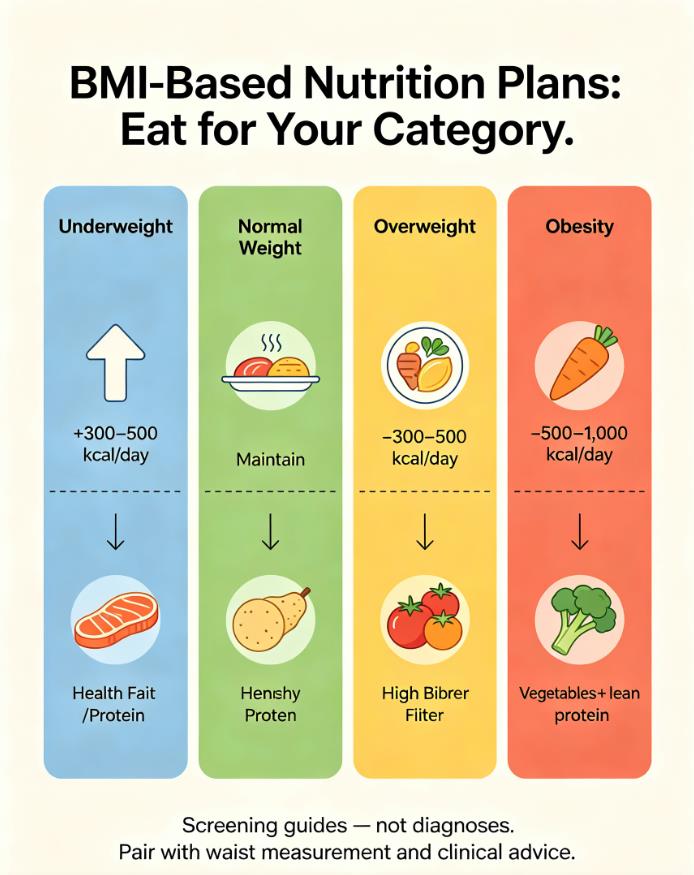
At a Glance: BMI-based nutrition plans use your BMI category — underweight, normal, overweight, or obesity — to adjust calories, protein, and food choices. Calorie changes range from +300 to −1,000 kcal/day. These are screening guides, not diagnoses. Pair with waist measurement and clinical advice. Below: what to eat, how much, and the 4 steps to build your own plan.
A BMI number gives you a screening category. Your nutrition plan turns that category into a daily action guide. BMI only uses height and weight to assign you a category. This category works as a starting point for meal planning. It tells you if you probably need more calories, fewer calories, or to keep your intake steady.
BMI and Nutrition: What the Number Tells Your Plate
According to the CDC, a BMI below 18.5 signals underweight, which generally means the body needs more calories and nutrients. A BMI of 18.5 to 24.9 is considered healthy weight — maintenance is the goal. A BMI of 25.0 to 29.9 falls into overweight, and 30.0 or higher is obesity. These categories each point to a different nutritional starting point.
What BMI cannot do is tell you how much of your weight is muscle versus fat. That distinction matters. A muscular athlete with a BMI of 27 needs a different nutrition plan than a sedentary person with the same BMI. Pair your BMI with a waist measurement or body fat estimate before locking in a nutrition plan. Use our free BMI calculator to get your starting number, then read on to build the plan that fits your category.
| BMI Category | Goal | Calorie Adjustment | Key Food Focus | Sample Daily Calorie Range |
|---|---|---|---|---|
| Underweight (<18.5) | Gain 0.5–1 lb/week | +300–500 kcal/day | Nutrient-dense fats/protein | Women: 2100–2400 Men: 2500–2800 |
| Normal (18.5–24.9) | Maintain weight | Maintenance | Plate method (½ veg, ¼ grain, ¼ protein) | Women: 1800–2400 Men: 2200–3000 |
| Overweight (25–29.9) | Lose 0.5–1 lb/week | −300–500 kcal/day | Fiber/protein for satiety | Women: 1500–1800 Men: 1900–2200 |
| Obesity (≥30.0) | Lose 1–2 lbs/week | −500–1000 kcal/day | Non-starchy veg/lean protein | Women: 1200–1500 Men: 1500–1800 |
*Calorie ranges are estimates for moderately active adults. Use our calorie calculator for a personalized target based on your age, height, and activity level.
Nutrition Plan for Underweight: BMI Below 18.5
Nutrition goal: Gain 0.5–1 lb per week through a calorie surplus of 300–500 calories per day, with an emphasis on nutrient-dense foods that support muscle growth and bone health.
If you are underweight, it is tempting to think you can live on pizza and ice cream. But gaining weight the healthy way is different — it is about building a foundation, not just adding fat. One 19-year-old art student we heard from had a BMI of 17.2 and struggled to eat enough. She told us she previously struggled to finish full meals without feeling bloated. So she added peanut butter to her oatmeal and a Greek yogurt snack instead. Three months later, she had gained 4 pounds and said she finally felt warm again.
What to eat
Healthy fats (aim for 30–35% of calories): Avocados, nuts, nut butters, olive oil, and fatty fish. Add 2 tablespoons of peanut butter to oatmeal or a smoothie for an easy 190-calorie boost.
Protein (1.2–1.5 g per kg of body weight): Chicken, turkey, eggs, Greek yogurt, tofu, and lentils. Spread protein across 4–5 meals to support muscle protein synthesis.
Complex carbohydrates: Quinoa, brown rice, sweet potatoes, and oats. These provide sustained energy and help meet higher calorie targets without blood sugar crashes.
Liquid calories: Smoothies made with whole milk or soy milk, protein powder, banana, and nut butter can pack 500–600 calories into one glass without leaving you uncomfortably full.
Eating pattern
Eat 5–6 smaller meals and snacks per day rather than forcing three large meals. A sample day: breakfast at 7 am (oatmeal with walnuts and fruit), mid-morning snack at 10 am (Greek yogurt with honey), lunch at 1 pm (quinoa bowl with chicken and avocado), afternoon snack at 4 pm (trail mix with dried fruit), dinner at 7 pm (salmon with sweet potato and vegetables), and an evening snack if needed (cottage cheese with berries).
Nutrition Plan for Normal Weight: BMI 18.5 to 24.9
Nutrition goal: Maintain current weight while supporting overall health. Prioritize macronutrient balance, micronutrient variety, and hydration.
If your BMI is in the normal range, your nutrition plan is about consistency — not complacency. The USDA Dietary Guidelines for Americans recommend a balanced eating pattern that includes all food groups within an appropriate calorie level. For a moderately active adult in this category, maintenance calories typically fall between 1,800 and 2,400 for women and 2,200 to 3,000 for men, depending on age and activity.
Use the plate method: fill half your plate with vegetables and fruits, a quarter with whole grains, and a quarter with lean protein. You don't need to weigh every vegetable; eyeballing works once you get used to the ratio. This ratio naturally balances macronutrients without counting grams.
Aim for at least 20 grams of protein per meal to stabilize blood sugar and stay full longer. Prioritize unsaturated fats — olive oil, avocado, nuts, and seeds. Three balanced meals with one or two small snacks works for most people in this category. The USDA notes that the typical American diet exceeds recommendations for added sugars, saturated fat, and sodium — so even in the normal weight range, keeping added sugars below 10% of daily calories makes a meaningful health difference.
Nutrition Plan for Overweight: BMI 25.0 to 29.9
Nutrition goal: Create a 300–500 calorie daily deficit for gradual weight loss of 0.5–1 lb per week. Prioritize satiating foods — fiber, protein, and water-rich vegetables — to control hunger during the deficit.
The Academy of Nutrition and Dietetics recommends a weight management approach that emphasizes dietary patterns rather than isolated nutrients. For overweight individuals, the evidence supports reducing energy-dense, nutrient-poor foods while increasing fiber and protein to manage appetite.
In practice, cutting just one sugary soda per day can lead to 10–12 pounds lost over a year without other changes. That single swap — replacing a 150-calorie soda with water — creates nearly a third of the weekly deficit you need. Small changes compound.
What to eat
Fiber (25–30 g per day minimum): Vegetables, fruits, legumes, and whole grains. Fiber slows digestion and keeps you full. A cup of lentils delivers 15 grams of fiber.
Protein at every meal (20–30 g per meal): Protein preserves muscle during weight loss and has the highest satiety effect of all macronutrients.
Skip the white bread and soda: They are empty calories that leave you hungry an hour later. Swap in whole grains and water.
Eating pattern
Three meals plus one snack, with an emphasis on portion control. Use a smaller plate — research shows plate size influences perceived portion satisfaction. Measure servings for the first two weeks: 4–6 ounces of protein, ½ cup of grains, and at least 2 cups of vegetables per meal. For specific strategies when your BMI is between 25 and 30, explore our weight management strategies for BMI 25–30.
Nutrition Plan for Obesity: BMI 30.0 and Above
Nutrition goal: Achieve gradual, sustainable weight loss of 1–2 lbs per week (500–1,000 calorie daily deficit) through nutrient-dense, whole-food choices. Focus on long-term habit change, not rapid results.
In our work with readers, we keep seeing the same pattern: crash diets backfire. Hard. The CDC is right — losing 1–2 pounds a week is the sweet spot where you don't feel miserable and your body doesn't fight back. For a person with a BMI of 30 or above, a 500–1,000 calorie daily deficit typically produces this rate of loss. But the quality of those calories matters as much as the quantity.
Note: The CDC further divides obesity into three classes: Class 1 (30–34.9), Class 2 (35–39.9), and Class 3 (≥40). Individuals with Class 3 obesity should consult a healthcare provider before starting any weight loss program.
One reader with a BMI of 32 swapped his daily takeout lunch for homemade baked salmon with roasted broccoli and sweet potato. He didn't count a single calorie. Six months later, he was down 18 pounds. His labs improved. He still misses his favorite burger joint, but now he makes a healthier version at home twice a month instead of ordering takeout twice a week.
If you have type 2 diabetes or hypertension, consult your doctor before starting a calorie deficit to avoid hypoglycemia or blood pressure spikes.
What to eat
Non-starchy vegetables at every meal: Spinach, broccoli, bell peppers, cauliflower, and leafy greens are low in calories but high in volume and micronutrients. Aim for 4–5 servings per day.
Lean protein (1.2–1.6 g per kg of body weight): Preserving muscle during weight loss is critical for keeping metabolic rate stable.
Whole-food carbohydrates in moderation: Oats, quinoa, barley, and beans provide slow-digesting energy. Limit refined flour products and sugary snacks.
Healthy fats in small portions: A quarter of an avocado, a tablespoon of olive oil, or a small handful of nuts. Don't force yourself to eat plain steamed broccoli if you hate it — add a drizzle of olive oil and a pinch of salt. Consistency matters more than a few extra calories from healthy fat.
Eating pattern
Three structured meals per day with no more than one planned snack. The most important shift is away from ultra-processed foods. A 2019 randomized controlled trial found that ultra-processed foods drive overeating — even when calories and macros were matched, people ate 500 more calories a day and gained weight. Cooking at home, even with simple ingredients, is one of the highest-impact changes you can make. To understand how calorie control fits into the bigger picture, see our guide on calorie control based on BMI.
Core Principles Across All BMI Categories
These habits apply to everyone, no matter your BMI. They build lasting health, not just short-term weight results.
Watch added sugars: Keep them below 10% of your total daily calories. On a 2,000-calorie diet, that equals around 50 grams or 12 teaspoons. The average American adult consumes roughly 17 teaspoons per day — nearly 50% above the recommendation.
Keep sodium under 2,300 mg per day. Most sodium in the American diet comes from processed and restaurant foods, not the salt shaker at home.
Saturated fat: Limit to less than 10% of daily calories. Swap butter for olive oil, choose lean cuts of meat, and incorporate plant-based protein sources like beans and lentils.
Hydration: Water supports every metabolic process. Dehydration can mimic hunger, leading to unnecessary snacking. The Academy of Nutrition and Dietetics recommends approximately 11.5 cups (2.7 L) of total fluid daily for women and 15.5 cups (3.7 L) for men from all beverages and foods combined.
Sleep: Aim for 7–9 hours nightly. Poor sleep disrupts hunger hormones (ghrelin and leptin), increasing cravings for high-sugar foods and making weight management harder. It sounds simple, but fixing your sleep schedule is often the missing piece for people stuck in a weight loss plateau.
Physical activity: The WHO recommends at least 150 minutes of moderate-intensity aerobic activity plus 2 strength sessions per week.
Special Considerations for Specific Populations
Pregnant and lactating women: Do not attempt weight loss during pregnancy. Calorie needs increase by roughly 340 calories per day in the second trimester and 450 calories per day in the third trimester for women with a healthy pre-pregnancy weight. Prioritize protein, iron, and folate intake. Postpartum, a gradual return to pre-pregnancy weight over 6–12 months is the safest target. Avoid crash dieting while breastfeeding.
Adults 65+: A slightly higher BMI (23–28) may be protective against frailty and malnutrition. Aim for 1.2–1.6 g of protein per kg of body weight daily to prevent sarcopenia.
Asian adults: Per WHO guidelines, the overweight threshold begins at BMI 23.0 — lower than the standard 25.0. This WHO adjustment accounts for higher metabolic disease risk at lower BMI values for many Asian populations. Apply overweight nutrition strategies at a lower BMI if you have Asian ancestry.
Individuals with diabetes or hypertension: Consult your healthcare provider before making significant dietary changes, as medication adjustments may be necessary.
How to Build Your BMI-Based Nutrition Plan in 4 Steps
Know your BMI category. Use an accurate BMI calculator. Write down your number and category.
Estimate your maintenance calories. Your maintenance is the number of calories you need to stay at your current weight. A calorie calculator can help you find your personal starting point.
Set your macronutrient targets. Protein at 1.2–1.6 g per kg of body weight (higher end for those in a deficit), fat at 20–35% of calories, and the remainder from carbohydrates.
Build your meal framework. Pick 2–3 breakfast, lunch, and dinner templates that fit your calorie and macro targets. Rotate them. Variety within structure keeps you consistent without getting bored.
Frequently Asked Questions About BMI-Based Nutrition Plans
Is BMI enough to build a nutrition plan?
Think of BMI as a compass, not a GPS. It points you in the right direction, but it doesn't know about the traffic jams — like whether you're carrying extra muscle or just stress weight. If you are athletic, pregnant, or over 65, adjust your plan accordingly. Use BMI to pick your starting strategy, then adjust based on waist circumference, energy levels, and how your body responds over 2–4 weeks.
Is BMI accurate for muscular athletes?
No. Athletes with high muscle mass may have a BMI in the overweight range (25–29.9) but low body fat percentage. Use waist circumference (less than 40 inches for men, less than 35 inches for women) and body fat testing instead. A football player with a BMI of 28 and 10% body fat is in excellent health, not overweight. For athletes, a body fat calculator and waist measurement are far more meaningful than BMI alone.
How many calories should I eat if my BMI is 25?
Start with a 300–500 calorie daily deficit below your maintenance. For most moderately active adults, that means roughly 1,600–2,000 calories for women and 2,000–2,500 for men — but individual needs vary. A BMI of 25 is right at the threshold of overweight. If your goal is weight loss, a moderate deficit of 300–500 calories per day will produce roughly 0.5–1 pound of loss per week. This is still a rough estimate; age and daily activity will shift your actual maintenance calories.
What is the best diet for someone with a BMI over 30?
There is no single best diet. The most effective plan is the one you can follow consistently. Prioritize whole foods, lean protein, vegetables, and a sustainable 500–1,000 calorie daily deficit. Research comparing different dietary patterns shows that adherence — not the specific diet type — predicts long-term success.
Do I need to count calories if I follow a BMI-based nutrition plan?
Not necessarily forever, but tracking for the first 1–2 weeks builds awareness that pays off later. Many people underestimate their calorie intake by 20–40%. A short period of tracking — using an app or simple food journal — helps you understand portion sizes and calorie density. After that, many people can transition to a more intuitive approach using the plate method and hunger cues.
How fast should I expect results from a BMI-based nutrition plan?
Healthy weight change is 0.5–2 lbs per week depending on your starting point and calorie difference. Weight gain for underweight individuals: 0.5–1 lb per week. Weight loss for overweight and obesity: 1–2 lbs per week. Results that come more quickly are often unsustainable or involve water weight rather than fat or muscle change. Track weekly averages, not daily fluctuations.
Sources
CDC: Steps for Losing Weight — Gradual Pace of 1–2 lbs per Week
Academy of Nutrition and Dietetics: Adult Weight Management Evidence-Based Practice Guideline (2023)
Hall KD, et al. Ultra-processed diets cause excess calorie intake and weight gain: an inpatient randomized controlled trial of ad libitum food intake. Cell Metab. 2019;30(1):67–77.e3.
This article is for educational and informational purposes only. It does not provide medical advice, diagnosis, or treatment. Always consult a qualified healthcare provider regarding your individual health and nutrition needs. Individual results will vary. The BMI Calculator Blog Team maintains editorial independence and does not sell health products.