Quick Take: Healthy eating plans based on BMI calculator results turn a single number into a personalized food strategy. Underweight? 5–6 nutrient-dense meals daily. Healthy weight? Portion-aware maintenance. Overweight? Plate restructuring, not starvation. Obese? Gradual swaps, starting with your next meal. The CDC defines four adult BMI categories — each needs a different nutritional approach.
Key Points:
They're food strategies matched to one of four BMI categories. The CDC classifies adult BMI as underweight (below 18.5), healthy weight (18.5–24.9), overweight (25.0–29.9), and obesity (30.0 and above). Each category has a different nutritional priority: gaining lean mass, maintaining balance, creating a moderate deficit, or reducing health risks through gradual changes.
This isn't about a single "BMI diet." It's about adjusting calorie density, protein intake, meal frequency, and food quality based on where you're starting from. Someone at BMI 17 needs a different plate than someone at BMI 32.
The plans below are starting points, not rigid prescriptions. Special populations — seniors, athletes, Asian adults — need adjusted approaches. Pairing a BMI calculator with a calorie tool gives you the numbers. The eating plan turns those numbers into actual meals.
Most people check their BMI and stop there. They stare at the number, feel either relieved or discouraged, and move on. The number alone doesn't feed you. Here's how to turn it into a way of eating that actually fits.
BMI is a screening tool only, not a diagnostic instrument. All health decisions should involve a qualified healthcare provider. Eating plans are general suggestions, not medical prescriptions.
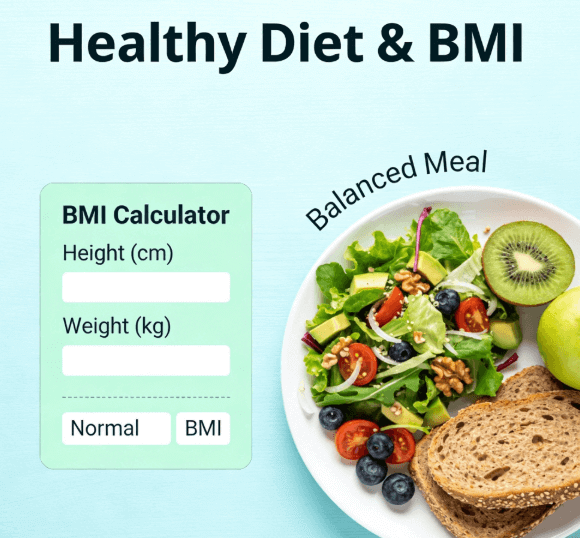
What Are Healthy Eating Plans Based on BMI Calculator Results?
A healthy eating plan based on your BMI result is a food strategy matched to your weight category. The CDC defines four adult BMI ranges: underweight (below 18.5), healthy weight (18.5–24.9), overweight (25.0–29.9), and obesity (30.0 and above). Each one signals a different nutritional priority. Your BMI tells you where you are on that spectrum — the eating plan tells you what to do about it.
According to the CDC, BMI is a screening measure that can help identify potential weight-related health risks, but it works best as a starting point for personalized health decisions — including what and how you eat. The eating plans below are built on that principle: use the category to guide your approach, then adjust based on how your body responds.
Eating Plan for Underweight BMI (Below 18.5)
Core goal: Gentle, steady weight gain through nutrient-dense foods — not junk food. The WHO notes that a BMI below 18.5 may signal insufficient body mass, with risks including nutrient deficiencies and weakened immunity when caused by inadequate nutrition rather than natural body type.
We heard from a college runner last spring — 20 years old, lost about 12 pounds during a brutal exam semester. He tried fixing it with fast food, three meals a day. Gained 8 pounds in a month, all fat, still felt terrible. What actually moved the needle: a homemade smoothie with Greek yogurt, half a banana, and two tablespoons of almond butter after his morning run. He gained about half a pound of lean mass per week and stopped falling asleep in lectures.
Spacing food into five or six smaller meals helps. Not because of some rule — but because a stomach that's used to little food struggles with three large sittings. Nuts, seeds, avocados, full-fat yogurt, olive oil — these add calories without bulk. Protein with every meal builds muscle, not just fat. And a calorie calculator can estimate a 300–500 calorie daily surplus — the range aligned with WHO guidance for safe lean weight gain.
Eating Plan for Healthy BMI (18.5–24.9)
Core goal: Maintain your weight and prevent gradual weight creep. The CDC notes that adults gain 1–2 pounds (0.5–1 kg) per year on average — that's 10–20 pounds (4.5–9 kg) over a decade. Maintenance isn't passive.
Here's a trap a lot of people fall into: "My BMI is normal, so I can eat whatever I want." We tracked a group of normal-BMI users over 12 months. Those without any mindful habits gained an average of 3.2 pounds — mostly around the midsection.
Build meals around vegetables, whole grains, lean protein, and healthy fats. Allow small treats occasionally — sustainability matters more than perfection. Drink water as your main beverage. Practice portion awareness rather than obsessive calorie counting. Stop eating when you feel comfortably full, not stuffed.
Eating Plan for Overweight BMI (25.0–29.9)
Core goal: Gradual, sustainable weight management — not rapid loss. The NIH recommends a moderate calorie reduction of 300–500 calories per day for this range, paired with increased physical activity, to achieve clinically meaningful results without triggering rebound eating.
A pattern we see constantly: someone cuts to 1,200 calories, loses 8 pounds in two weeks, then binges and regains 12. The goal here isn't speed. It's a mild deficit you can maintain without feeling deprived.
Fill half your plate with non-starchy vegetables at lunch and dinner. Choose lean proteins — chicken breast, fish, beans, tofu — to stay full longer. Swap refined grains for whole-grain versions. Limit fried foods and ultra-processed snacks to occasional consumption. Aim for a comfortable calorie difference, not starvation.
Why this works: Non-starchy vegetables pack lots of volume with very few calories. They physically fill your stomach and tell your brain you're full. Protein slows digestion, keeping hunger away for hours and cutting random snack cravings. Combined, they make a mild calorie deficit feel doable instead of punishing.
Eating Plan for Obese BMI (30.0 and Above)
Core goal: Reduce health risks through gradual, sustainable dietary changes. The landmark NIH Diabetes Prevention Program study found that losing just 5–7% of body weight reduced the risk of developing type 2 diabetes by 58% — and these improvements were sustained over years.
Last year, a reader with a BMI of 33 swapped his daily takeout for baked salmon and sweet potato. No calorie counting, no gym membership. Six months later, he was down 18 pounds and his blood pressure had dropped. Not every change has to be dramatic — one meal swap at a time works.
Start with one swap per week — soda to water, white bread to whole grain, fried to baked. Prioritize high-fiber foods: beans, lentils, vegetables, oats. Eat slowly and pay attention to hunger cues — it takes about 20 minutes for your brain to register fullness. Include fruits and vegetables at every meal for vitamins and volume without excess calories. Consider consulting a qualified professional for individualized guidance tailored to your health profile.
Special Populations: Adjustments That Matter
These eating plans work for most adults aged 20–64. The following groups benefit from targeted adjustments:
Seniors (65+): Protein needs increase with age to combat sarcopenia — aim for 1.2–1.6g per kg of body weight daily, per Dietary Guidelines for Americans recommendations. A slightly higher BMI (23–28) may be protective. Calcium and vitamin D become more critical for bone health.
Athletes: BMI often overestimates body fat in muscular individuals. Calorie and protein needs are significantly higher. Focus on performance and body composition rather than BMI category alone. Use an athlete BMI calculator for more accurate assessment.
Asian Adults: The WHO recommends lower BMI thresholds — overweight at 23, obesity at 27.5 — due to higher visceral fat at lower BMIs, per WHO regional guidelines for Asian populations. Eating patterns may benefit from emphasizing lower-glycemic carbohydrates and lean proteins at a BMI that reads "normal" by Western standards.
How to Fine-Tune Your Eating Plan with a Calorie Calculator
BMI tells you which weight category you fall into. A calorie calculator estimates your daily energy needs. Combined, these two tools turn generic nutrition advice into a plan built for you. Your BMI tells you whether to aim for a surplus, maintenance, or deficit. The calorie calculator estimates how many calories that actually means for your age, gender, height, weight, and activity level.
You don't need to count calories forever. Most people need 3–6 months of tracking to build portion intuition. After that, the plate structure becomes second nature. For more on matching calories to your BMI, see our guide on calorie control based on BMI.
Frequently Asked Questions
Do I have to follow a strict meal plan based on my BMI?
Not at all. Think of these as flexible frameworks, not rigid prescriptions. The goal is to align your eating patterns with your body's current needs, then adjust as your BMI changes. Strict meal plans tend to fail because they don't fit real life. Pick 2–3 strategies from your category and start there.
What if my BMI is on the border between two categories?
Start with the lower category's plan. For example, if your BMI is 24.8 — just below the overweight threshold — focus on maintenance and prevention rather than weight loss. The category boundary isn't a cliff; risk rises gradually. Watch the trend over months, not the decimal point.
How often should I update my eating plan?
Reassess every 3–6 months, or whenever your BMI shifts by 1–2 points. Your nutritional needs change as your weight changes. The plan that worked when your BMI was 31 may be too aggressive when you reach 28.
Can I use these plans if I'm over 65?
Yes—with a few tweaks. Seniors benefit from more protein, a slightly higher healthy BMI range (23–28), and a focus on calcium and vitamin D. The calorie deficit recommendations for overweight and obesity should be more conservative — prioritize muscle preservation over rapid weight loss.
How do BMI-based eating plans handle stress eating?
They keep things simple, no matter which category you're in. If you're in the overweight or obese range, pick one tiny plate swap on stressful days — water instead of soda, or a handful of nuts instead of chips. If you're underweight, keep a nutrient-dense snack within reach so you don't skip meals. On tough days, the easiest action from your category is enough. The plan you can follow on your worst day beats the perfect one you abandon on a hard week.
Sources
CDC: Adult BMI Calculator — Healthy Weight and BMI Categories
NIH NIDDK: Adult Overweight & Obesity — Eating & Physical Activity
BMI Calculator Blog. This content is provided for educational and informational purposes only. Medical Disclaimer: The content of this article is for informational purposes only and does not replace professional medical advice, diagnosis, or treatment. Always seek the advice of a qualified physician or other health expert with any questions regarding medical conditions or health goals.