At a Glance: BMI proper use means treating it as a screening tool, not a final diagnosis. BMI cannot distinguish muscle from fat, does not account for age or ethnicity, and misses fat distribution. This guide explains the core principles: matching assessments to specific populations, pairing BMI with body fat percentage and waist circumference, and tracking trends over single readings.
Key Takeaways for Proper BMI Use
BMI is strictly a screening tool; it never diagnoses obesity or health status on its own.
Standard BMI fails athletes (muscle vs. fat) and seniors (muscle loss); use adjusted calculators.
Asian adults face higher risks at lower BMIs—switch to WHO Asian thresholds (23/27.5).
Always pair BMI with waist circumference to catch hidden visceral fat risks.
Track your BMI trend over 6–12 months rather than obsessing over a single reading.
What BMI Actually Measures (And What It Does Not)
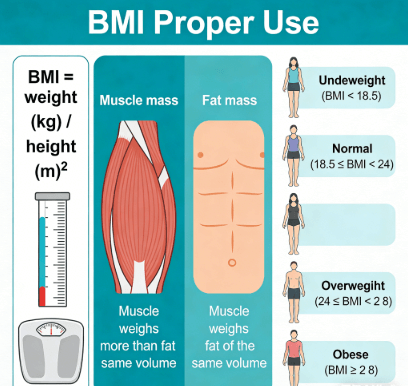
Before diving into BMI proper use, it is critical to understand what this metric does and does not capture. BMI is calculated by dividing weight (kg) by height (m) squared — or using the imperial formula: [weight (lb) ÷ height (in)²] × 703. The Centers for Disease Control and Prevention (CDC) provides the standard adult BMI categories: underweight (<18.5), normal weight (18.5–24.9), overweight (25.0–29.9), and obese (30.0+).
What BMI does not measure is equally important. It cannot distinguish muscle from fat, ignores bone density, and fails to account for fat distribution — such as visceral versus subcutaneous fat — or individual factors like age, gender, and ethnicity. Consider a professional weightlifter: they might register a BMI in the “obese” range with very low body fat and excellent metabolic health. Or a 45-year-old Asian office worker with a BMI of 24: “normal” by Western standards, but flagged as a risk under WHO guidelines for Asian populations where overweight begins at 23.
For muscular individuals, an athlete BMI calculator is essential for proper use. For Asian adults, an Asian BMI calculator provides adjusted thresholds. Start with a reliable BMI calculator, then pair it with the metrics below for a complete picture.
Key Limitations Defining Proper BMI Use
Recognizing BMI's limitations is not about dismissing it — it is about using it correctly to avoid misclassification.
1. No Distinction Between Muscle and Fat
Muscle is denser than fat, so one pound of muscle occupies far less volume than the same weight of fat. Highly muscular individuals will have a higher BMI despite peak physical health. For this group, body fat percentage and muscle mass assessments provide far more meaningful data than BMI alone.
2. Age and Life Stage Differences
The standard 18.5–24.9 range applies only to non-athletic adults. Children and teens require BMI percentiles based on age and gender. Seniors need a wider healthy range (roughly 23–28) to account for muscle loss (sarcopenia) and height reduction. Pregnancy BMI should only be based on pre-pregnancy measurements. Proper use means matching the assessment to your life stage.
3. Ethnic and Gender Variations
Risk thresholds vary. Research shows Asian populations develop diabetes and heart disease at significantly lower BMI values than Western populations. WHO recommends lower cutoffs (overweight at 23, obesity at 25) due to higher metabolic risk at lower BMIs. Gender matters too: women naturally carry more essential fat than men at the same BMI.
4. Ignorance of Fat Distribution
Not all fat is equal. Visceral fat (around organs) drives type 2 diabetes and heart disease risk, while subcutaneous fat is less harmful. BMI cannot see where fat is stored. Two people with identical BMIs can have vastly different risks based on waist circumference. Proper use always includes waist measurement. A body fat calculator adds a third data point to break the tie between weight and waist.
BMI Classification Table (Standard vs. Adjusted)
| Population Group | Underweight | Normal/Healthy | Overweight | Obese |
|---|---|---|---|---|
| General Adult (CDC/WHO) | <18.5 | 18.5 – 24.9 | 25.0 – 29.9 | ≥30.0 |
| Asian Adults (WHO Adjusted) | <18.5 | 18.5 – 22.9 | 23.0 – 27.4 | ≥27.5 |
| Seniors (65+ Years) | <21.0 | 23.0 – 28.0 | 28.0 – 30.0 | >30.0* |
| Athletes (NSCA) | N/A | 20.0 – 25.0** | 25.0 – 30.0** | N/A |
*For seniors, a slightly higher BMI (up to 30) is often associated with lower mortality risk. **Athletes should prioritize body fat % over BMI categories.
Core Principles of BMI Proper Use
Mastering BMI proper use relies on these evidence-based principles for everyone:
First and most important: Use BMI as a screening tool, not a diagnosis. BMI flags potential risk; it does not diagnose obesity or malnutrition. Only a healthcare provider can make formal diagnoses using BMI alongside blood work, blood pressure, and medical history.
A common mistake is using generic charts for everyone. Generic calculators work for sedentary adults, but children need percentiles, athletes need muscle-adjusted tools, seniors need age-adjusted ranges, and Asian individuals need ethnicity-specific thresholds.
One practical step is to pair BMI with other metrics. Combine BMI with body fat percentage (to distinguish muscle from fat) and waist circumference (to assess visceral fat risk). Track vital signs like blood pressure and glucose for metabolic context.
Focus on trends, not single readings. A single BMI is a snapshot. A gradual increase over 6–12 months signals a shift needing attention. Stability, even at a higher normal BMI, is often a positive sign.
Avoid BMI-related anxiety. BMI is a number, not a measure of worth. Avoid extreme diets based solely on BMI. Consult a provider if your BMI flags concern.
BMI Proper Use for Specific Populations
Children and Teens (2–20 Years)
For kids, BMI percentiles are the only valid measure. Proper use means comparing a child’s BMI to peers of the same age and gender. Track percentiles over time to spot trends (e.g., a jump from the 70th to 90th percentile). Never label a child based on a single adult BMI reading. Always use a pediatric BMI calculator. This mix-up is surprisingly common among parents doing quick home weight checks.
Athletes and Highly Muscular Individuals
Standard BMI misclassifies most athletes as overweight or obese because muscle is dense. Proper use requires an athlete-specific calculator and prioritizing body fat percentage. A strength athlete with a BMI of 28 and 8% body fat is metabolically healthy; BMI alone tells the wrong story.
Seniors (65+ Years)
After 65, muscle loss and height reduction narrow the standard BMI’s usefulness. A 2022 meta-analysis found older adults with a BMI between 23 and 30 had the lowest mortality risk. Proper use means using age-adjusted ranges (e.g., via a senior BMI calculator) and focusing on mobility and muscle strength, not just the scale.
Ethnic Minority Populations
Asian, Black, and Hispanic populations have unique risk profiles. A 2004 WHO expert consultation confirmed lower BMI cutoffs for Asian adults (23/25). Consider a 50-year-old Asian woman with a BMI of 24 and a waist circumference of 34 inches—this scenario perfectly illustrates why WHO adjusted the thresholds for Asian populations. Proper use means applying these ethnicity-specific guidelines to avoid missing early risks that standard charts ignore.
Common Misuses of BMI to Avoid
Using adult ranges for children. This leads to mislabeling and anxiety. Always use percentile charts for anyone under 20.
Relying on BMI alone. BMI is a starting point, not the finish line. Always consider waist size, body fat, and metabolic markers.
Misclassifying athletes. Muscle is not fat. A high BMI in an athlete is rarely a health risk without elevated body fat or waist circumference.
Fixating on a single reading. Health is about trends. A “normal” BMI with a sedentary lifestyle is riskier than a slightly elevated BMI in an active person.
Ignoring pre-pregnancy BMI. Pre-pregnancy BMI predicts pregnancy complications; current pregnancy BMI is not a valid health measure.
Final Thoughts: A Holistic Approach
BMI is not perfect, but it is useful when used correctly. Proper use means treating it as a screening tool, pairing it with other metrics, tailoring it to your population, and tracking trends over time. It is a conversation starter with your healthcare provider, not a final verdict on your health. Start with a tailored calculator, pair BMI with waist and body fat, and talk to your provider before making changes.
Frequently Asked Questions About BMI Proper Use
Is BMI an accurate measure of health for everyone?
No. It works reasonably well for sedentary adults but misclassifies athletes, older adults with muscle loss, and Asian adults at lower BMI thresholds. Always pair BMI with waist circumference and body fat percentage.
Why does BMI still matter if it has so many limitations?
Because it is quick, free, and correlates with population-level health risks. It is an effective first-pass screening tool to flag potential issues for further investigation.
How often should I check my BMI for proper use?
Once or twice a year is sufficient for most adults. Focus on tracking trends over time rather than obsessing over a single reading.
Can I use the same BMI calculator for my child and myself?
No. Children require percentile-based calculators (like our pediatric BMI tool), not fixed adult ranges.
Can BMI be trusted for long-term health tracking?
Yes, when paired with waist circumference and body fat percentage. A stable or improving trend over years is a strong positive signal.
Why do Asian populations have lower healthy BMI thresholds?
Research shows Asian populations develop diabetes and heart disease at significantly lower BMI values than Western populations. WHO recommends lower cutoffs (23/25) to enable earlier intervention.
Should seniors use standard adult BMI ranges?
No. Standard ranges are too narrow. Seniors benefit from a higher range (23–30) to protect against frailty and malnutrition, focusing more on muscle preservation than weight loss.
References & Sources
BMI Calculator Blog. This content is for educational purposes only. Medical Disclaimer: This does not replace professional medical advice, diagnosis, or treatment. Always consult a qualified healthcare provider regarding your health goals.