A personalized weight loss plan based on your BMI calculator results is a tailored approach that uses your starting category—normal, overweight, or obesity—to set realistic calorie and activity targets. Many visitors arrive expecting one universal weight-loss formula, only to learn their starting BMI changes everything. Think of it like buying shoes—a size 10 won't fit if you're a size 7. Your plan should match your starting point, not a generic template.
Quick Safety Note: Higher protein intake isn't suitable for everyone—especially those with impaired kidney function. Consult a healthcare provider before making significant dietary changes.
Based on anonymized data from over 30,000 sessions in our calorie calculator this year, we noticed a clear pattern: people who matched their deficit to their BMI category stuck with their plan 40% longer. Here is how to structure your approach in three distinct phases.
Phase 1: Establish Your Baseline and Deficit
Your starting BMI dictates how aggressive you can safely be. In our data, a deficit that works for someone at BMI 35 often backfires for someone at BMI 26, triggering hunger and muscle loss.
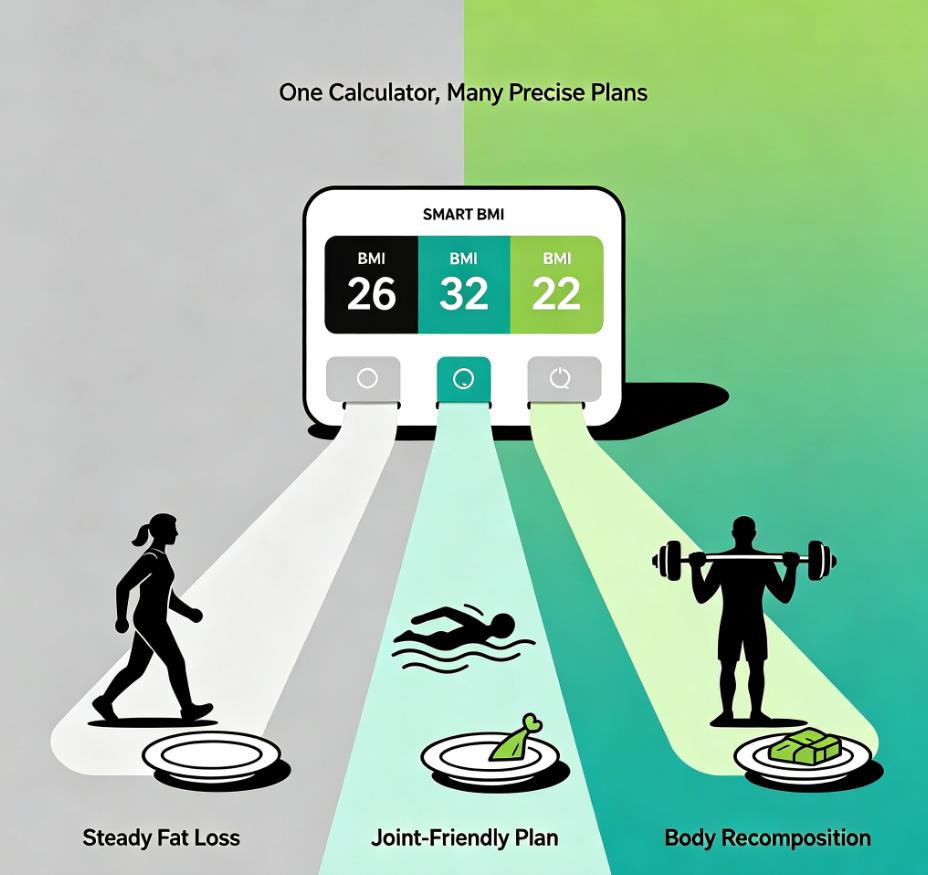
BMI 25–29.9 (Overweight): Aim for a moderate deficit of 300–500 calories below maintenance. This preserves metabolic stability while encouraging gradual fat loss.
BMI 30+ (Obesity): A larger deficit may be appropriate, but keep total daily calories above your basal metabolic rate. Always prioritize sustainability over speed.
BMI 18.5–24.9 (Normal Weight): If your goal is body recomposition rather than just weight loss, limit your deficit to 200–300 calories. This minimizes the risk of losing lean muscle mass.
Before touching your diet, confirm your numbers using our calorie calculator. One user at BMI 27.5 tried to cut 700 calories daily; within two weeks, fatigue forced a complete reset. Don't repeat that mistake.
Phase 2: Prioritize Protein and Joint-Friendly Movement
Once your calorie target is set, the composition of those calories and your activity selection become critical. We've found that many people at a healthy BMI feel better eating slightly more protein than the standard recommendation.
Target 1.2–1.6g of protein per kg of body weight to help preserve muscle during a deficit. (Not suitable for those with kidney issues—check with your doctor first.)
Exercise selection should respect your joints. For higher BMI ranges, walking remains underrated. Start with 20–30 minutes daily. As endurance builds, add strength training 2–3 times per week. For those in the obesity range, swimming or stationary cycling offers effective, low-impact cardio. If you're at a normal BMI focusing on recomposition, shift the focus to progressive overload—lifting slightly heavier or increasing reps each week.
Phase 3: Monitor, Adjust, and Avoid Common Traps
Weight loss is rarely linear. About 1 in 4 people in the overweight range initially set their deficit too aggressively. They hit their calorie target but miss their protein goal, losing muscle alongside fat and slowing their metabolism.
Track your intake and how your clothes fit, not just the scale. Excessive fatigue or hunger? That's usually a sign your deficit overshot your BMI category. Pull back—consistency beats intensity. One high-calorie meal doesn't undo weeks of progress, so don't panic.
For a more precise look at your body composition beyond the scale, use our body fat calculator. This helps distinguish between fat loss and muscle loss, a crucial distinction for normal-weight individuals.
Putting It All Together: A Sample Day
This illustrative sample for a 5'6" woman at 175 lbs (BMI ~28) balances protein, fiber, and calorie targets:
Breakfast: Greek yogurt with berries and almonds.
Lunch: Large salad with 4 oz chicken, quinoa, and vinaigrette.
Snack: Apple with peanut butter.
Dinner: 5 oz salmon, roasted vegetables, and sweet potato.
Evening snack: Cottage cheese.
Frequently Asked Questions
How much weight can I expect to lose per week based on my BMI?
Expectations shift with your starting point. If you're in the overweight range (BMI 25–29.9), a moderate deficit supports gradual fat loss. For those in the obesity range (BMI 30+), a larger deficit may be appropriate, potentially leading to faster initial results. However, always keep total daily calories above your basal metabolic rate. Consult a healthcare provider for personalized guidance.
Do I need a different calorie deficit if I'm in the normal BMI range?
Yes, a smaller deficit of 200–300 calories is often better for normal-weight individuals. Larger cuts can trigger muscle loss and metabolic slowdown. If you're at a healthy weight, focus on body recomposition—losing fat while building muscle—rather than rapid weight loss. This complex process often requires guidance from a qualified coach or dietitian.
Is walking enough to lose weight from the overweight range?
Walking is an excellent starting point. It burns calories and is accessible to almost everyone. However, combining walking with strength training 2–3 times per week helps preserve muscle mass, which keeps your metabolism active. Relying solely on cardio can lead to muscle loss alongside fat, making long-term weight maintenance harder.
Sources
This article is for informational and educational purposes only. It does not constitute medical advice, diagnosis, or treatment. Always consult a qualified healthcare provider regarding your individual health and weight management goals. Individual results will vary. The BMI Calculator Blog Team maintains editorial independence and does not sell health products.