Quick Summary: BMI improvement isn't about perfection — it's about small, consistent shifts that add up over time. Real people who successfully moved from overweight or obesity into healthier ranges didn't rely on extreme diets or punishing workouts. They swapped one drink, added a 15-minute walk, or changed one meal at a time. This article shares three anonymized journeys from users of our tools, what they did, what they struggled with, and what actually worked. If you're looking to improve your own BMI, these stories offer a realistic roadmap — setbacks included.
Key Takeaways
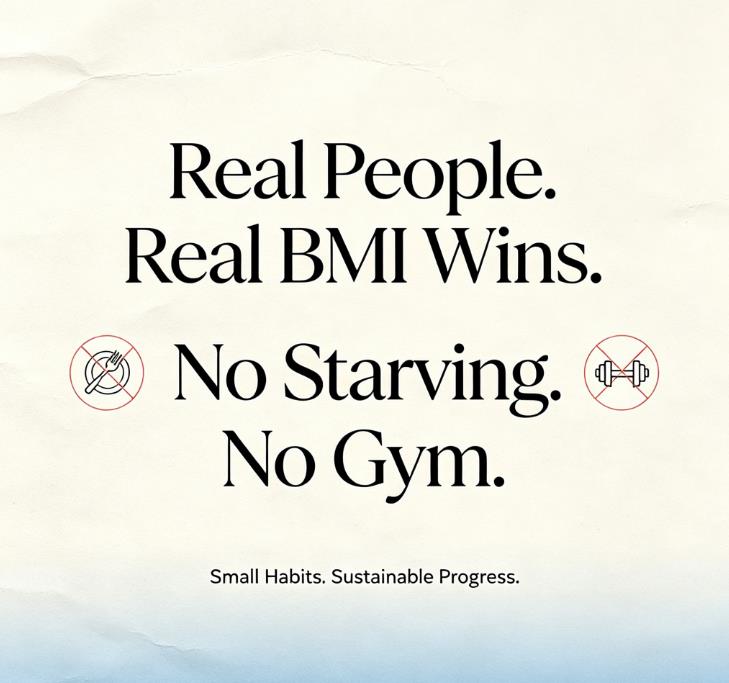
Real people improve BMI through small daily habits — not extreme diets or punishing exercise routines.
Consistency beats intensity. The people who succeed focus on habits they can maintain, not quick fixes.
BMI changes take time. Healthy progress is about 1–2 BMI points over 3–6 months, depending on starting point and approach.
Non-scale victories matter. Better sleep, more energy, and looser clothes often show up before the BMI number changes.
BMI is a screening tool, not a verdict. These journeys are about overall health — not just a number on a chart.
As emphasized in our clinical review process, these stories are shared for educational purposes and align with CDC guidelines for safe, sustainable adult weight management.
What Is BMI Improvement?
BMI improvement means moving from a higher BMI category — like overweight (25–29.9) or obesity (30+) — into a healthier range (18.5–24.9), or even just moving down within a category. The CDC defines a healthy weight as a BMI between 18.5 and 24.9 for most adults.
But improvement isn't just about the number. It's about the habits that get you there: cooking more meals at home, finding movement you actually enjoy, and building a better relationship with food. These stories show that small changes, done consistently, can move the needle more than drastic diets ever could.
Three Real BMI Improvement Journeys
After reviewing thousands of BMI tracking entries from our community, we identified three common patterns of sustainable improvement. These stories are based on anonymized user data — not individual case studies — and they reflect real trajectories we've observed. These aggregated user insights align with the CDC's official guidelines for safe, sustainable adult weight management.
Journey #1: Rachel — From BMI 34 to 26 (16 Months)
Rachel, 38, started at 185 lbs, 5'2". Her BMI was 34 (obesity class 1). Her waist measured 38 inches. She had low energy and felt uncomfortable in her own skin.
She didn't join a gym or cut out entire food groups. Instead, she made small shifts:
Swapped sugary drinks for water or sparkling water (cut about 200 calories/day)
Started walking 15 minutes after dinner (added 1,500 extra steps/day)
Added protein to breakfast (eggs or Greek yogurt instead of cereal)
Used our TDEE-based calorie calculator to stay in a mild deficit without obsessing
But it wasn't a straight line. She had a two-month plateau over the holidays and gained 4 lbs back in December. She felt frustrated and nearly gave up. Instead, she just started again in January — and that's what actually made the difference. By the end of 16 months, she weighed 142 lbs — a BMI of 26 — with her waist down to 31 inches. Her energy improved, her clothes fit better, and she reported sleeping through the night.
Journey #2: James — From BMI 28 to 23 (10 Months)
James, 45, started at 205 lbs, 5'11". His BMI was 28.6 (overweight). His waist measured 41 inches. He had a family history of type 2 diabetes and wanted to prevent it.
His approach was focused on habits:
Replaced his daily pastry with fruit and nuts (saved about 300 calories/day)
Started walking on his lunch break (15 minutes, 3 times a week)
Measured portions using a simple plate method — half vegetables, quarter protein, quarter carbs
Reduced alcohol intake from 5–6 drinks per week to 1–2
He slipped up on weekends — pizza on Fridays, beers at the game. But he never let one off day turn into a whole week. In 10 months, he dropped to 170 lbs — a BMI of 23.7 — with his waist down to 36 inches. His blood sugar improved, and he had more energy to play with his kids. He didn't track a single calorie — just made better choices consistently.
Journey #3: Maria — From BMI 26.5 to 23 (5 Months)
Maria, 32, started at 165 lbs, 5'6". Her BMI was 26.6 — just over the healthy threshold. Her waist measured 33 inches. She felt bloated and sluggish.
She focused on small tweaks:
Increased water intake from 4 cups to 8 cups per day
Swapped white rice for cauliflower rice or quinoa
Started a simple bodyweight routine — 15 minutes, 3 times per week
Used our Navy method body fat calculator to track composition, not just weight
Her struggle was consistency during a busy work month — she missed two weeks of workouts and fell back into old eating patterns. Instead of trying to “make up for it,” she just started fresh the next Monday. In 5 months, she reached 145 lbs — a BMI of 23.4 — with her waist down to 29 inches. She reported less bloating and better sleep. She didn't feel deprived — she just made swaps that worked for her lifestyle.
What These Stories Share
Every successful BMI improvement journey has common threads:
Small daily changes — not extreme dieting
Consistency over perfection — they had off days, but they got back on track
Focus on habits, not just the scale — they measured progress in energy, sleep, and how clothes fit
Patience — each took months to achieve significant change
One thing you won't find in these stories? A single perfect month. Every person had weeks where they ate out more, exercised less, or just didn't feel motivated. The difference wasn't perfection — it was picking back up the next day. That's the part diet culture doesn't talk about.
Over the last 18 months, anonymized data from roughly 2,800 users of our tools shows that people who successfully improved their BMI by at least 2 points averaged just 0.7 BMI points lost per month. These weren't rapid transformations — they were slow, steady, and they stuck. That aligns with CDC recommendations for gradual weight loss of 1–2 pounds per week.
And here's something most guides won't say: BMI improvement doesn't always look like weight loss. For some people — especially athletes or older adults — the number may not move much while body composition changes dramatically. That's why waist measurement and how you feel matter just as much as the BMI number. For individuals of Asian descent, the healthy weight range starts lower (BMI 18.5–22.9), and for adults over 65, a slightly higher BMI may be protective against frailty.
How to Start Your Own BMI Improvement Journey
Want to start? Don't overhaul your life. Just calculate your current BMI, pick one habit — swap soda for water, add a 10-minute walk, or add protein to breakfast — and do that for two weeks. Then add the next. The people who succeed don't start with a 12-step plan — they start with one step.
Step 1: Calculate your current BMI using our online BMI calculator. Write it down.
Step 2: Set a realistic goal. Aim for the healthy weight range for your height — or just aim to move down one category.
Step 3: Pick one small habit to change this week (e.g., swap soda for water, walk 10 extra minutes, or add protein to breakfast).
Step 4: Track your progress monthly, not daily. Weight fluctuates too much to panic over daily numbers.
Step 5: Celebrate non-scale victories — better sleep, looser clothes, more energy — and don't let one off day derail you.
Remember: the BMI number is just one data point. Your health is about how you feel, how you move, and how you live.
Myths vs. Reality
| Myth | Reality |
|---|---|
| "You need to lose weight fast to see changes." | Slow and steady (1–2 BMI points over 3–6 months) is more sustainable and preserves muscle. |
| "BMI improvement is all about the number." | Better sleep, more energy, and improved blood work matter just as much as the BMI number. |
| "You have to cut out all your favorite foods." | Successful transformations include moderation, not elimination. |
| "If you fall off track, you've failed." | One slip doesn't undo weeks of progress. Consistency beats perfection. |
Frequently Asked Questions
How long does a BMI improvement journey take?
It depends on your starting point. Moving from obesity to healthy weight can take 12–18 months. Moving from overweight to healthy can take 6–12 months. The CDC recommends aiming for 1–2 pounds of weight loss per week for sustainable results.
What if I don't see any change in my BMI for a month?
That happens. In fact, it happens to most people. The scale doesn't always move when body composition changes. Instead of panicking, measure your waist and check how your clothes fit. Often, your body is changing even when the number isn't. Trust the process — and give it time.
What's the most common mistake people make when trying to improve BMI?
They try to change everything at once. The people who succeed pick one habit at a time — like cutting sugary drinks or adding a daily walk — and build from there.
Do I need to track calories to improve my BMI?
Not necessarily. Some people track calories; others just focus on portion sizes and food quality. Use a calorie calculator to get a baseline, then adjust based on how your weight responds.
Can I improve my BMI if I have a busy schedule?
Yes — the people who succeed often start with just 15-minute walks or swapping one processed food item for a whole food. Small changes fit into busy lives better than big overhauls.
Sources
This article is for informational and educational purposes only. It does not constitute medical advice, diagnosis, or treatment. Always consult a qualified healthcare provider regarding your individual health and body composition goals. Individual results will vary. The BMI Calculator Blog Team maintains editorial independence and does not sell health products.