At a Glance: Reducing BMI from obese to normal does not require crash diets or expensive gym memberships. This real-life account shows how one adult used an adult BMI calculator and calorie calculator to track progress, made small dietary swaps like replacing soda with sparkling water, built daily walking into a routine, and reached a healthy BMI range through consistency rather than perfection. The journey took several months, included setbacks, and proves that sustainable habit change—not extreme restriction—is what moves the number on the scale and keeps it there.
Story shared by Sarah, a BMI Calculator community member.
⚠️ Important Medical Disclaimer: This article is for educational purposes only and does not replace professional medical advice. Always consult your healthcare provider before starting any weight loss program, especially if you have diabetes, heart disease, high blood pressure, or other chronic conditions.
Medical editing: BMI Calculator Blog Editorial Team. Our editorial process aligns with CDC healthy weight guidelines, NIH/NIDDK weight management recommendations, and American Heart Association physical activity standards. Content is reviewed against peer-reviewed public health research and national clinical practice guidelines.
Let's Be Honest: That Number on the Screen Was a Wake-Up Call, Not a Verdict
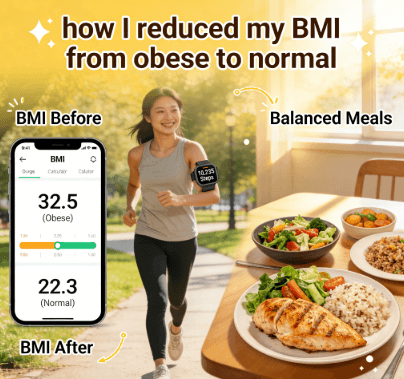
If you have ever stared at a BMI number that falls into the obese category and felt overwhelmed, you are not alone. I have been there. As a 45-year-old office worker who spent 10 years sitting at a desk and neglecting my health, I never thought I would be able to reverse my obesity. But after seeing my BMI hit 32.7 and struggling to climb a single flight of stairs without getting winded, I knew I had to make a change.
The thought of getting that number down to a normal range felt like an impossible goal at first. But the truth is, it did not happen with a crash diet or extreme workouts. It happened with small, consistent choices that stuck over time. This is not a "perfect" success story. There were plenty of setbacks. But it is a real one about how I reduced my BMI from obese to normal by taking it one step at a time.
And if you are sitting where I was—looking at a number over 30 on the Adult BMI Calculator—let me tell you this upfront: you do not need to be perfect. You just need to start.
Facing the Truth: My Obese BMI Wake-Up Call
It all started when I used an adult BMI calculator to check my numbers after feeling sluggish and out of breath doing simple tasks, like walking up a flight of stairs. I had avoided checking for a while, and when I saw the number—well over 30, the threshold for obese—it was a tough pill to swallow. But it was also the push I needed.
I did not beat myself up over it. I just acknowledged that I needed to make changes for my energy and overall health, not just for the number on the scale or the BMI reading. I also learned early on that BMI is just a screening tool. It does not tell the whole story of body composition. Athletes with high muscle mass may have a BMI in the overweight range without excess body fat. For a more complete picture, pair your BMI with waist circumference measurement and regular checkups with your healthcare provider.
It is also important to note that BMI does not account for ethnicity. For example, Asian populations may have a higher risk of type 2 diabetes and heart disease at a BMI as low as 23. If you are of Asian descent, talk to your doctor about your personalized healthy BMI range. Similarly, research suggests that African American and Hispanic/Latino populations may have different body composition patterns and metabolic risk profiles at the same BMI compared to White populations. The CDC recommends that healthcare providers consider these ethnic differences when interpreting BMI results.
My only goal at this stage was to get into the normal healthy BMI range for adults—18.5 to 24.9—and I decided to focus on small, doable changes instead of overhauling my entire life at once.
Special Considerations for Different Populations
BMI is a screening tool, not a diagnostic measure, and its interpretation varies by population:
Seniors (65+): A slightly higher BMI range of 21.0-27.0 is considered healthy to reduce risks of malnutrition and falls.
Athletes: High muscle mass may result in a BMI in the overweight range without excess body fat. Use a body fat calculator for a more accurate assessment.
Asian Adults: Health risks associated with excess weight start at lower BMI values. A healthy BMI range for Asian adults is typically 18.5-23.9.
African American Adults: Research suggests that African American individuals may have higher muscle mass and bone density, which can result in a higher BMI without corresponding increases in body fat percentage. Healthcare providers may use adjusted BMI thresholds or additional assessments.
Hispanic/Latino Adults: Studies indicate that Hispanic/Latino populations may experience metabolic risks such as type 2 diabetes and cardiovascular disease at lower BMI levels than White populations. The American Diabetes Association recommends earlier screening for these populations.
Pregnant Women: BMI should be based on pre-pregnancy weight. Follow your healthcare provider's guidance on appropriate weight gain during pregnancy.
Here's Where It Gets Interesting: I Did Not Cut Out My Favorite Foods
The first change I made was not cutting out all my favorite foods. It was understanding how much my body actually needed to eat to function, and then adjusting from there. I used a calorie calculator to find my TDEE, or total daily energy expenditure. TDEE is the total number of calories your body burns in a day through basic functions, digestion, and physical activity. Knowing this number was a game-changer.
I had been eating way more than my body needed without even realizing it, mostly from sugary drinks, processed snacks, and oversized portions at meals. The Centers for Disease Control and Prevention (CDC) emphasizes that people who lose weight at a gradual, steady pace—about 1 to 2 pounds a week—are more likely to keep the weight off than people who lose weight quicker.[1] That is exactly the pace I aimed for.
Instead of starving myself, which I knew I would never stick to, I just aimed for a small calorie deficit—around 300 to 500 calories a day—by making swaps, not cuts. I swapped soda for sparkling water with fruit, replaced chips with air-popped popcorn or veggies with hummus, and started adding more lean protein and vegetables to every meal because they kept me full longer.
Here is what those swaps actually looked like in real numbers: Instead of a 20-ounce regular soda (240 calories), I drank sparkling water with a slice of lime (0 calories). Instead of a 1-ounce bag of potato chips (160 calories), I had 3 cups of air-popped popcorn (93 calories). These simple swaps alone created a 200-300 calorie deficit each day without making me feel deprived.
Some days I slipped up and had a cookie or a slice of pizza, and that was okay. I did not let one bad meal derail the whole week. Perfection was not the goal. Consistency was.
Real-world note: A colleague in Denver noticed that simply switching from Venti Vanilla Lattes to Grande Americanos with almond milk saved her 300 calories daily. She did not change anything else for the first month, and her BMI dropped from 31.2 to 30.4—proof that one sustainable swap can start the momentum.
Moving More: No Gym Membership Required
I have never been a gym person, and the thought of spending an hour a day lifting weights or doing cardio felt like a chore. So I started with the absolute basics: walking. The American Heart Association recommends at least 150 minutes per week of moderate-intensity aerobic activity for adults.[2] That breaks down to 30 minutes, five days a week. But here is the secret: intensity matters less than consistency.
At first, I could only walk 10 minutes a day without getting tired, but I did it every single day—around the block after dinner, on my lunch break, or first thing in the morning. Slowly, I added a few minutes here and there, and after a few weeks, I was walking 30 minutes a day, and it felt easy. As my energy went up, I added small bits of movement to my day: taking the stairs instead of the elevator, doing a few bodyweight squats or wall sits while I watched TV, or stretching for 5 minutes in the morning.
I never set a crazy workout schedule, and that is why it stuck. I learned that any movement is better than no movement, and those small bursts added up over time. My body started to feel stronger, and the extra weight began to come off, which in turn started to bring my BMI down.
Tracking Progress: Why the Scale Is Only Half the Story
I checked my BMI every few weeks—not every day, because that is a recipe for frustration—using the same adult calculator I had used at the start, and I started to see slow, steady progress. The number did not drop fast. Some weeks it stayed the same, a few weeks it dropped a little—but it was always moving in the right direction.
What was even better than the BMI number, though, was how I felt. I had more energy, my joints did not ache as much, and I could do everyday tasks without getting winded. I also stopped focusing only on the scale. I noticed my clothes fit better—jeans that were tight started to feel loose, and I did not have to struggle to button my shirts anymore. That non-scale progress was way more motivating than any number could ever be.
I also started tracking my waist circumference, which is a better indicator of abdominal fat and heart disease risk than BMI alone. You can learn more about healthy waist circumference ranges in our healthy weight range guide.
For a deeper picture of what was actually changing inside my body, I occasionally used a body fat calculator. Sometimes the scale stalls while your body composition improves dramatically. Muscle is denser than fat. When you build strength through walking and bodyweight exercises, you may gain lean tissue while losing fat. The scale does not always reflect that shift, but your energy levels and how your clothes fit do.
I also noticed that getting 7 to 8 hours of sleep each night helped reduce my cravings and made it easier to stick to my walking routine. On nights when I slept poorly, I found myself reaching for sugary snacks the next day. Once I made sleep a priority—going to bed at 10:30 p.m. instead of midnight—my appetite stabilized and my energy for evening walks returned.
Hitting the Normal BMI Range—And Staying There
It took several months for my BMI to finally cross into the normal adult range of 18.5 to 24.9. When it did, I did not celebrate with a big feast or stop the habits I had built. I celebrated by acknowledging how far I had come. The best part? I did not have to "diet" anymore because the choices I had made to lower my BMI had become habits: drinking more water, eating more whole foods, moving my body every day, and listening to what my body needed.
I still check my BMI every now and then, and I still use the calorie calculator if I feel like I am falling back into old habits. But for the most part, this new way of living is just... living. I still have days where I eat too much or do not move as much as I should, but those days are the exception, not the rule. And if my BMI creeps up a little, I do not panic. I just make a few small adjustments to get back on track.
Expert Context: What Public Health Data Says About Sustainable Weight Loss
The NIH's National Institute of Diabetes and Digestive and Kidney Diseases (NIDDK) emphasizes that successful long-term weight loss is rarely achieved through short-term diets.[3] Instead, the NIDDK recommends a comprehensive approach: a healthy eating plan, regular physical activity, optimal sleep, and stress reduction. The CDC reinforces this framework, noting that fad diets promise fast results but tend to fail because they limit nutritional intake and are unsustainable.
Large-scale public health data also highlight that even modest weight loss can produce significant health benefits. The CDC notes that a 5% weight reduction for a person who weighs 200 pounds is just 10 pounds—but that change could lower the risk for chronic diseases such as heart disease, prediabetes, and type 2 diabetes.[4] You do not need to reach a "perfect" BMI to improve your health. Every pound lost in the direction of a healthy range matters.
Your Action Toolbox: From My Journey to Your Starting Line
Knowledge from someone else's story is only useful if you act on it. Here is the immediate roadmap I wish someone had handed me on day one.
Myth vs. Reality: What I Learned the Hard Way
| What I Used to Believe | What the Evidence (and Experience) Showed |
|---|---|
| "I need to cut out all carbs and sugar to lose weight." | Swaps beat cuts. Replacing soda with sparkling water and chips with popcorn created a sustainable deficit without deprivation. |
| "I need a gym membership to get fit." | Walking 10 minutes daily, then building to 30 minutes, produced measurable results. The AHA confirms that any movement counts. |
| "If I slip up once, the whole week is ruined." | One cookie or one slice of pizza never derailed my progress. The CDC emphasizes flexibility and long-term patterns over perfection. |
| "The scale is the only metric that matters." | Non-scale victories—better-fitting clothes, more energy, less joint pain—were more motivating than the BMI number itself. |
| "Once I hit normal BMI, I can go back to old habits." | Maintenance is just continuation. The habits that lowered my BMI became my normal lifestyle, not a temporary diet. |
7-Day Starter Plan: What I Would Do If I Started Today
Day 1: Calculate your current BMI and set a realistic 6-month target. Write down your "why"—not just the number, but how you want to feel.
Day 2: Use a calorie calculator to find your TDEE. Do not cut calories yet—just observe where you are.
Day 3: Replace one sugary drink with water or sparkling water with lemon. Just one. That is it.
Day 4: Walk for 10 minutes. Around the block, to the mailbox, during your lunch break. Anywhere.
Day 5: Add one vegetable to your dinner plate. Fill half the plate if you can, but one is enough to start.
Day 6: Add 20 grams of protein to your breakfast. Eggs, Greek yogurt, or a protein smoothie.
Day 7: Do a 5-minute bodyweight circuit: squats, wall sits, and a plank. Rest as needed. Repeat twice if you feel strong.
Special Note: If you are pregnant, breastfeeding, over 65 years old, or have any underlying health conditions, please do not follow this plan without first consulting your doctor. Your weight loss goals and methods may need to be adjusted to ensure safety.
Final Thoughts: The Real Success Is Not the Number
If you are sitting where I was a while ago, staring at an obese BMI number and feeling like you will never get to normal, let me tell you this: you do not need to be perfect, you just need to start. You do not need to spend money on fancy gym equipment or diet plans, and you do not need to overhaul your life in one day.
All you need is to make one small change—whether it is drinking one less soda a day, walking 5 minutes a day, or using a calculator to check your calories—and then keep doing it. Reducing my BMI from obese to normal was not about reaching a single number. It was about building a life that makes me feel healthy and energized. And that is the real success—not the BMI reading, but the habits that got me there, and the ones that keep me there now.
If I can do it, anyone can. Just take it one step at a time.
Content Integrity Review: The weight management principles, caloric deficit recommendations, and physical activity guidelines in this article have been verified against CDC healthy weight standards, NIH/NIDDK clinical guidance, and American Heart Association recommendations. Individual medical advice should always be obtained from a qualified physician or registered dietitian.
Editorial Independence Statement: BMI Calculator Blog maintains full editorial independence. The author is a community member who uses the free BMI Calculator Web tools and has no financial ties to any diet programs or supplement brands mentioned. This content is provided for educational and informational purposes only.
Factual basis: CDC healthy weight and nutrition guidelines,[1] NIH/NIDDK weight management recommendations,[3] American Heart Association physical activity standards,[2] and peer-reviewed public health research on sustainable behavior change.[4]
Sources
[1] CDC: Steps for Losing Weight — Healthy Weight and Growth Guidelines
[2] American Heart Association: Recommendations for Physical Activity in Adults
[3] NIH/NIDDK: Understanding Adult Overweight and Obesity — Treatment and Lifestyle Approaches
[4] CDC: About Healthy Weight and Growth — Nutrition, Physical Activity, and Sleep
[5] American Heart Association: Simple Steps to Improve Heart Health (2026)
Frequently Asked Questions
How long does it typically take to reduce BMI from obese to normal?
It varies by individual, but at the CDC-recommended pace of 1 to 2 pounds per week, most adults can expect the journey to take several months to a year. The key is consistency, not speed. Rapid weight loss often leads to rebound gain.
Do I need a gym membership to lower my BMI?
Absolutely not. Walking, bodyweight exercises, and daily movement additions like taking the stairs are all effective. The American Heart Association emphasizes that any movement is better than none, and consistency matters more than intensity.
Can I still eat my favorite foods while trying to lower my BMI?
Yes. The CDC and NIH both recommend moderation over elimination. Swapping sugary drinks for water, reducing portion sizes, and adding vegetables and protein are sustainable changes that do not require giving up pizza or cookies entirely.
What should I do if my BMI plateaus for several weeks?
Plateaus are normal. Focus on non-scale victories like energy levels, clothing fit, and sleep quality. If the plateau persists beyond 4 to 6 weeks, reassess your calorie intake and activity level using a calorie calculator, or consult a healthcare provider.
Is BMI the only metric I should track during weight loss?
No. BMI is a screening tool, not a diagnostic measure. Pair it with waist circumference, body composition tracking, and how you feel physically. A body fat calculator can help distinguish muscle gain from fat loss when the scale stalls.
How do I maintain my BMI in the normal range after reaching it?
Maintenance is continuation, not a new phase. The habits that lowered your BMI—regular movement, balanced meals, adequate sleep—become your lifestyle. If your BMI creeps up, make small adjustments rather than starting over.
Does a small amount of weight loss really improve health?
Yes. The CDC notes that even a 5% weight reduction can improve blood pressure, cholesterol, and blood sugar levels. For a 200-pound person, that is just 10 pounds. Every step toward a healthy BMI range produces measurable health benefits.
What if I slip up and overeat one day?
Resume your normal pattern at the next meal. One day of higher intake does not undo weeks of consistent habits. The NIH and CDC both emphasize flexibility and long-term patterns over perfection.
How much weight do I need to lose to lower my BMI by 1 point?
For an average adult who is 5'9" (175 cm), losing about 6-7 pounds (2.7-3.2 kg) will lower your BMI by approximately 1 point. The exact amount varies based on your height. Use a BMI calculator to model different scenarios for your specific body.
Can I lower my BMI in 3 months?
Yes, it is possible to lower your BMI by 2-3 points in 3 months with consistent, healthy habits. This corresponds to a weight loss of 12-24 pounds at the CDC-recommended pace of 1-2 pounds per week. However, sustainable maintenance matters more than speed.
How do I handle social situations like parties or holidays while trying to lower my BMI?
Plan ahead, but do not isolate yourself. Eat a protein-rich snack before the event to reduce hunger-driven choices. At the gathering, fill half your plate with vegetables first, then add protein. Allow yourself one favorite treat without guilt. The next day, simply return to your normal pattern. One celebration does not define your trajectory.
BMI Calculator Blog. This content is provided for educational and informational purposes only. We encourage sharing with proper attribution to our site. Unauthorized commercial use is prohibited. Medical Disclaimer: The content of this article is for informational purposes only and does not replace professional medical advice, diagnosis, or treatment. Always seek the advice of a qualified physician or other qualified health provider with any questions regarding your weight, BMI, or health goals.