Full Summary: A sustainable BMI improvement journey covers safe weekly pacing, tracking that is not distorted by water weight, plateau and craving fixes, non-scale wins, and adjusted rules for seniors, Asian adults, and athletes.
Quick Take: A BMI improvement journey is not a reboot diet. It is a few repeatable habits timed to your real life. Losing 5–10% of body weight can improve blood pressure, blood sugar, and lipid risk markers even before your BMI label changes much; a pace of about 0.5–1 pound per week usually translates to 1–2 BMI points over 3–6 months. Small consistency beats intense bursts almost every time.
BMI is a screening tool only, not a diagnostic instrument. All health decisions should involve a qualified healthcare provider. This content provides general guidance, not medical prescriptions.
What a BMI Improvement Journey Actually Looks Like
Most people do not start with a spreadsheet. They start because a belt feels tighter, a clinic visit shows a higher number, or stairs feel harder than last year. That moment matters more than any plan. One working parent told us she had tried three app diets in two years; every one ended within six weeks because the rules did not fit school runs, late meetings, and a kitchen full of kid snacks. Her turning point was boring on paper and effective in life: one sugary drink swapped for water, one 10-minute walk after dinner, same scale same time twice a month.
Another common pattern is the rebound. Someone drops 12 pounds in six weeks, feels great, then returns to old portions and regains it. The CDC-aligned lesson is not willpower, it is adherence: tiny changes that survive holidays, travel, and bad weeks are worth more than a perfect month.
The Core Principle: Tiny Habits, Tracked Loosely
Extreme plans fail because they are temporary. Sustainable BMI improvement works like a thermostat, not a bonfire. Start with one anchor habit, keep it for three weeks, then add the next.
Worked example with the real detours
A 38-year-old desk worker started at BMI 28.2. First attempt was a 1,200-calorie regimen plus five gym nights; he quit on day 9 from hunger and scheduling conflicts. Revised plan was narrower:
Replace one 150-calorie sweet drink with water every day; if cravings spike, switch to sparkling water with lime instead of banning all sugar.
Walk 10 minutes after dinner, push to 20 only when it feels automatic, and let the kids set the pace.
Weigh every 4 weeks, not daily; daily swings were mostly water and sleep, which made him quit previous attempts.
Use a calorie calculator once to set a gentle target, then adjust by 100–200 calories only after 4–6 weeks of no movement.
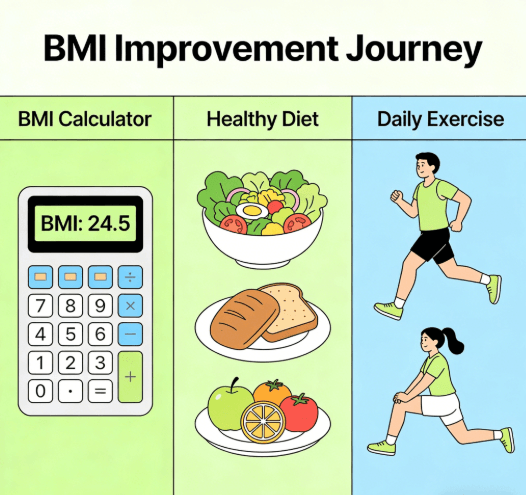
By month 8 his BMI was 24.5. The number looked unremarkable; the behavioral change was not. He had a default walk, a default drink rule, and a weighing rhythm that did not trigger anxiety.
Question: How fast can I safely improve BMI? Answer: For most adults, 0.5–1 pound per week is the safe zone; that is roughly 1–2 BMI points every 3–6 months. Faster loss raises regain risk and can cut muscle if protein and strength work are missing.
Start Tracking Without Sabotaging Yourself
Tracking fails when it becomes a daily verdict. A simpler protocol works better:
Measure BMI every 4–6 weeks; midweek and morning give the steadiest comparison.
Keep the same scale, same clothes state, same time. One change invites noise.
Treat 1.0 BMI point or more as a real move; smaller shifts may be measurement error, hydration, or sodium.
Add waist circumference. BMI misses belly fat distribution; waist trends often explain stalled energy or clothing fit better than the index alone.
Log trends with a BMI calculator, and pair it with body composition when muscle gain is likely. For a step-by-step record format, see BMI Before and After: Tracking Your Health Journey.
Three Hurdles People Actually Hit
Plateaus after early loss
Hitting a plateau is not proof you’ve failed. Your body burns fewer calories once your weight goes down, which stalls progress naturally. Try adding two brief strength workouts weekly and trimming your calorie target by 100–200 calories. Instead of only checking the scale, track waist size and sleep quality. It’s common to keep shedding fat even when weight stays flat, thanks to water and glycogen changes during training.
No time on workdays
Stack movement into existing routines: stairs before meetings, a 5-minute stretch while coffee brews, a parking spot farther from the door. Sunday prep of two or three meals prevents the 8 p.m. fast-food fallback. Ten minutes daily for 20 weeks beats seven perfect gym days that never repeat.
Cravings and all-or-nothing setbacks
Allow planned treats one or two times weekly so nothing feels forbidden. One rough meal does not erase three weeks; resume at the next meal, do not double the effort to punish the slip. Move trigger snacks out of sight instead of relying on sheer restraint.
Non-Scale Signs the Journey Is Working
These often arrive before the BMI number moves much:
Stairs feel easier; no puffing at the third floor.
Sleep improves and morning fatigue drops.
Work clothes loosen at the waist even if weight is flat.
Joint stiffness or knee pain eases during daily errands.
Kids or coworkers notice steadier energy rather than diet mood swings.
Because BMI cannot separate muscle from fat, a body fat calculator helps when training loads rise. A flat BMI with a smaller waist and better lift numbers is still progress.
Adjustments for Seniors, Asian Adults, and Athletes
One rule for all adults ignores body composition and risk context.
Seniors 65+: A range around 23–28 may be reasonable for some; prioritize protein and resistance work over aggressive cutting to protect muscle and bone. Confirm individual targets with a clinician, especially with frailty or multiple conditions.
Asian adults: WHO and several national guides use lower cutoffs, with overweight often beginning near 23 and added risk reviewed from 25; set goals against population-specific thresholds rather than a single Western 25.
Athletes: High muscle can inflate BMI. Track body fat, performance tests, and waist alongside the index so leanness is not mistaken for overweight.
Stories That Stuck, Not Highlight Reels
Mark, 45, BMI 32 to 24.8: A blood sugar warning pushed him to act. He resisted a bootcamp because travel days made it unrealistic, so he walked 15 minutes after dinner and added one weekend hike. At three months the habit was automatic; at twelve months fasting glucose was back in range. His note was practical: "The walk was never about calories after week two. It was the one appointment I kept with myself."
Priya, 36, postpartum: Started at BMI 27.1 with broken sleep and little gym time. She kept one fruit-and-protein breakfast, one stroller walk, and weighed monthly. Nine months later BMI was 24.2; the win she remembered was not the number but carrying groceries without back strain.
Marge, 72, BMI 29 to 25.8: Used chair strength, pool walking, and protein at lunch after losing muscle on earlier crash diets. Joint pain dropped first, BMI second. Her plan avoided aggressive restriction because appetite and strength mattered more than speed.
More journeys are in BMI Transformation Stories.
Your First 30 Days, Step by Step
Start simple over your first 30 days. Week one, just pick two tiny actions: swap one sugary drink and take a 10-minute post-dinner walk, plus log your baseline BMI, weight and waist measurement. Stick to those two habits through week two, and lock in your 4-week weighing schedule. By week three, add protein to whichever meal you normally skip — eggs, yogurt, lentils or lean meat all work well. In week four, introduce two quick strength sessions using stairs, resistance bands or simple bodyweight squats. Hold off on adding anything new until those four habits feel effortless. That sense of boring routine is exactly what makes long-term progress stick.
Frequently Asked Questions
How long until BMI noticeably improves?
For most adults, 1–2 BMI points over 3–6 months is a safe, keepable pace; early changes often show up as looser clothes, better sleep, and easier stairs before the index moves a full point. Faster rates can work short term but raise regain risk if habits are not built to last.
My BMI is flat but I feel better and my waist is smaller. Is that success?
Yes. BMI does not capture recomposition. If you train and eat enough protein, you can lose fat, gain muscle, and keep total weight nearly steady while waist drops and energy rises. Keep waist below 40 inches (102 cm) for men and 35 inches (89 cm) for women as a general screening cut, and review individual targets with a clinician.
Why does my BMI stall even when I follow the plan strictly?
Stalls usually come from measurement drift, undated calorie creep, new medication, poor sleep, or muscle gain masking fat loss. First fix the protocol: same scale, same time, 4-week intervals, waist added. Then check protein and two strength sessions weekly. If six to eight weeks still show nothing on both BMI and waist, review the calorie target down by 100–200 and ask a healthcare provider about medical or medication factors rather than cutting aggressively.
Do I really need to cut out carbs completely to improve my BMI?
No. Extreme carb elimination is not required for most people. The stronger lever is total calorie balance and food quality — more protein, fiber, and whole foods; fewer sugary drinks and refined snacks. Some people feel better with lower-carb patterns, but the best plan is the one you can stick with for months, not weeks.
Sources
NIH/NHLBI: Aim for a Healthy Weight — benefits of 5–10% weight loss, safe pacing
WHO: Obesity and Overweight Fact Sheet — BMI limits and population considerations
All claims are reviewed against our editorial medical review panel and aligned with CDC, WHO and HHS guidelines.
This article is for informational and educational purposes only. It does not constitute medical advice, diagnosis, or treatment. Always consult a qualified healthcare provider regarding your individual health and weight goals. Individual results will vary. The BMI Calculator Blog Team maintains editorial independence and does not sell health products.