Quick Take: A BMI diet for weight loss is a sustainable eating strategy that aligns your food choices with your current BMI category to achieve a healthy weight. The CDC and WHO define safe weight loss as 1–2 pounds (0.5–1 kg) per week. This isn't about crash dieting — it's about matching your calorie deficit to your starting BMI, prioritizing whole foods, and building habits that outlast motivation.
Key Takeaways
Safe weight loss pace: 1–2 lbs (0.5–1 kg) per week (CDC / WHO standard).
Calorie deficit by BMI: 300–500 cal/day for overweight, 500–750 cal/day for Class 1 obesity.
Core rule: Prioritize protein + fiber, avoid extreme restriction to protect muscle mass.
Goal: Build sustainable habits, not short-term weight loss that rebounds.
First step: Calculate your starting BMI to determine your category — not a guess.
A BMI diet for weight loss is a food strategy that uses your current BMI number to set a realistic pace, calorie target, and eating pattern. The CDC defines four adult BMI categories: underweight (below 18.5), healthy weight (18.5–24.9), overweight (25.0–29.9), and obesity (30.0 and above). For weight loss, the focus is on the overweight and obesity ranges. Each one needs a different approach.
Before you plan anything, know your starting point. Use our Free BMI Calculator to get your number. The eating plans below are built around that number — not a generic meal plan.
BMI Diet for Overweight (25.0–29.9)
Target: Lose 0.5–1 kg (1–2 pounds) per week. The NIH recommends a moderate daily calorie deficit of 300–500 calories for this range. This pace preserves muscle mass while steadily reducing fat — something crash diets at 800 calories a day can't do.
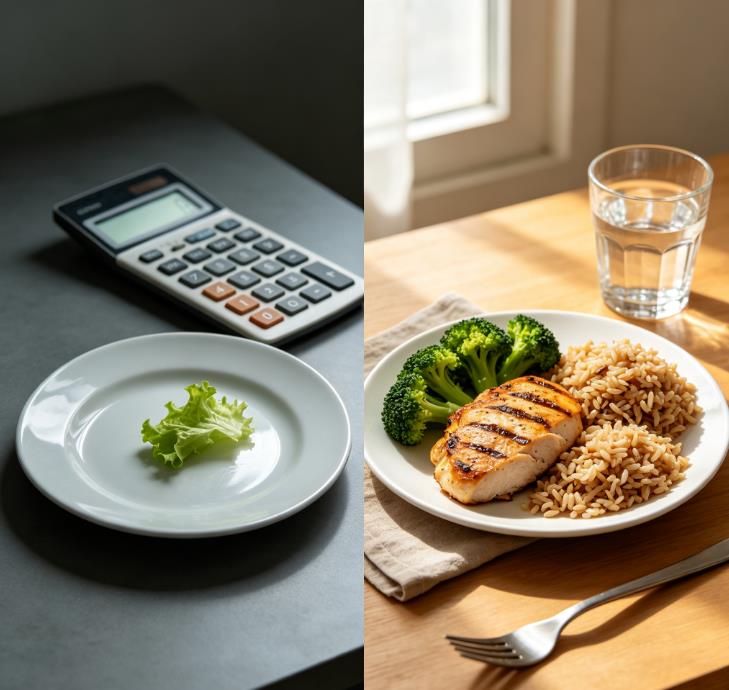
The most common mistake we see: People in this range go all-in. 1,200 calories. Two hours of daily cardio. No carbs. They lose 10 pounds (4.5 kg) in two weeks — then burn out, binge, and regain 15 pounds (6.8 kg). The goal here isn't speed. It's a deficit you can maintain without white-knuckling through every evening.
Fill half your plate with non-starchy vegetables — spinach, broccoli, peppers, cauliflower. They're high in volume and fiber, low in calories, and they trigger fullness signals to your brain.
Choose lean proteins at every meal: chicken breast, fish, beans, lentils, tofu. Protein digests slowly and keeps hunger at bay for hours.
Swap refined grains for whole-grain versions — brown rice instead of white, whole-wheat bread instead of white bread.
Limit fried foods, sugary drinks, and ultra-processed snacks to occasional consumption, not daily defaults.
Use our Calorie Calculator for Weight Loss to estimate your maintenance level, then subtract 300–500 calories.
BMI Diet for Obesity Class 1 (30.0–34.9)
Target: Lose 1–1.5 pounds (0.45–0.7 kg) per week with a 500–750 daily calorie deficit. The landmark NIH Diabetes Prevention Program study found that losing just 5–7% of body weight reduced the risk of developing type 2 diabetes by 58% — and these benefits held up over years. Even modest losses produce meaningful health gains.
What we've observed: People in this range often try to overhaul everything on Monday morning. They clear out the pantry. Stock only kale and grilled chicken. By Thursday afternoon, they're exhausted and ordering pizza. Real change doesn't start with a 30-day transformation. It starts with the next meal you eat.
We worked with a 42-year-old woman with a BMI of 32 who started with just one swap: replacing her daily soda with sparkling water. Three months later, she'd lost 12 pounds (5.4 kg) without changing anything else — and had more energy than she'd had in years. That's the power of a single, sustainable change.
Begin with one food swap per week — soda to water, white bread to whole grain, fried chicken to baked.
Prioritize high-fiber foods: beans, lentils, oats, vegetables. They slow digestion and keep blood sugar stable.
Eat slowly — it takes about 20 minutes for your brain to register fullness. Put your fork down between bites.
Track progress beyond the scale: energy levels, how clothes fit, mobility improvements. The scale lies sometimes; your jeans don't.
BMI Diet for Obesity Class 2 & 3 (35.0 and Above)
Target: Focus on health improvements first, weight loss second. Even a 5% body weight reduction significantly lowers cardiovascular and metabolic risk factors. Very low-calorie diets (under 800 calories/day) should never be attempted without medical supervision.
The biggest trap: Setting a goal like "lose 80 pounds (36.3 kg) in 6 months." That's a recipe for burnout and injury. The target that actually works: one healthy habit, consistently applied, for one month. Then add another.
Start with low-impact movement: walking, water aerobics, chair exercises. Protect your joints — they're under more mechanical stress at higher BMIs.
Focus on whole, unprocessed foods that stabilize blood sugar and reduce cravings naturally.
Work with a healthcare provider to monitor blood pressure, blood glucose, and other markers as your weight changes.
Celebrate non-scale victories: walking farther without getting winded, sleeping better, needing less medication.
5 Questions to Ask Yourself Before Every Meal
Forget rigid lists of "good" and "bad" foods. These five questions will guide your choices far better than any set of rules — and they're based on what actually works for long-term weight management.
"Would my great-grandmother recognize this as food?" If the ingredient list reads like a chemistry experiment, think twice. Stick mostly to things that look like they came from a farm, not a factory.
"Where's the protein?" Make sure every meal has a clear protein source. It's the most satiating macronutrient, and it protects your muscle mass while you lose fat.
"Am I actually hungry, or just bored, stressed, or tired?" If you wouldn't eat an apple, you're probably not truly hungry. Pause for 10 minutes and see if the urge passes.
"How will this make me feel in an hour?" A heavy, greasy meal might feel good for 10 minutes, then leave you sluggish. A balanced plate of vegetables, protein, and whole grains gives you steady energy.
"Did I enjoy it without guilt?" One indulgent meal isn't a failure. It's part of a normal life. Guilt leads to "I already blew it" thinking, which leads to abandoning the whole plan. Eat it, enjoy it, and move on.
Common Mistakes That Derail a BMI Diet
These three mistakes show up repeatedly — and they're all fixable. Honestly, the second one still surprises us; you'd think by now people would know better, but the scale is a cruel master.
Treating the diet as a temporary fix. If your eating plan has an end date, the weight will return when the plan stops. A BMI diet is a permanent shift in food habits — not a 12-week program. The goal isn't just reaching a healthy BMI. It's staying there.
Comparing your progress to others. We knew a woman named Sarah who started a weight loss journey alongside her coworker. Her coworker's BMI was 28; Sarah's was 32. After a month, the coworker had lost 8 pounds (3.6 kg), while Sarah had lost only 5 pounds (2.3 kg). She was ready to quit, convinced she was failing. But when we checked her records, her blood pressure had improved, she'd stopped snoring, and she could climb three flights of stairs without stopping. Comparison is the thief of progress — and sometimes it robs you of seeing your own real wins.
Cutting calories too low. Never go below 1,200 calories/day for women or 1,500 for men without medical supervision. Extreme restriction triggers your body's survival response — metabolism slows, hunger hormones spike, and muscle loss accelerates. The deficit should feel manageable, not punishing.
Why Slow Weight Loss Wins
Trying to lose weight fast is like pumping water out of a swamp. The water level (your weight) drops quickly, but the mud underneath — your habits, your emotions, your metabolism — stays put. The moment you stop pumping, the water rushes right back in, murkier than before. Slow weight loss, by contrast, is like digging channels and building waterways. It redirects the flow. It takes longer, but the water stays gone. A 2020 review in the American Journal of Clinical Nutrition confirmed that gradual weight loss results in greater fat loss and better preservation of resting energy expenditure compared to rapid weight loss. Speed is the enemy of sustainability.
Frequently Asked Questions
How fast can I expect to see results on a BMI diet?
The CDC and WHO consider 1–2 pounds (0.5–1 kg) per week a safe, sustainable rate. At this pace, someone with a BMI of 30 might reach a BMI of 25 in roughly 4–6 months. Results appear first in how you feel — more energy, better sleep, looser clothes — before they show up as dramatic scale changes.
Do I need to count calories to follow a BMI diet?
Not forever. Counting calories is training wheels — it teaches you what appropriate portions look like. Most people need 3–6 months of tracking to build that intuition. After that, the plate structure (half vegetables, quarter protein, quarter whole grains) becomes automatic enough to maintain without the app.
What if I have a bad week and regain a few pounds?
One bad week doesn't erase months of progress. Weight fluctuates naturally. A 3-pound (1.4 kg) "gain" after a salty meal is mostly water, not fat. Return to your normal eating pattern at the next meal. The people who succeed long-term aren't perfect — they're consistent enough to recover quickly from imperfect moments.
Can I follow a BMI diet if I'm over 65?
Yes, with adjustments. For adults 65+, a BMI of 23–28 may be protective, and weight loss should be approached cautiously to avoid muscle and bone loss. Prioritize protein intake (1.2–1.6g per kg of body weight) and pair any calorie reduction with resistance training. Consult a healthcare provider before starting.
Related Articles
BMI-Based Weight Loss Strategies: Match Your Plan to Your Starting Point, Not a Generic Chart
Healthy Eating Plans for Every BMI Category: From Underweight to Obesity
Sources
BMI Calculator Blog. This content is provided for educational and informational purposes only. Medical Disclaimer: The content of this article is for informational purposes only and does not replace professional medical advice, diagnosis, or treatment. Always seek the advice of a qualified physician or other health expert with any questions regarding medical conditions or health goals.