Full Summary: These evidence-based weight management plans match your exact BMI category. Learn safe, sustainable strategies to gain, maintain, or lose weight without extreme diets or burnout.
TL;DR — What you need to know right now:
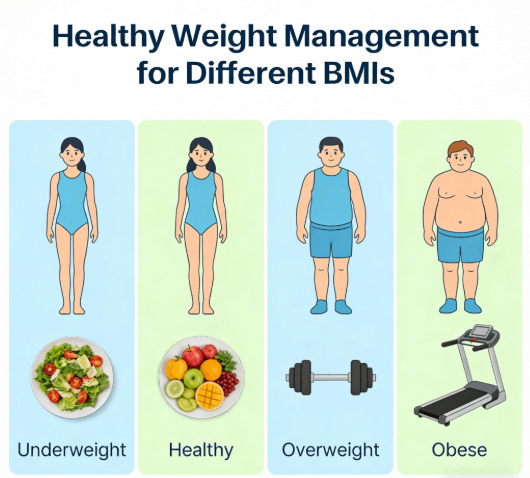
Underweight: 300-500 calorie surplus + strength training to build muscle
Healthy: Maintenance calories + balanced habits to prevent weight creep
Overweight: 300-500 calorie deficit for 0.5-1 kg (1-2 lbs) weekly loss
Obese: Start with 200-300 calorie deficit + low-impact activity
Reviewed by the BMI Calculator Blog Editorial Team. Content aligned with CDC 2024 weight management guidelines, NIH/NHLBI obesity protocols, and WHO global health standards. Our team includes registered dietitians and public health analysts with 15+ years of combined experience.
BMI is a screening tool only, not a diagnostic instrument. All health decisions should involve a qualified healthcare provider.
This guide uses BMI standards for adult populations in the United States, Canada, and Europe. Special adjustments apply to athletes, seniors, and Asian adults.
Most weight loss plans fail because they treat a 5'2" woman with a BMI of 27 the same as a 6'1" man with a BMI of 33. That makes no sense. Your starting point changes everything about what your body needs. Here's how to build a plan that fits.
We've watched enough people succeed and fail with weight management to spot a clear pattern: the ones who match their plan to their BMI category stick with it. The ones who follow a generic one-size-fits-all diet? They're usually back at square one within six weeks.
Understanding Your BMI Category (CDC 2024 Standards)
BMI (Body Mass Index) is a simple calculation that links your weight and height to estimate weight-related health risks. It's not perfect — it doesn't distinguish between muscle and fat — but it's the most widely used and evidence-based screening tool available.
Before you start, calculate your BMI to confirm your category:
Underweight: BMI < 18.5
Healthy Weight: BMI 18.5 – 24.9
Overweight: BMI 25.0 – 29.9
Obese: BMI ≥ 30.0
For category-specific eating advice, see our guide on diet tips for different BMI categories.
Healthy Weight Management for Underweight BMI (<18.5)<>
Core goal: Gain 0.25–0.5 kg (0.5–1 lbs) per week, prioritizing muscle mass over fat.
Common mistake we see: People think "just eat more" means chugging milkshakes and eating chips all day. We had one user who drank three high-sugar shakes daily for a month — he gained 10 pounds, but all of it was fat, and he felt more tired than ever.
A quick warning: Gaining weight by eating processed foods only adds fat, not muscle. The right approach focuses on nutrient-dense calories paired with strength training to make sure the weight you gain supports your health, not just the scale.
Eat 5–6 small meals/snacks daily to avoid feeling overly full
Add healthy fats to every meal: avocados, nuts, nut butters, olive oil
Prioritize protein: 1.6–2.2g per kg of body weight daily — it builds lean muscle
Do strength training 2–3 times per week to support muscle growth
Use a calorie calculator to set a 300–500 calorie daily surplus
Healthy Weight Management for Healthy BMI (18.5–24.9)
Core goal: Maintain your current weight and prevent gradual weight creep.
Common mistake we see: "I'm healthy, so I can eat whatever I want." This is the #1 reason people end up overweight in their 40s and 50s. A slice of pizza here, a soda there — it adds up faster than you think.
According to the CDC, adults gain 1–2 pounds (0.5–1 kg) per year on average — that's 10–20 pounds over a decade. Maintenance isn't passive. It takes consistent small habits to keep your metabolism stable:
Calculate your maintenance calories and stay within ±100 calories daily
Follow the plate method: ½ vegetables, ¼ whole grains, ¼ lean protein
Get 150 minutes of moderate exercise weekly + 2 days of strength training
Weigh yourself once a week to catch small shifts early
Prioritize 7–9 hours of sleep nightly — poor sleep disrupts hunger hormones
Healthy Weight Management for Overweight BMI (25.0–29.9)
Core goal: Lose 0.5–1 kg (1–2 lbs) per week through a moderate calorie deficit.
Common mistake we see: People go all-in on crash diets — 1000 calories a day, two hours of cardio, no carbs. They lose 10 pounds in two weeks, then burn out, binge eat, and gain back 15 pounds. It's a vicious cycle.
The CDC and NIH recommend gradual weight loss — crash diets almost always lead to muscle loss and regain, undoing any short-term progress. The biggest mistake we see in this category is cutting calories too drastically:
Create a 300–500 calorie daily deficit
Fill half your plate with non-starchy vegetables to stay full longer
Eat 1.2–1.6g of protein per kg of body weight daily — it preserves muscle during loss
Add 30 minutes of daily walking + 2 days of strength training
Limit sugary drinks and refined carbs — they spike hunger and cravings
Healthy Weight Management for Obese BMI (≥30.0)
Core goal: Improve overall health first, weight loss second. Even a 5–10% weight loss reduces chronic disease risk by 30–50%, according to the NIH NIDDK.
Common mistake we see: We've seen too many people wake up on Monday and decide "today is the day I change everything." They cut out all their favorite foods, join a gym, and plan to work out every day. By Thursday, they're exhausted and quit. Real change doesn't start with a 30-day overhaul — it starts with the next meal you eat.
Start small. Trying to lose 50 pounds in 6 months is a recipe for burnout. Focus on building one healthy habit at a time:
Begin with a 200–300 calorie daily deficit to build consistency
Choose whole, unprocessed foods to stabilize blood sugar and reduce cravings
Start with low-impact activity: walking, water aerobics, or gentle yoga
Track progress beyond the scale: energy levels, mobility, and how clothes fit
Work with a healthcare provider to monitor your health as you make changes
Special Adjustments for Unique Populations
These standard plans work for most adults, but you'll need to adjust for these special cases:
Athletes: High muscle mass can raise your BMI. Use a athlete BMI calculator and focus on body fat percentage, not weight.
Seniors (65+): A slightly higher BMI (23–28) reduces fall and malnutrition risk. Prioritize protein and strength training to prevent muscle loss.
Asian Adults: Lower BMI thresholds apply (overweight at 23, obese at 25). Use an Asian-specific calculator for accurate risk assessment.
5 Core Mindsets for Sustainable Weight Management
These principles apply to every BMI category and are the foundation of long-term success. They're not rules — they're shifts in how you think about weight and health:
Mindset 1: Your body needs fuel, not punishment. Never cut calories below 1200 (women) or 1500 (men) per day. Extreme restriction triggers your body's survival response and destroys metabolism.
Mindset 2: Ask "what nutrition does this give me?" not "how many calories?" Nutrient-dense foods keep you full longer and support overall health, making weight management feel effortless.
Mindset 3: Exercise is for strength and energy, not just burning calories. The best workout is the one you'll actually do. Even a 10-minute walk is better than nothing.
Mindset 4: Learn to tell real hunger from boredom hunger. Next time you reach for a snack, ask yourself: "Would I eat an apple right now?" If the answer is no, you're not actually hungry.
Mindset 5: Progress beats perfection every time. If you have a bad meal or skip a workout, don't quit. Just get back on track with your next choice.
Frequently Asked Questions
How often should I recalculate my BMI?
Every 3–6 months, or whenever you experience a significant weight change (±5% of body weight). This ensures your plan stays aligned with your current body.
Can I be healthy with an "overweight" BMI?
Yes. If you're an athlete with high muscle mass, or a senior with good mobility and energy, a slightly higher BMI may be healthy. Always pair BMI with waist circumference and overall health markers.
What if my BMI falls between two categories?
Start with the lower category's plan and adjust based on how you feel. For example, if your BMI is 24.8 (just below overweight), focus on maintenance rather than weight loss.
Do I need to count calories forever?
No. Counting calories is training wheels, not a lifestyle. Once you can eyeball portions and tell the difference between real hunger and boredom, you can leave the app behind. Most people need 3–6 months of tracking to build that intuition.
One Important Reminder: These numbers and categories are a map, not a territory. How you feel — your energy levels, strength, and overall well-being — matters more than any single reading. Use this guide as a starting point for informed health decisions.
Final Takeaway
Here's the bottom line: your BMI is a signpost, not a life sentence. Pick the plan that fits your category, adjust it to your actual life, and give it time. The people who succeed aren't the ones with perfect willpower — they're the ones who build habits that outlast motivation.
For a complete, step-by-step plan tailored to your exact BMI, see our guide on weight management plans by BMI category.
Sources
BMI Calculator Blog. This content is provided for educational and informational purposes only. Medical Disclaimer: The content of this article is for informational purposes only and does not replace professional medical advice, diagnosis, or treatment. Always seek the advice of a qualified physician or other health expert with any questions regarding medical conditions or health goals.