The BMI formula is weight ÷ height². Using correct units — metric or imperial — and the 703 factor for pounds/inches is critical to avoid errors. This guide walks through the BMI formula step by step, covers the three most common mistakes, and explains why the same number means different things for children, seniors, athletes, and ethnic groups. BMI is a screening tool, not for diagnosis — pair it with waist circumference or a healthcare provider consult.
The Math Behind the Number on Your Screen
Most people never think about where that BMI number comes from — they just see it on a screen. But the formula behind it is stupidly simple, and stupidly easy to mess up. The CDC and WHO both use the same exact equation: BMI = weight ÷ height². That's it. No hidden variables.
Look, the units matter. Period. Mix kilograms with inches, or pounds with meters, and the number becomes nonsense. That's like bringing a fork to a soup contest — the math is fine, but the tool is wrong. And the 703 conversion factor for imperial units? People forget it all the time, which turns a healthy 24.9 into a meaningless 0.0355. We've seen countless users get tripped up by these tiny unit mix-ups during our daily tool feedback reviews — it's far more common than most health guides acknowledge.
Metric vs. Imperial: Which Formula Gives You the Right Answer
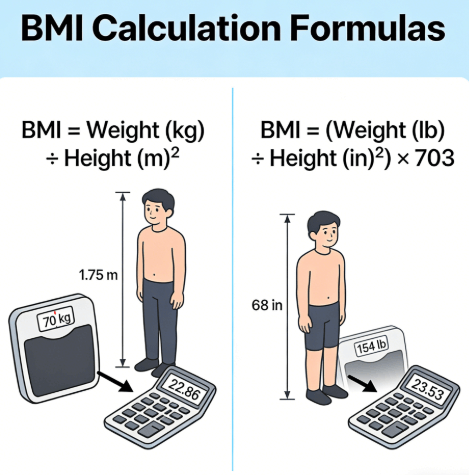
Both formulas work — but they serve different audiences. If you live anywhere outside the US, or inside a hospital or research lab, metric is the standard. The formula is BMI = Weight (kg) ÷ Height (m)². Weigh yourself in kilograms (no heavy clothes, best in the morning). Measure your height in meters — if you have centimeters, divide by 100 (165 cm = 1.65 m). Square your height. Then divide your weight by that squared number.
Example: A person who weighs 68 kg and is 1.75 m tall. Height squared = 1.75 × 1.75 = 3.0625. BMI = 68 ÷ 3.0625 = 22.2 — squarely in the healthy adult range.
In the US, most people use pounds and inches. Same math, one extra step: multiply by 703. Skip it, and your BMI will look like you're a ghost. The formula is BMI = (Weight (lb) ÷ Height (in)²) × 703. Weigh yourself in pounds. Measure your height in inches (5'5" = 65 inches; 1 foot = 12 inches). Square your height in inches. Divide weight by squared height. Then multiply by 703.
Example: 150 lb, 65 inches tall. Height squared = 65 × 65 = 4,225. 150 ÷ 4,225 = 0.0355. 0.0355 × 703 = 24.9 — the upper end of the healthy range.
Two Mornings, Two Different Numbers, Two Very Different Stories
A 32-year-old data analyst in Austin steps onto his scale every morning. He's 5'10", weighs 185 lb, and yes, he probably skips leg day — but his BMI still reads 26.5, "overweight." He frowns, then heads to the gym for his third strength workout of the week. He has a 34-inch waist, a resting heart rate of 58, and his doctor told him last month that his blood work is excellent. The BMI number doesn't match what he sees in the mirror because the formula can't see muscle.
Two thousand miles away in Portland, a 68-year-old retired teacher stands on the same model of scale. She's 5'4" and 140 lb — BMI 24.0, "normal." But she's noticed her energy is lower, and her grip strength has faded over the last two years. Her BMI says everything is fine, but she's actually lost significant muscle mass. The number is normal, but her body isn't functioning normally. For seniors, a BMI of 23–27 is often healthier than 18.5–24.9 because a little extra weight provides a nutritional buffer against illness. As Winter et al. (2014) demonstrated in their meta-analysis of nearly 200,000 older adults, mortality risk actually rises below BMI 23 in this age group.
These two stories have one thing in common: the BMI formula did its math exactly right. The problem isn't the calculation — it's the interpretation. That's why population-specific tools exist: a senior BMI calculator uses a different healthy range than a standard adult calculator, and an Asian BMI calculator uses narrower cutoffs because metabolic risk rises at lower BMIs for Asian populations — the WHO recommends overweight starting at BMI 23, not 25, for these groups.
The Three Mistakes That Quietly Wreck Your BMI
These unit errors are easy to overlook, even for people who are good at basic math. Skipping the 703 factor is the most common. This turns a correct BMI of 24.9 into 0.0355 — a number that looks like you're underweight by a factor of 700. Never skip the ×703 when using pounds and inches. Using centimeters instead of meters is the second trap. If you plug 165 cm directly into the metric formula instead of 1.65 m, your BMI will be 10,000 times too high. Always divide cm by 100 before squaring. And using feet instead of inches is the third. 5.5 feet is not the same as 65 inches — the squared value is completely different. Convert everything to inches (1 foot = 12 inches) before calculating.
The easiest way to avoid all three mistakes is to use a trusted Adult BMI Calculator that handles both metric and imperial units automatically — but knowing the formula gives you the power to double-check the machine. Look, I get why people skip the 703 — it feels like extra busywork. But skip it and your number is garbage.
Your 2-Minute Monthly BMI Reset
You don't need an app or a subscription. Just follow this short checklist once a month. Use the same scale, same hard floor (no carpet), same time of day — ideally morning, after bathroom, before eating. Write down your BMI and put the number away for the rest of the day. After four weeks, calculate your average BMI across all readings — ignore any single high or low day. And pair your BMI with one other metric: either waist circumference (under 35 inches for women, 40 for men) or body fat percentage from a body fat calculator. That's it. No emotional attachment, no daily panic. Just a consistent, boring routine that gives you real trends over months, not noise from day to day.
Common Myths About the BMI Formula
A high BMI doesn't always mean you're unhealthy — muscular athletes often have BMIs above 25 despite very low body fat, because the formula can't see muscle. And a normal BMI doesn't mean you have nothing to worry about — up to 30% of normal-BMI adults have metabolic syndrome, including high blood pressure, insulin resistance, or unhealthy cholesterol. The formula itself is identical for everyone regardless of ethnicity. What changes is how clinicians read the result. And you don't need a fancy calculator to get an accurate BMI — the formula is simple enough to do on your phone. But a digital tool saves you from unit mistakes and automatically applies the right healthy range for your age and population group.
The Formula Doesn't Change — But Your Healthy Range Does
The same BMI number means different things depending on who you are. That's not a flaw — it's why population-specific guidelines exist. A BMI of 25 for a 25-year-old is just above the healthy range. For a 75-year-old senior, it's ideal — protective against malnutrition and fracture risk. For a competitive athlete, it might be perfectly healthy if body fat is low. And for a person of Asian descent, 25 is already in the "caution" zone due to higher metabolic risk. So yeah, the equation stays the same. What your doctor does with it? That's a different story.
Frequently Asked Questions
Why do you multiply BMI by 703 for imperial units?
The 703 conversion factor adjusts the ratio of pounds per square inch to the metric standard of kilograms per square meter. It's a fixed constant derived from 1 lb = 0.453592 kg and 1 inch = 0.0254 m. Without it, imperial BMI numbers would be about 1/703 of the true value.
What happens if you forget to convert cm to m for metric BMI?
Using 165 cm instead of 1.65 m makes your BMI 10,000 times too high — a huge error. Always divide cm by 100 first.
Is the BMI formula different for athletes or seniors?
No — the mathematical formula is identical. Only the interpretation of the resulting number differs. Here's how the same BMI number reads differently by group:
Seniors (65+): Healthy range shifts to 23–27, since a slightly higher BMI protects against frailty and malnutrition.
Athletes: BMI alone is unreliable — body fat percentage and waist circumference matter more.
Children and teens: Use CDC growth percentiles, not fixed adult ranges.
Asian adults: WHO sets lower cutoffs — overweight begins at BMI 23, not 25.
Can I use the same BMI formula for children?
Yes, the calculation is identical. But you must interpret the result using CDC growth percentiles, not adult fixed ranges. Use a dedicated child BMI calculator.
Why does the BMI formula sometimes label healthy people as overweight?
Because BMI ignores body composition. Muscular individuals and people with high bone density can have a BMI above 25 while having low body fat. That's why BMI is a screening tool, not for diagnosis.
Sources
Winter JE et al. BMI and all-cause mortality in older adults: a meta-analysis. Am J Clin Nutr. 2014;99(4):875-90. PubMed
This article is for informational and educational purposes only. It does not replace professional medical advice. Consider discussing your results with a qualified healthcare provider. The BMI Calculator Blog Team maintains editorial independence.
Related Articles
Last updated: October 9, 2026.