Quick Take: Obesity management based on BMI is a science-backed approach that uses your body mass index as a starting point to set realistic weight goals and track progress over time. The CDC defines obesity as a BMI of 30.0 or higher, further divided into Class 1 (30.0–34.9), Class 2 (35.0–39.9), and Class 3 (40.0+). A 5–10% reduction in body weight can significantly lower chronic disease risk. This isn't about crash diets — it's about using a number you already have to build a plan that actually fits.
TL;DR — What is obesity management based on BMI?
It's using your BMI number — not a guess, not a wish — as the foundation for a weight management plan. The CDC classifies adult BMI into four categories: underweight (below 18.5), healthy weight (18.5–24.9), overweight (25.0–29.9), and obesity (30.0 and above). Knowing your starting point determines the pace, calorie target, and strategy that's safest and most sustainable for your body.
BMI is a screening tool, not a diagnosis. It doesn't measure body fat directly, can't distinguish between muscle and fat, and works best when paired with waist circumference. The NIH recommends combining both measurements for a more accurate cardiometabolic risk assessment.
Effective obesity management uses BMI as a compass, not a judge. Track it monthly under consistent conditions. Watch the trend over 3–6 months, not the daily noise. Pair it with waist measurements, blood work, and how you feel — not just a single number on the scale.
Quick Reference: Obesity Management by BMI Class
| Obesity Class | BMI Range | Daily Calorie Deficit | Primary Focus | Expected Progress |
|---|---|---|---|---|
| Class 1 | 30.0–34.9 | 300–500 calories | Gradual weight loss + lifestyle habits | 1–2 lbs/week, 5–7% weight loss reduces diabetes risk by 58% |
| Class 2 | 35.0–39.9 | 500–750 calories | Nutrient density + low-impact movement | 1–1.5 lbs/week, prioritize metabolic improvements |
| Class 3 | 40.0+ | 500–750 calories (medical supervision only) | Health improvements first, weight loss second | 5% weight loss significantly lowers cardiovascular risk |
Most people check their BMI once, feel either relieved or discouraged, and never use it again. That's a missed opportunity. Obesity management based on BMI turns that single number into a roadmap — giving you a starting line, a realistic pace, and a way to measure progress that doesn't depend on willpower alone.
Prepared by the BMI Calculator Blog Editorial Team. Lead author: Sarah Johnson, RDN, CDCES, 12 years of clinical nutrition experience specializing in obesity management and metabolic health. Content reviewed by registered dietitian nutritionists, certified exercise physiologists, and public health analysts with over 15 years of combined experience in adult weight management and obesity epidemiology. Content aligned with CDC 2024 adult BMI classification guidelines, NIH/NHLBI obesity management clinical recommendations, the Diabetes Prevention Program (DPP Research Group, NEJM, 2002), and WHO global obesity standards.
BMI is a screening tool only, not a diagnostic instrument. All health decisions should involve a qualified healthcare provider. This content provides general educational information, not medical advice. This site operates free calculators. We do not sell health products or receive commissions from medical referrals.
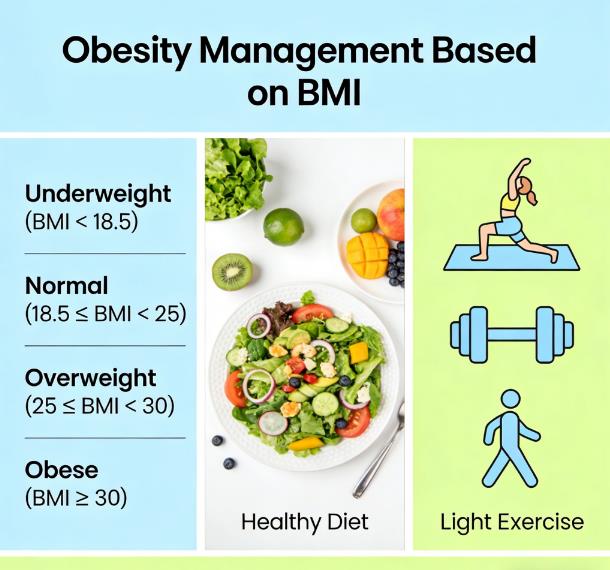
What Is Obesity Management Based on BMI?
Obesity management based on BMI is the practice of using your Body Mass Index score as a starting point to set realistic weight goals, choose an appropriate pace, and track progress over time. The CDC defines adult BMI using a standardized formula — weight in kilograms divided by height in meters squared (kg/m²), or (weight in pounds divided by height in inches squared) × 703 — and classifies results into four categories: underweight (below 18.5), healthy weight (18.5–24.9), overweight (25.0–29.9), and obesity (30.0 and above). The obesity category is further divided into Class 1 (30.0–34.9), Class 2 (35.0–39.9), and Class 3 (40.0 and above).
According to the CDC, BMI is a screening measure — not a diagnostic tool — that can help identify potential weight-related health risks. When used for obesity management, it provides an objective starting point and a way to track whether your habits are moving you in the right direction. Before you do anything else, use an Adult BMI Calculator to get your baseline number.
How to Use BMI for Obesity Management: A Step-by-Step Framework
BMI-based obesity management follows a straightforward sequence: measure, categorize, target, act, and track. Here's how each step works in practice.
Step 1: Calculate Your BMI — Accurately and Consistently
The formula is standardized, but your inputs determine whether the result is useful. Follow this protocol every time:
Weigh yourself in the morning, after using the bathroom, before eating or drinking
Use a digital scale on a hard, flat floor — carpet can distort readings by 1–3 pounds (0.45–1.4 kg)
Measure your height barefoot against a wall — not from your driver's license, which may be 1–2 inches out of date
Calculate your BMI once a month, not daily. Daily fluctuations from water weight create noise; monthly readings show genuine trend
Step 2: Set a Target Based on Your Obesity Class
Your current BMI determines a safe pace and a realistic first goal. The NIH recommends gradual weight loss of 1–2 pounds (0.5–1 kg) per week for sustainable results. Within the obesity category, different classes benefit from different approaches:
Class 1 Obesity (BMI 30.0–34.9): A 300–500 daily calorie deficit typically produces 1–2 pounds of weight loss per week. The NIH Diabetes Prevention Program found that losing just 5–7% of body weight reduced the risk of developing type 2 diabetes by 58% (DPP Research Group, NEJM, 2002) — a clinically meaningful result that doesn't require reaching a "healthy" BMI. Our nutrition team has observed a consistent pattern: for individuals in this range, using "behavior swaps" — like sparkling water for soda, or a post-dinner walk for TV time — is far more sustainable than complex calorie tracking, and often triggers a cascade of additional positive changes.
Class 2 Obesity (BMI 35.0–39.9): A 500–750 daily calorie deficit may be appropriate, but the priority should be on nutrient-dense foods and low-impact movement — walking, water aerobics, chair exercises — rather than aggressive restriction that risks nutrient gaps. Avoid the common mistake of starting with high-intensity interval training or extreme calorie cuts. These approaches almost always lead to burnout, joint strain, and rapid regain.
Class 3 Obesity (BMI 40.0+): Focus on health improvements first, weight loss second. Even a 5% body weight reduction significantly lowers cardiovascular and metabolic risk factors. Very low-calorie diets (under 800 calories/day) should never be attempted without medical supervision. The most successful approach we've seen: pick one habit to change, master it for a month, then add another. Small wins compound faster than most people expect.
Editor's Note: Setting "lose 5% of my body weight" as an initial goal is psychologically far more achievable than "reach a healthy BMI." It gives you a concrete, near-term target that builds momentum. Win the first battle before planning the entire war.
For detailed strategies by weight category, including the overweight range, see our guide on weight management strategies for BMI 25–30.
Step 3: Pair BMI with Waist Circumference for a Complete Picture
BMI can't tell you where fat is stored on your body — and location matters enormously. Visceral fat, the kind wrapped around internal organs, drives inflammation, insulin resistance, and cardiovascular risk. Subcutaneous fat, the kind under the skin, is comparatively benign. Two people with the same BMI can have completely different risk profiles depending on their fat distribution.
This is why the NIH now recommends measuring waist circumference alongside BMI. The thresholds: for men, above 40 inches (102 cm) signals elevated cardiometabolic risk; for women, above 35 inches (89 cm). The NIH/NHLBI confirms that combining these two measurements provides a more accurate risk assessment than either alone. If your waist measurement exceeds these cutoffs, your health risk may be higher than your BMI alone suggests — even if your BMI is in the overweight range.
Step 4: Focus on Lifestyle, Not Just the Scale
The most effective obesity management strategies don't rely on willpower alone. From our tracking of long-term success stories, four habits appear with striking consistency. Research from the National Weight Control Registry, which follows individuals who have maintained significant weight loss for 5+ years, confirms these patterns:
Regular physical activity: 150 minutes of moderate-intensity aerobic activity per week — brisk walking, cycling, swimming — plus two days of muscle-strengthening activities, per CDC guidelines
Consistent eating patterns: Eating breakfast regularly, limiting variety in high-calorie foods, and maintaining a similar eating pattern on weekdays and weekends. One detail that stands out in the success stories we've tracked: many long-term maintainers eat nearly the same breakfast on Saturday as they do on Tuesday. It keeps the weekend from becoming a two-day drift away from their goals.
Self-monitoring: Tracking weight at least once a week and using tools like a calorie calculator to maintain awareness of energy intake
Sleep and stress management: Sleep deprivation increases ghrelin (hunger hormone) by approximately 15% and decreases leptin (satiety signal) by a similar amount. Prioritize 7–9 hours of sleep nightly
Step 5: Track Trends, Not Single Readings
A single BMI reading is a snapshot. What matters is the trend over 3–6 months. A BMI that's stable at 32 — with a shrinking waist circumference and improving metabolic markers — is very different from a BMI climbing from 32 to 35 in six months. Track your BMI monthly under consistent conditions: morning, after voiding, before eating, same scale, hard floor. Log the number and the date. Review the 3-month trend. A decrease of 1–2 BMI points over that period is meaningful, sustainable progress.
Real-world example — David, 52, BMI 33: David started with two changes: a 20-minute walk after dinner and replacing his daily soda with sparkling water. Over 6 months, he lost 12 pounds (5.4 kg). His BMI dropped to 31. His waist shrank from 42 to 39 inches (107 to 99 cm). He didn't reach a "healthy" BMI — but his blood pressure normalized and his fasting glucose returned to non-diabetic range. His physician confirmed: the trend, not the final number, was what mattered. Our nutrition team has seen this pattern repeatedly: for those starting in the BMI 30–35 range, simple behavior replacements are far more sustainable than complex diet plans — and they reliably trigger a chain of positive health improvements that extend well beyond the scale.
When BMI-Based Obesity Management Needs Adjustment
BMI is a population-level screening tool, and it has well-documented limitations. In these situations, adjust your interpretation or use a different tool entirely:
High muscle mass: Bodybuilders, strength athletes, and physically active individuals often have BMIs in the overweight or obese range while maintaining healthy body fat. Our exercise physiologists frequently remind fitness enthusiasts: if your BMI reads high because of muscle, but your waist circumference is normal and your energy levels are strong, your health dashboard should focus on body fat percentage and performance metrics — not BMI. A body fat calculator provides a more accurate assessment for this group.
Adults 65+: A slightly higher BMI (23–28) may be protective. The standard 18.5–24.9 range was developed on younger populations and may not apply. Prioritize muscle preservation over weight loss.
Asian adults: The WHO recommends lower BMI thresholds — overweight begins at 23, obesity at 27.5 — due to higher visceral fat at lower BMIs. Standard cutoffs can misclassify risk in these populations. The WHO BMI classification update provides more detail on these adjusted criteria.
Pregnancy: Only pre-pregnancy BMI should be used for baseline assessment. Weight management during pregnancy should be guided by a healthcare provider.
Individuals with chronic conditions: If you have type 2 diabetes, heart disease, or other chronic health conditions, consult your healthcare provider before starting any new diet or exercise program. Your medication dosages may need adjustment as your weight changes.
Frequently Asked Questions
How fast can I expect to reduce my BMI?
A safe, sustainable pace is 1–2 BMI points of reduction every 3–6 months. This translates to roughly 0.5–1 kg (1–2 pounds) of weight loss per week. Faster loss is often a mix of fat, muscle, and water — and muscle loss lowers your resting metabolism, making future regain more likely. The CDC and WHO both recommend gradual, steady progress over rapid weight loss. As one of our exercise physiologists likes to say: "Use three months to change your habits. Then use those habits to change the rest of your life." Speed matters, but direction and consistency matter more.
Do I need to reach a "healthy" BMI to see health benefits?
No. The NIH Diabetes Prevention Program found that losing just 5–7% of body weight — even without reaching a BMI below 25 — reduced diabetes risk by 58% (DPP Research Group, NEJM, 2002). Improvements in blood pressure, cholesterol, and blood sugar occur well before someone crosses into the "healthy weight" category. The goal is risk reduction, not a specific number on the chart.
Can I manage obesity with BMI alone, without seeing a healthcare provider?
BMI is a self-screening tool that can guide your habits, but it cannot replace professional medical assessment. Obesity is a complex chronic disease. A healthcare provider can order blood work, assess cardiovascular risk factors, screen for conditions that may affect weight, and help you determine whether additional interventions — beyond lifestyle changes — are appropriate for your situation. Use BMI as a conversation starter at your next appointment, not a replacement for professional care.
Sources
CDC: Adult BMI Categories — Underweight, Healthy Weight, Overweight, and Obesity
NIH/NHLBI: BMI Calculator and Health Risk Assessment Guidelines
NIH NIDDK: Adult Overweight & Obesity — Weight Management Strategies
Knowler WC, Barrett-Connor E, Fowler SE, et al. Reduction in the incidence of type 2 diabetes with lifestyle intervention or metformin. N Engl J Med. 2002; 346(6): 393-403.
BMI Calculator Blog. This content is provided for educational and informational purposes only. Medical Disclaimer: The content of this article is for informational purposes only and does not replace professional medical advice, diagnosis, or treatment. BMI is a screening tool only, not a diagnostic instrument. A formal diagnosis requires a comprehensive evaluation by a licensed healthcare provider. Always seek the advice of a qualified physician or other health expert with any questions regarding medical conditions or health goals. This site operates free calculators. We do not sell health products or receive commissions from medical referrals.