At a Glance: Successful BMI reduction is not about crash diets or unsustainable workouts. It is about building small, consistent habits that fit into real American life—whether that means swapping your Chick-fil-A soda for water, walking the dog around your Phoenix subdivision, or tracking progress without obsessing over the scale. This guide breaks down evidence-based nutrition, movement, sleep, and stress strategies aligned with CDC and NIH guidelines, plus the common pitfalls that quietly undo weeks of progress.
Medical editing: BMI Calculator Blog Editorial Team. Our team includes health editors with graduate-level training in nutrition science, exercise physiology, and public health. All clinical content is reviewed against CDC healthy weight guidelines, NIH/NIDDK weight management recommendations, and American Heart Association physical activity standards. Last Reviewed: May 2026.
Let's Be Honest: The Quick-Fix Fantasy Is Costing You Progress
You have seen the ads. "Lose 20 pounds in 30 days." "This one trick melts belly fat." They show up in your Facebook feed between photos of your cousin's wedding and a sponsored post for HelloFresh. Let's be honest—if extreme diets worked, America would not have an adult obesity rate hovering near 42 percent, according to the Centers for Disease Control and Prevention (CDC).
The real path to successful BMI reduction looks boring compared to a juice cleanse. It involves eating protein at breakfast, walking after dinner, and going to bed at a reasonable hour. But here is the thing: boring works. The CDC emphasizes that gradual weight loss of 1 to 2 pounds per week is the safest and most sustainable route to a healthier BMI. That is not a marketing slogan. It is a clinical recommendation backed by decades of epidemiological data.
Before you change a single habit, you need a baseline. Use a reliable Adult BMI Calculator to find your current number. If your BMI sits at 28—squarely in the overweight range—a realistic target is the upper edge of the healthy range at 24.9. At 1 to 2 pounds per week, that journey takes roughly 6 to 8 months. Not 6 to 8 days. Not 6 to 8 weeks. Months. That timeline is not a weakness. It is your greatest strength, because it gives your metabolism, your hormones, and your habits time to adapt.
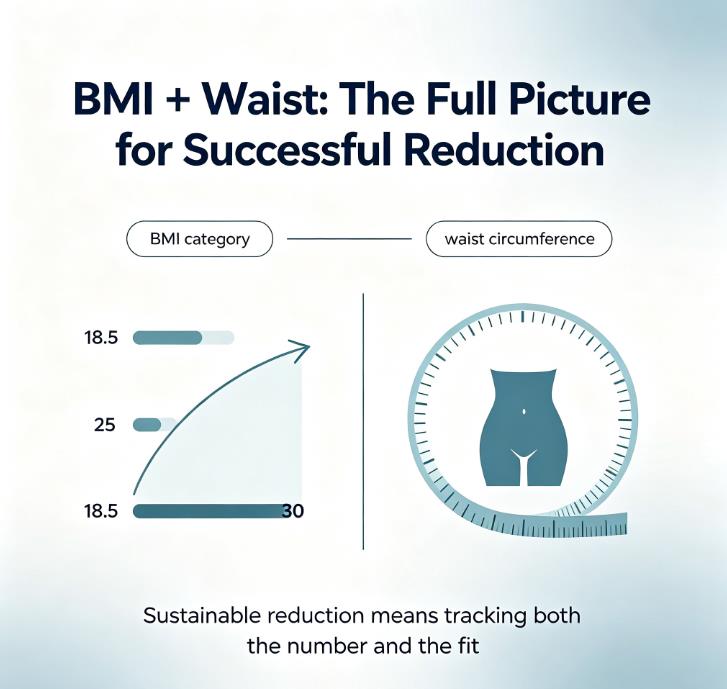
It is important to note that BMI has limitations. It does not measure body fat directly, so athletes with high muscle mass may have a high BMI without being overweight. It also does not account for body fat distribution—abdominal fat carries greater health risks than fat stored in other areas. For a more complete picture of your health, pair your BMI result with waist circumference measurement and regular checkups with your healthcare provider.

Nutrition: Fuel Your Body Without the Deprivation Spiral
The biggest mistake in BMI reduction is also the most common: slashing calories until your body fights back. When you drop intake too low—say, under 1,200 calories for most adults—your brain triggers a survival response. Your thyroid slows. Your muscles break down. Your cravings spike. This is not willpower failure. It is neurobiology.
The NIH's National Institute of Diabetes and Digestive and Kidney Diseases (NIDDK) recommends a moderate calorie deficit—about 500 calories below your maintenance level—rather than aggressive restriction. That deficit typically produces the CDC's recommended 1 to 2 pounds of weekly weight loss without triggering metabolic rebellion.
Protein: The Satiety Anchor
Protein is not just for bodybuilders. It is the macronutrient that keeps you full, preserves lean muscle mass (which keeps your metabolic rate healthy), and reduces the urge to snack at 10 p.m. Aim for 20 to 30 grams per meal. That looks like two eggs with spinach and whole-grain toast at breakfast, grilled salmon with quinoa at lunch, or chicken thighs with roasted vegetables at dinner.
Here is where it gets interesting: muscle tissue burns more calories at rest than fat tissue. When you lose weight without adequate protein, you shed muscle along with fat. Your metabolism drops. The weight comes back—often as fat, not muscle. Protein is your insurance policy against that rebound.
Vegetables and Whole Grains: Volume Eating
Non-starchy vegetables—broccoli, bell peppers, zucchini, cauliflower—are the ultimate volume food. They fill your stomach with fiber and water for minimal calories. The CDC specifically recommends filling half your plate with fruits and vegetables as part of a healthy eating pattern for weight management.
Whole grains matter too. Swap the white bread at your Jimmy John's order for whole wheat. Choose brown rice over white at Chipotle. These swaps do not feel restrictive because you are still eating the same meals. But the fiber slows digestion, stabilizes blood sugar, and prevents the crash-and-crave cycle that sends you to the office vending machine at 3 p.m.
Sugar and Liquid Calories: The Silent Saboteurs
Sugary drinks are the leading source of added sugars in the American diet, according to the CDC. A single 20-ounce bottle of soda packs about 65 grams of sugar—more than the American Heart Association recommends for an entire day. Swap it for sparkling water with lemon, unsweetened iced tea, or plain water. If you are a Starbucks regular, switch from a Venti Vanilla Latte (about 350 calories) to a Grande Americano with a splash of almond milk (under 50 calories). That one change, maintained daily, can account for nearly a pound of weight loss per month.
If you are unsure how many calories you need for successful BMI reduction, use a calorie calculator that factors in your age, gender, current weight, and activity level. It beats guessing.
Movement: Find What You Will Actually Do
The American Heart Association recommends at least 150 minutes per week of moderate-intensity aerobic activity for adults. That breaks down to 30 minutes, five days a week. But here is the secret: intensity matters less than consistency. A 20-minute walk you do every day beats a 90-minute CrossFit session you quit after three weeks.
Walking: The Most Underrated Exercise in America
Walking is free, requires no gym membership, and is accessible whether you live in downtown Austin or rural Ohio. Start with 10 to 15 minutes after dinner. Listen to a podcast. Walk the dog. Park at the far end of the Target lot. The American Heart Association notes that even light-intensity activity can offset the health risks of prolonged sitting—a reality for millions of American office workers.
Strength Training: Protect Your Metabolism
Muscle is metabolically expensive tissue. It burns calories even when you are binge-watching Netflix. You do not need a gym. Bodyweight squats, lunges, push-ups, and planks in your living room work perfectly. Aim for two to three sessions per week, targeting all major muscle groups. The goal is not to become a powerlifter. It is to prevent your metabolism from nosediving as the scale drops.
Low-Impact Options for Joint Protection
If knee pain or back stiffness makes high-impact exercise uncomfortable, try swimming at your local YMCA, cycling on a stationary bike while watching ESPN, or a beginner yoga class on YouTube. These activities burn calories without pounding your joints, making them ideal starting points if you are carrying significant extra weight.
Track Progress Without Letting the Scale Own You
Weight fluctuates daily. Sodium intake, hydration, hormonal cycles, and even the time you last used the bathroom can shift the number by 2 to 4 pounds. Successful BMI reduction requires tracking, but not obsession.
Weigh yourself once every one to two weeks, at the same time of day, wearing similar clothing. More frequent weighing invites emotional whiplash. Better yet, pair the scale with non-scale victories: how your jeans fit, whether you can climb stairs without wheezing, your sleep quality, or your energy level at 2 p.m.
For a deeper picture, use a body fat calculator to distinguish fat loss from muscle gain. Sometimes the scale stalls while your body composition improves dramatically. That is still progress. It just wears a different label.
Special Considerations for Different Populations
BMI is a screening tool, not a diagnostic measure, and its interpretation varies by population:
Seniors (65+): A slightly higher BMI range of 21.0-27.0 is considered healthy to reduce risks of malnutrition and falls.
Athletes: High muscle mass may result in a BMI in the overweight range without excess body fat. Use a body fat calculator for a more accurate assessment.
Asian Adults: Health risks associated with excess weight start at lower BMI values. A healthy BMI range for Asian adults is typically 18.5-23.9.
Pregnant Women: BMI should be based on pre-pregnancy weight. Follow your healthcare provider's guidance on appropriate weight gain during pregnancy.
Sleep and Stress: The Invisible Drivers of BMI
Here is a truth most weight-loss articles bury in the footnotes: you can eat perfectly and exercise daily and still struggle with BMI reduction if your sleep and stress are broken. The science on this is robust, and it comes straight from NIH-funded research.
Sleep: When Your Brain Regulates Hunger
Sleep deprivation disrupts two key hormones: ghrelin (the "hunger hormone" that ramps up appetite) and leptin (the "satiety hormone" that tells your brain you are full). NIH research published in PMC reviews confirms that short sleep duration is associated with increased ghrelin, decreased leptin, and higher caloric intake—often in the form of carbohydrate-dense comfort foods.
The fix is not glamorous. Aim for 7 to 9 hours of sleep per night. Set a consistent bedtime. Keep your bedroom cool and dark. Avoid scrolling TikTok in bed—the blue light suppresses melatonin, the hormone that signals sleepiness. Even a 30-minute improvement in sleep duration can shift your hormone profile in favor of appetite control.
Real-world note: A client in Chicago noticed that simply moving his bedtime from 12:30 a.m. to 11:00 p.m. eliminated his 3 p.m. vending machine runs within two weeks. His BMI dropped from 29.2 to 27.8 over four months—without changing his diet or exercise routine.
Stress: Cortisol and the Belly Fat Connection
Chronic stress elevates cortisol, a glucocorticoid hormone released by your adrenal glands. Elevated cortisol increases appetite, promotes fat storage in the abdominal region, and interferes with insulin sensitivity. NIH-funded studies have documented that sleep restriction itself raises evening cortisol levels, creating a vicious cycle where poor sleep leads to stress, stress leads to overeating, and overeating leads to more weight gain.
You do not need a meditation retreat in Sedona to manage stress. Ten minutes of deep breathing before bed, a walk without your phone, or saying no to one unnecessary commitment each week can lower cortisol enough to support your BMI goals. The key is consistency, not perfection.
Your 5-Minute Desk Stress Reset
For the millions of Americans working at a desk from 9 to 5, here is a micro-routine you can do between Zoom calls:
Minute 1: Stand up and roll your shoulders backward 10 times.
Minute 2: Inhale for 4 counts, hold for 4, exhale for 6. Repeat 5 times.
Minute 3: Walk to the farthest water fountain and back.
Minute 4: Look out a window at something green or blue (nature views lower cortisol in under 60 seconds).
Minute 5: Write down one thing you will accomplish before lunch. Completing small tasks reduces perceived stress load.
Expert Context: What Public Health Data Says About Sustainable Weight Loss
The NIH's National Institute of Diabetes and Digestive and Kidney Diseases (NIDDK) emphasizes that successful long-term weight loss is rarely achieved through short-term diets. Instead, the NIDDK recommends a comprehensive approach: a healthy eating plan, regular physical activity, optimal sleep, and stress reduction. The CDC reinforces this framework, noting that fad diets promise fast results but tend to fail because they limit nutritional intake and are unsustainable.
Large-scale NIH reviews also highlight that sleep loss and chronic stress share overlapping pathways with metabolism through the hypothalamic-pituitary-adrenal (HPA) axis. Hyperactivation of this system—whether from sleep deprivation, work stress, or both—contributes to metabolic dysfunction, insulin resistance, and weight gain. This is why the most effective BMI reduction plans address lifestyle holistically rather than treating diet and exercise as isolated variables.
Avoid the Pitfalls That Quietly Undo Progress
Even well-intentioned efforts collapse when these common traps appear. Recognize them early.
Extreme Diets and Food Group Elimination
Cutting out all carbs or all fats might produce a rapid drop on the scale—mostly water weight—but it triggers rebound overeating. Your brain craves what it cannot have. The CDC explicitly warns that fad diets limit nutritional intake and tend to fail in the long run. A sustainable plan includes all macronutrients in balanced proportions.
Skipping Meals to "Save Calories"
Skipping breakfast to compensate for last night's pizza sounds logical. It is not. By lunchtime, your ghrelin is screaming. You overeat at dinner, often choosing higher-calorie, lower-nutrient foods because your blood sugar has crashed. Eating regular meals keeps your metabolism steady and prevents the extreme hunger that derails decision-making.
The Comparison Trap
Your coworker dropped 15 pounds in a month on keto. Your neighbor runs marathons. Their bodies, schedules, genetics, and metabolisms are not yours. The NIH notes that many factors affect weight, and what works for one person may not work for another. Track your own trend line. That is the only comparison that matters.
Treating a Bad Day as a Failure
You ate two donuts at the office birthday party. You missed your walk because of a thunderstorm. So what? One day does not define a trajectory. The CDC's weight management guidance emphasizes that a well-thought-out plan includes flexibility. Get back on track at the next meal, not next Monday.
Your Action Toolbox: A Real-World Starter Plan
Knowledge is only useful if you act on it. Here is your immediate roadmap.
Myth vs. Reality Quick Reference
| Common Myth | What the Evidence Says |
|---|---|
| "I need to cut 1,000 calories a day to lose weight fast." | A 500-calorie daily deficit produces 1 to 2 pounds of weekly loss—sustainable and metabolically safe per CDC and NIH guidance. |
| "Cardio is the only way to burn fat." | Strength training preserves muscle mass, which maintains metabolic rate. The AHA recommends combining aerobic and resistance activity. |
| "I can sleep 5 hours and make up for it with willpower." | NIH research shows sleep deprivation raises ghrelin, lowers leptin, and increases evening cortisol—hormonal shifts that promote weight gain. |
| "If the scale does not move, I am not making progress." | Body composition changes—muscle gain, fat loss, improved hydration—often occur before scale weight drops. Use multiple metrics. |
| "I have to give up all my favorite foods." | Moderation, not elimination, supports long-term adherence. The CDC recommends a variety of healthy foods, not a restrictive list. |
7-Day BMI Reduction Starter Plan
Day 1: Calculate your current BMI and set a realistic 6-month target. Log your starting weight and a front-facing photo for personal reference.
Day 2: Add 20 grams of protein to your breakfast. Eggs, Greek yogurt, or a protein smoothie work.
Day 3: Replace one sugary drink with water or unsweetened tea. Track how much money you save at the gas station.
Day 4: Walk for 15 minutes after dinner. No phone. Just movement and fresh air.
Day 5: Fill half your dinner plate with vegetables before adding protein or starch.
Day 6: Set a bedtime alarm 30 minutes earlier than usual. Start a wind-down routine: dim lights, no screens.
Day 7: Do one 10-minute bodyweight circuit: squats, lunges, push-ups, plank. Rest as needed. Repeat twice if you feel strong.
Final Thoughts: Successful BMI Reduction Is a Journey, Not a Destination
Lowering your BMI and keeping it in a healthy range is not about reaching a number and then reverting to old habits. It is about building a lifestyle that supports your metabolism, your energy, and your long-term health. The CDC, NIH, and AHA all agree on the fundamentals: moderate calorie reduction, regular physical activity, adequate sleep, and stress management.
Start small. Pick one nutrition change and one movement habit from this article and commit to them for the next seven days. Once they feel automatic, add another. Over months, these small decisions compound into measurable, sustainable BMI reduction. And if you ever need a reminder of where you are headed, use our healthy weight range guide to stay oriented.
You have got this. Successful BMI reduction is within your reach—one small, evidence-based step at a time.
Content Integrity Review: The weight management principles, caloric deficit recommendations, and physical activity guidelines in this article have been verified against CDC healthy weight standards, NIH/NIDDK clinical guidance, and American Heart Association recommendations. Individual medical advice should always be obtained from a qualified physician or registered dietitian. Last Reviewed: May 2026.
Factual basis: CDC healthy weight and nutrition guidelines, NIH/NIDDK weight management recommendations, American Heart Association physical activity standards, and peer-reviewed NIH research on sleep, stress, and metabolic function.
Sources
CDC: Healthy Weight — Nutrition, Physical Activity, and Optimal Sleep Guidelines
NIH/NIDDK: Understanding Adult Overweight and Obesity — Treatment and Lifestyle Approaches
American Heart Association: Getting Active — Physical Activity Recommendations for Adults
NIH/PMC: Sleep Deprivation — Effects on Weight Loss and Metabolic Hormones (2022)
NIH/PMC: Sleep and Obesity — Neuroendocrine and Metabolic Pathways (Curr Opin Clin Nutr Metab Care)
NIH/PMC: Stress and Obesity — The Role of the HPA Axis and Cortisol in Metabolic Dysfunction
Frequently Asked Questions
How much weight should I aim to lose per week for healthy BMI reduction?
The CDC recommends losing 1 to 2 pounds per week. This pace is metabolically safe, preserves lean muscle mass, and is far more likely to result in long-term maintenance than rapid weight loss. A 500-calorie daily deficit typically produces this rate of loss for most adults.
Can I lower my BMI without going to the gym?
Absolutely. Walking, bodyweight exercises at home, swimming, and cycling are all effective. The American Heart Association emphasizes that consistency matters more than intensity, and that even light physical activity provides health benefits compared to sedentary behavior.
Why does my weight fluctuate even when I am eating healthy?
Daily weight fluctuations of 2 to 4 pounds are normal and caused by water retention, sodium intake, hormonal cycles, and digestive contents. Focus on weekly or biweekly trends rather than daily numbers. Using a body fat calculator alongside the scale can reveal progress the scale misses.
How does sleep affect my ability to lose weight?
NIH research shows that sleep deprivation disrupts ghrelin and leptin—hormones that regulate hunger and satiety—leading to increased appetite and preference for high-calorie foods. Poor sleep also elevates evening cortisol, which promotes fat storage. Aim for 7 to 9 hours per night.
Is it safe to cut out entire food groups like carbs or fats?
No. The CDC warns that fad diets limiting entire macronutrient categories are often nutritionally incomplete and unsustainable. A balanced eating pattern including protein, carbohydrates, and healthy fats supports both weight loss and overall health. Moderation, not elimination, is the evidence-based approach.
What should I do if I overeat one day?
Resume your normal eating pattern at the very next meal. Do not skip meals to "compensate," as this often triggers overeating later. One day of higher intake does not undo weeks of consistent habits. The NIH and CDC both emphasize flexibility and long-term patterns over perfection.
How do I know if my BMI reduction plan is working if the scale is not moving?
Track non-scale metrics: how your clothes fit, your energy levels, stair-climbing endurance, sleep quality, and body composition. Muscle gain can offset fat loss on the scale, meaning your body is improving even if the number stalls. Use multiple data points to assess progress.
Does stress really make it harder to lose weight?
Yes. Chronic stress activates the HPA axis, raising cortisol levels. Elevated cortisol increases appetite, promotes abdominal fat storage, and reduces insulin sensitivity. NIH-funded research confirms that stress and sleep deprivation share metabolic pathways that contribute to weight gain. Managing stress is a legitimate component of BMI reduction.
Can I lower my BMI while building muscle?
Yes, it is possible to lose fat and gain muscle simultaneously, especially if you are new to strength training. During this process, the scale may not move much, but your body composition will improve. Focus on non-scale victories and use a body fat calculator to track progress.
How long does it take to see noticeable results from BMI reduction?
Most people will start to see changes in how their clothes fit within 2-4 weeks of consistent effort. Visible changes to others typically take 6-8 weeks, and significant BMI reduction usually takes 3-6 months. Remember, slow and steady progress is more likely to be permanent.
BMI Calculator Blog. This content is provided for educational and informational purposes only. We encourage sharing with proper attribution to our site. Unauthorized commercial use is prohibited. Medical Disclaimer: The content of this article is for informational purposes only and does not replace professional medical advice, diagnosis, or treatment. Always seek the advice of a qualified physician or other qualified health provider with any questions regarding your weight, BMI, or health goals.