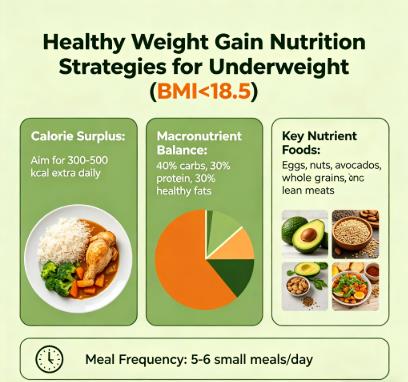
Weight gain nutrition for a BMI below 18.5 means creating a 250–500 kcal daily surplus using nutrient-dense foods — not empty calories. The goal is to build muscle and replenish nutrient stores, not just add fat. Prioritize healthy fats, lean proteins (1.2–1.6 g per kg of body weight), and complex carbohydrates eaten across 5–6 smaller meals per day. Pair the surplus with strength training 2–3 times weekly so the added weight lands as lean mass. Track your baseline with a BMI calculator, then increase calories gradually — 0.5–1 lb (0.2–0.45 kg) gained per week is the sustainable rate the CDC recommends.
Many people with a BMI below 18.5 face the same challenge: knowing what to eat is only half the battle. The real struggle is overcoming the anxiety of "eating wrong" and the frustration when the body seems resistant to change. Healthy weight gain is not a reckless feast — it is a carefully planned rebuild, with a blueprint, the right materials, and patience.
According to the CDC, approximately 1.6% of U.S. adults are classified as underweight, with higher prevalence among younger adults and certain medical populations. This guide provides evidence-based strategies aligned with WHO underweight classifications, CDC healthy weight gain guidelines, and NIH nutrient intake recommendations.
What "Underweight" Actually Means — and Why It Needs a Specific Strategy
The WHO and CDC define underweight as a BMI below 18.5. That number isn't just a label. It's a screening threshold associated with elevated risk for nutrient deficiencies, reduced bone mineral density, weakened immune response, and — in some cases — hormonal disruption. A BMI calculator confirms whether you fall below that line, but the number alone doesn't tell the full story. A very active person with high muscle mass might sit at BMI 18.3 and be metabolically healthy. A sedentary individual at the same BMI could be under-muscled and under-nourished. Context matters.
The nutrition strategy for underweight isn't "eat more of anything." It's a structured approach: a moderate calorie surplus, a specific protein target, and nutrient-dense food choices that support muscle gain — not just fat accumulation. The CDC recommends gaining 0.5–1 lb (0.2–0.45 kg) per week as a safe, sustainable rate. Faster gains tend to deposit as adipose tissue rather than lean mass.
The Core Framework: Surplus, Density, Frequency
Three levers drive healthy weight gain for a BMI below 18.5. Pull all three, and the scale moves in the right direction — with the right composition.
| Lever | Target | Why It Works |
|---|---|---|
| Caloric surplus | +250–500 kcal/day above maintenance | Creates the energy environment for tissue synthesis without overwhelming the digestive system or promoting rapid fat gain |
| Nutrient density | ≥80% of calories from whole and minimally processed foods | Delivers the micronutrients (iron, B12, zinc, calcium) that underweight individuals are most likely to be deficient in |
| Meal frequency | 5–6 eating occasions per day | Circumvents low appetite; distributes calorie load so no single meal feels overwhelming |
Research consistently shows that individuals who meet protein targets (above 1.4 g/kg) combined with regular strength training gain a higher proportion of lean mass relative to total weight gained. Conversely, focusing solely on calorie surplus without adequate protein or training tends to result in a higher ratio of fat gain.
Build the 250–500 kcal Surplus With Calorie-Dense Whole Foods
A 250–500 kcal surplus isn't a large volume of food — if you choose the right foods. The difference between hitting the surplus and falling short often comes down to food selection, not portion size.
Healthy fats deliver the most calories per gram (9 kcal/g vs. 4 kcal/g for protein and carbs). A single tablespoon of olive oil drizzled over vegetables adds 119 kcal without adding much volume — and that's the trick. Two tablespoons of peanut butter on toast? That's another 188 kcal plus 8 grams of protein. For a quick snack, a quarter-cup of almonds packs 207 kcal and 8 grams of protein.
Complex carbohydrates provide sustained energy and fuel muscle glycogen stores. One cup of cooked oats delivers 150 kcal and 5 g protein. One cup of cooked quinoa: 222 kcal and 8 g protein. One medium sweet potato: 103 kcal with vitamin A and potassium. And lean proteins supply the amino acids for muscle synthesis: a 3-ounce (85 g) chicken breast has 165 kcal and 31 g protein; one cup of whole-milk Greek yogurt, 220 kcal and 20 g protein; three large eggs, 215 kcal and 18 g protein. Protein is the non-negotiable macronutrient — without enough, the surplus weight lands as fat.
A calorie calculator estimates your maintenance intake based on age, gender, height, weight, and activity level. Add 250–500 kcal to that number. A 25-year-old sedentary woman at 5'5" (165 cm) and 105 lbs (47.6 kg) with a BMI of 17.5 might have a maintenance intake near 1,800 kcal. Her target range: 2,050–2,300 kcal per day.
Set the Protein Target at 1.2–1.6 g/kg
A 2016 position stand by the Academy of Nutrition and Dietetics and the NIH recommends 1.2–1.6 grams of protein per kilogram of body weight for individuals in a calorie surplus aimed at lean mass gain. For a 60 kg (132 lb) individual, that's 72–96 grams of protein daily — spread across 4–5 eating occasions to maximize muscle protein synthesis. For most healthy adults, a single dose of 20–30 g protein per meal is sufficient to stimulate synthesis; exceeding that in one sitting doesn't provide additional muscle-building benefit.
Eat 5–6 Times Per Day
Low appetite is one of the most common barriers for people with a BMI below 18.5. Three large meals often feel impossible. Five to six smaller eating occasions — roughly every 2.5–3 hours — lower the volume burden per meal while keeping the total daily intake on target. A smoothie between breakfast and lunch, a handful of trail mix mid-afternoon, and a small bowl of yogurt before bed can collectively add 500–700 kcal without the discomfort of a large dinner.
For those with very small appetites, a "three-step ramp-up" approach helps. Week 1, add one glass of whole milk or a cup of yogurt between two existing meals. Week 2, add a spoonful of nut butter to that snack. Week 3, upgrade one of those snacks to a half-sized meal, like half a sandwich. We regularly hear this exact frustration from site visitors aiming for healthy lean-mass gain — small steps bypass the mental block of "I can't eat that much."
A 2,200–2,400 kcal Sample Day
| Meal | Example | Approximate Calories |
|---|---|---|
| Breakfast | 1 cup cooked oats + 1 tbsp peanut butter + ½ banana + 1 tsp honey + 1 cup whole milk | 500 kcal |
| Mid-Morning Snack | 1 hard-boiled egg + 1 small handful walnuts | 220 kcal |
| Lunch | 4 oz grilled chicken breast + 1 cup brown rice + 1 cup roasted sweet potato + ½ avocado | 600 kcal |
| Afternoon Snack | 1 cup whole-milk Greek yogurt + ½ cup berries + 2 tbsp granola | 300 kcal |
| Dinner | 5 oz baked salmon + 1 cup quinoa + 1 cup steamed broccoli + 1 tbsp olive oil | 520 kcal |
| Evening Snack | 1 slice whole-grain bread + 1 tbsp almond butter | 200 kcal |
This template is modular. Swap salmon for tofu or tempeh. Trade oats for a smoothie made with milk, banana, peanut butter, and a scoop of protein powder if chewing feels like a chore early in the morning. The structure matters more than the specific ingredients. For tailored eating patterns based on BMI category, our guide on diet tips for different BMI categories provides broader context.
Three Common Mistakes That Stall Healthy Weight Gain
Look, I get it — when you're finally ready to gain weight, it's tempting to just eat a pint of ice cream and call it a day. But sugar and refined carbs create a calorie surplus quickly without providing the amino acids, vitamins, or minerals needed for muscle synthesis. That approach often results in fat gain rather than lean mass, with no improvement in energy or strength.
The second mistake is undereating protein. Without 1.2–1.6 g/kg of daily protein, even a well-designed calorie surplus shifts toward fat gain. One common scenario: individuals consuming 3,000+ kcal daily but only 50 g of protein see minimal lean mass gain. Adjusting to 90 g/day with structured training often produces significant lean mass gain within 8–12 weeks.
And the third: not drinking calories. When appetite is low, liquids are the easiest vehicle for additional energy. A smoothie with whole milk, a banana, 2 tablespoons of peanut butter, and a scoop of oats delivers 500–600 kcal without triggering fullness the way a solid meal does.
Pair Nutrition With Strength Training
The calorie surplus provides the raw material. Strength training provides the signal that directs that material toward muscle tissue rather than fat stores.
Without resistance exercise, a significant portion of the gained weight will be adipose tissue — which does little to improve functional strength or bone density. Train 2–3 sessions per week, each 20–40 minutes — volume matters more than duration. Focus on compound movements: squats, deadlifts, push-ups, rows, and overhead presses stimulate systemic muscle protein synthesis. Add a small increment each week — one additional repetition, 2.5–5 lbs more on the bar, or one extra set.
For a structured exercise plan designed specifically for underweight individuals, our guide on weight gain exercises for underweight outlines compound routines, rep ranges, and progression protocols in detail. Broader fitness programming across BMI categories is covered in our overview of fitness programs for every BMI category.
Weekly Tracking Protocol
Weigh yourself twice per week — same scale, same conditions: morning, post-void, pre-food, light clothing. Wednesday and Saturday mornings work well, capturing mid-week and post-weekend trends without daily noise.
Track the 7-day calorie average, not the daily number. Some days you'll hit 2,400 kcal; others, 2,100. The weekly average determines whether you're in a surplus.
Monitor strength progress too. If the number on the bar or the repetitions are increasing, the surplus is supporting muscle gain. If strength stalls while weight climbs, the surplus may be too large — the extra energy is going to fat, not muscle.
Recalculate every 4–6 weeks. As weight increases, maintenance calories shift. Our healthy weight range calculator shows the target corridor for your height and helps you gauge how far you've come.
When to Seek Additional Support
If 3–6 months of consistent surplus eating and strength training produce no meaningful weight change — or if weight loss continues despite the intervention — an underlying issue may be at play. Hyperthyroidism, malabsorption disorders, and certain gastrointestinal conditions can prevent weight gain even in a caloric surplus. Persistent fatigue, hair thinning, or frequent illness alongside low BMI warrant a comprehensive evaluation from a healthcare provider or registered dietitian.
This guide is for generally healthy individuals whose low BMI stems primarily from inadequate intake. If your low weight is accompanied by persistent digestive discomfort, unexplained fatigue, or ongoing low mood, seek a medical evaluation before focusing on dietary changes.
Frequently Asked Questions
How many calories should I eat to gain weight if my BMI is below 18.5?
Calculate your maintenance calories based on your current weight, height, age, gender, and activity level. Add 250–500 kcal to that number. For a sedentary woman at 5'5" (165 cm) and 105 lbs (47.6 kg) with a BMI of 17.5, maintenance may be around 1,800 kcal — so the target is 2,050–2,300 kcal daily. Adjust every 4–6 weeks as weight increases.
Why am I eating more but still not gaining weight?
The three most common reasons: the surplus isn't actually large enough (food logs often underestimate intake by 10–20%), protein is too low (below 1.2 g/kg), or there's an underlying medical issue such as hyperthyroidism or malabsorption. If consistent tracking across 4–6 weeks shows a genuine surplus without weight gain, consult a healthcare provider for metabolic screening.
What foods are best for healthy weight gain when I have a low appetite?
Calorie-dense, low-volume foods work best:
Nut butters, avocado, olive oil — high calories in small servings
Whole milk, Greek yogurt — protein plus energy in drinkable or spoonable form
Trail mix, smoothies — easy to consume between meals without feeling stuffed
A smoothie with milk, banana, peanut butter, and oats delivers 500–600 kcal in a drinkable form. Liquid calories don't trigger satiety as strongly as solid foods, making them a practical tool when appetite is limited.
How much protein do I need to gain healthy weight?
1.2–1.6 grams of protein per kilogram of body weight daily. For a 60 kg (132 lb) person, that's 72–96 grams. Spread it across 4–5 meals with 20–30 g per sitting. More than 30 g in a single meal doesn't further increase muscle protein synthesis.
Can I just eat junk food to gain weight fast?
It will increase the scale number — but primarily through fat gain, not lean mass. Junk food lacks the protein, vitamins, and minerals needed for muscle synthesis and nutrient repletion. The CDC and WHO specifically recommend nutrient-dense foods for healthy weight gain in underweight individuals because the goal is to build tissue and restore nutrient stores, not just to add adipose mass.
Sources
WHO: Malnutrition — Underweight Classification and Health Risks
CDC: Healthy Weight — Nutrition and Physical Activity Guidelines
This article is for informational and educational purposes only. It does not replace professional medical advice. Consider discussing your results with a qualified healthcare provider. The BMI Calculator Blog Team maintains editorial independence.
Related Articles
Diet Tips for Every BMI Category: What to Eat from Underweight to Obesity
Weight Gain Exercises for Underweight (BMI < 18.5) to Build Muscle
Overweight vs Underweight: What the Data Actually Says About Your Health
Last updated: October 8, 2026.