A good BMI number for adults is between 18.5 and 24.9. That's what the CDC and WHO say — and they're not wrong. But here's what most charts won't tell you: what's "good" for a 25-year-old athlete might not be "good" for a 65-year-old, and a BMI of 24 for a sedentary person isn't the same as 24 for a lifter. This guide breaks down what a good BMI actually means — and when to look beyond the number.
Key Takeaways
A good BMI = 18.5–24.9 for most adults. Active lifters often land at 25–27 with low body fat — not a red flag.
Risk cutoffs shift by background. Older adults thrive at 23–28. Asian adults face risk starting at 23, and South Asians even earlier.
Your waist size often matters more. Under 40 inches (men) or 35 inches (women) is a better health signal than BMI alone.
BMI is a screening tool. It's a starting point — not the final word on your health.
So What's a Good BMI, Actually?
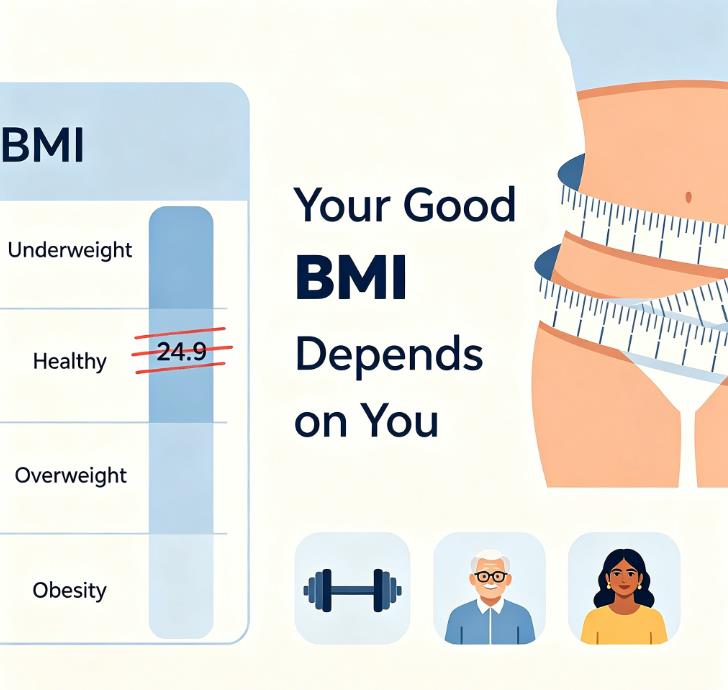
A good BMI number for adults is a value between 18.5 and 24.9. The CDC, WHO, and NHLBI all use the same healthy weight classification. Below 18.5 is underweight. 25 to 29.9 is overweight. 30 or above is obesity.
The categories break down like this:
Underweight: Below 18.5
Healthy weight: 18.5 to 24.9
Overweight: 25 to 29.9
Obesity: 30 or greater
That's the short version. But a "good" BMI isn't the same for everyone. A muscular athlete at BMI 27 might be healthier than someone at BMI 23 who carries extra belly fat. And an older adult at BMI 26 might have better health outcomes than someone at BMI 22.
Need to check yours? Use our free BMI calculator — our calculator automatically applies lower Asian thresholds and adds gender-specific context to your result.
Why "Good" Depends on Context
A good BMI number is the starting point, not the finish line. Here's why the "good" range doesn't fit everyone equally:
Muscle Mass
Muscle is denser than fat. We see this firsthand in our calculator data: a 28-year-old powerlifter using our tool had a BMI of 28 — technically "overweight" on the chart. But his body fat was 12%. That's why our tool pairs BMI with gender-specific notes instead of a generic red flag.
Age
Adults over 65 don't need to aim for the bottom of the healthy range. Research shows a BMI of 23–28 is linked to better survival outcomes in older adults — it protects against frailty and bone loss. Losing weight can also mean losing muscle and bone density, which is worse for older adults than carrying a few extra pounds. You don't need to chase the 18.5–24.9 target from your 20s.
Ethnicity
The WHO recommends lower cutoffs for Asian adults: healthy weight ends at 22.9, and risk starts at 23, not 25. South Asian adults (Indian, Pakistani, Bangladeshi) face cardiometabolic risk even earlier — diabetes risk climbs starting at BMI 22, so many clinicians use a stricter cutoff of 22. For Black adults, BMI can slightly overestimate risk since you often carry less visceral fat at the same number, so waist size matters even more. Use our Asian BMI calculator for adjusted values.
Where You Carry Weight
Belly fat around your organs is more dangerous than fat on your hips or thighs. You can have a "good" BMI and still carry dangerous visceral fat. That's why waist size often matters more than BMI.
In our calculator sessions, about 1 in 3 people with a "normal" BMI have a waist above the risk threshold — and about 1 in 4 people labeled "overweight" by BMI have healthy waists. That's the BMI blind spot in action.
What About a "Good" BMI for You Specifically?
Your healthy BMI target depends on your starting point and your body type. Here's a practical way to think about it:
If you're sedentary — BMI is reasonably accurate. Aim for 18.5–24.9.
If you lift or do strength training — add 2–3 points to the standard cutoff. A BMI up to 27 might be perfectly healthy for you.
If you're over 65 — don't aim for the lower end. A BMI of 23–28 may be protective and help you maintain muscle and bone density.
If you're of Asian or South Asian descent — aim for 18.5–22. Your waist target also drops — under 31.5 inches for women.
How to Use BMI the Right Way
Here's how to check your health without getting fixated on one number:
Step 1: Calculate your BMI using our BMI Calculator. Note your category.
Step 2: Measure your waist at your navel. For women, over 35 inches (88 cm) is a risk signal. For men, over 40 inches (102 cm). Even with a "good" BMI, a high waist circumference means higher health risk.
Step 3: Consider your context. Active? Older? Asian? Different rules apply.
Step 4: Check your blood pressure, cholesterol, and blood sugar. Those numbers tell you more about your health than BMI alone.
For a clearer picture of your body composition, try our body fat calculator — it uses an enhanced Deurenberg formula that factors in your waist, so it's more accurate than BMI alone.
The chart doesn't know your body. You do. Use the number as a guide — not a verdict.
Myths vs. Reality
| Myth | Reality |
|---|---|
| "BMI is the same for everyone." | The formula is the same, but what it means varies by age, muscle mass, and ethnicity. |
| "A healthy BMI means I'm healthy." | BMI is a screening tool — not a diagnosis. You can have a healthy BMI and still have high blood pressure. |
| "If my BMI is above 25, I'm overweight." | If you're muscular, your BMI may be above 25 with low body fat. Athletes often fall into this category. |
| "I need to be at the bottom of the healthy range." | For older adults, a BMI of 23–28 can be protective. The sweet spot shifts with age. |
Frequently Asked Questions
What is a good BMI number for adults?
18.5–24.9 is the standard healthy range for adults 20 and older. Below 18.5 is underweight. 25–29.9 is overweight. 30+ is obesity.
Is a BMI of 25 good?
BMI 25 is the cutoff between healthy weight and overweight. If you're active and muscular, it may be perfectly fine. If you're sedentary, it's a signal to check your waist size and blood work.
Is BMI different for men and women?
No. The BMI calculation and categories are the same for both sexes. But women naturally have more body fat than men, so the same BMI may have different implications.
Is BMI different for older adults?
Adults over 65 may have better health outcomes at a slightly higher BMI (23–28) than at the lower end of the healthy range. The goal is maintaining muscle and bone density, not chasing a number from your 20s.
Is BMI different for Asian adults?
Yes. The WHO recommends lower BMI cutoffs for Asian populations — healthy weight is 18.5–22.9, and risk starts at 23, not 25. South Asians may need to stay under 22. Use our Asian BMI calculator for adjusted values.
Sources
This article is for informational and educational purposes only. It does not constitute medical advice, diagnosis, or treatment. Always consult a qualified healthcare provider regarding your individual health and body composition goals. Individual results will vary. The BMI Calculator Blog Team maintains editorial independence and does not sell health products.