Quick Summary: New BMI research updates three key areas: lower cutoffs for Asian populations, the reality of normal-weight obesity, and protective BMI ranges for adults 65+. BMI alone is no longer sufficient for a full assessment—pair it with waist circumference and other measures when indicated.
BMI remains a useful population screening tool, but recent research has exposed its blind spots. The standard four categories (underweight below 18.5, healthy 18.5–24.9, overweight 25.0–29.9, obesity 30.0+) still apply broadly, but they mask significant differences based on ethnicity, age, and body composition.
Updated BMI Ranges by Population
| Population Group | Healthy BMI Range | Overweight Threshold | Obesity Threshold |
|---|---|---|---|
| General Adults (18–64) | 18.5–24.9 | 25.0 | ≥30.0 |
| Asian Adults (18–64) | 18.5–22.9 | 23.0 | ≥27.5 |
| Adults 65+ | 23.0–28.0 (Protective) | N/A* | ≥30.0 |
*For adults 65+, standard overweight classification may not apply the same way; BMI 23–28 is generally protective.
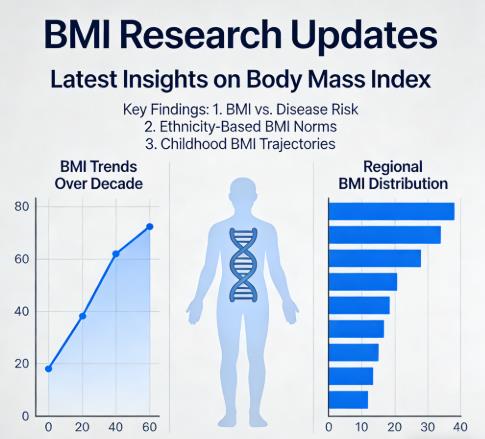
Why Your Ethnicity Changes Your BMI Number
For decades, the same BMI cutoffs (25 for overweight, 30 for obesity) were used globally. New research proves this one-size-fits-all approach does not work for Asian, South Asian and Middle Eastern groups. Many people of Asian descent celebrate a BMI of 22, not realizing their metabolic risk may already be climbing.
A 2022 pooled multi-continental study of 1.9 million adults confirmed that diabetes risk in South Asian and Chinese populations begins rising steeply at a BMI of just 23 (The Lancet). Meanwhile, Black populations may have slightly higher thresholds before risk accelerates. The WHO recognized this back in 2004, recommending lower action points for Asians. If this describes your background, use an Asian BMI calculator for a more accurate look.
The Truth About "Normal-Weight" Obesity
A "normal" BMI doesn't guarantee metabolic health. Up to 30% of people with a BMI between 18.5 and 24.9 carry dangerous levels of visceral fat. On a DEXA scan, their bodies resemble those of someone with a BMI of 30+. Researchers call this normal-weight obesity.
A 2023 study in the European Heart Journal found these individuals had a nearly threefold higher risk of cardiovascular mortality compared to those with normal body fat. Visceral fat sits deep inside your abdomen. It barely shows up on the scale, yet it slowly harms your metabolic health. That’s why the NIH now recommends measuring waist circumference alongside BMI. If you’re a man with a waist over 40 inches (102 cm) or a woman over 35 inches (89 cm), it’s time to look deeper, regardless of your BMI number.
If your waistline is raising red flags while your BMI looks fine, a body fat calculator can help uncover what the scale hides.
Why Older Adults Might Not Need to Lose Weight
For years, the "obesity paradox" confused researchers: older adults with a BMI in the overweight range often lived longer. Recent meta-analyses explain why. A 2014 meta-analysis of 32 studies found that for those over 65, mortality risk didn't increase until BMI dropped below 23.0 or climbed past 33.0 (American Journal of Clinical Nutrition). A more recent 11-year study confirmed that a BMI between 23 and 28 is the sweet spot for survival.
Extra weight in later life acts as a metabolic reserve. It protects against frailty and hip fractures and provides energy during illnesses when appetite fades. Example: A healthy 75-year-old who stays active with BMI 26 usually does not need weight loss based on that number alone. Discuss your personal needs with a qualified provider; individual results vary.
How to Apply These Updates to Your Own BMI
BMI still has value—use it alongside other measures. Start with a BMI Calculator to get your baseline. Then, keep these real-world tips in mind:
If you have Asian or South Asian roots, treat 23 as your personal overweight threshold—not 25. For Black adults, standard cutoffs work, but waist size remains a critical tell. Measure your waist monthly; it takes 60 seconds and often reveals more than the scale ever will. And if you're over 65, remember that a BMI of 23–28 is often protective, not a problem to fix.
Athletes, in particular, should never trust BMI alone. It overestimates body fat in muscular bodies. Focus on your waistline and blood work instead.
Frequently Asked Questions
Is BMI outdated? Should I still trust it?
BMI is still a valuable screening tool—just not a final verdict. Pair it with waist circumference and blood work for a fuller picture of your health.
My BMI is 22 but my waist is 36 inches. Should I be concerned?
If you're a woman, absolutely. A 36-inch waist exceeds the 35-inch threshold for elevated risk. A "perfect" BMI can still hide high visceral fat. A body fat measurement or blood work adds clarity.
What BMI should Asian adults aim for?
The WHO recommends staying below 23. A BMI between 23–27.5 signals increased risk, while 27.5+ indicates high risk for Asian populations.
Why do some older adults with higher BMI live longer?
It’s not that obesity is healthy; it’s that a little extra weight provides energy reserves and cushioning. For adults over 65, the data supports a protective range of 23–28.
Does BMI research still support the same four categories?
Yes, for population studies. But for individuals, the lines are blurrier. A BMI of 24.9 vs. 25.1 isn't a cliff—risk rises gradually and shifts based on your ethnicity and age.
Sources
WHO: Obesity and Overweight — Global BMI Classification and Ethnic Considerations
CDC: Adult BMI Categories — Underweight, Healthy Weight, Overweight, and Obesity
2022 pooled multi-continental study of 1.9 million adults on ethnicity and BMI-related diabetes risk (The Lancet)
European Heart Journal (2023): Normal-weight obesity and cardiovascular mortality risk
Winter JE, et al. (2014). BMI and all-cause mortality in adults aged 65+ meta-analysis, American Journal of Clinical Nutrition
This article is for informational and educational purposes only. It does not constitute medical advice, diagnosis, or treatment. Always consult a qualified healthcare provider regarding your individual health and weight goals. Individual results will vary.