Quick Summary: In older women, BMI under 18.5—or under 20–21 after 65—raises osteoporosis, muscle loss, and fall risks. One reading is not enough; track weight trend, grip strength, and recent illness.
Underweight: below 18.5; after 65, below 20–21 needs review.
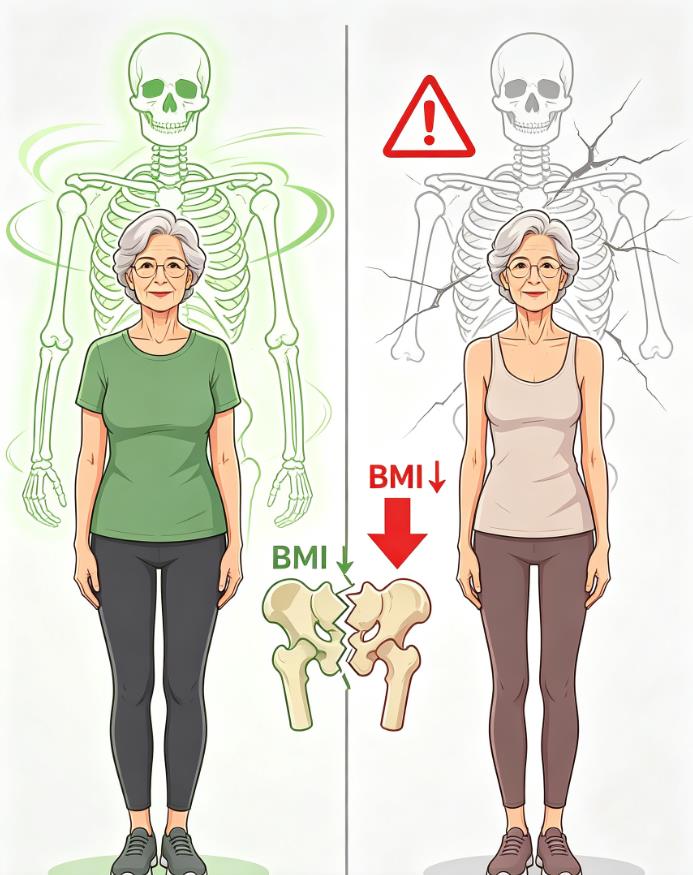
Risks: bone loss, sarcopenia, falls, slow healing.
Red flag: unintentional 5% weight loss in 6–12 months.
Plan: protein, strength work, provider check—not strict dieting.
What Low BMI Means After 65
BMI is weight in kg ÷ height in meters². A Free BMI Calculator returns the score fast, but it cannot measure muscle or bone. CDC and WHO use 18.5 as the adult underweight line; after 65, many clinicians treat below 20–21 as a caution zone because small reserves protect bones and immunity.
Key Numbers That Define Risk
Four numbers shape risk: 18.5 underweight at any age; 20–21 caution after 65; 5% unintentional loss in 6–12 months (about 7 lb for a 140-lb woman); 1.0–1.2 g/kg daily protein start. In adults 65+, studies link 5–10% unintentional loss to roughly 26% higher all-cause mortality and loss over 10% to more than double it.
A Typical Scenario
Take a 71-year-old woman with a starting BMI of 22. A brief illness left her with little desire to eat long after recovery. Over 14 months, her BMI reached 18.8. Her slacks loosened before the scale alarmed her, and a handgrip check felt weaker than a year earlier. The number had simply lagged behind her strength—a pattern, not a diagnosis.
Warning Signs by System
Osteoporosis: height loss or prior low-trauma fracture → bone density review. Sarcopenia: weak grip, slow gait, hard stairs → twice-weekly resistance work. Falls: tripping or needing a handrail to rise → balance drills and home safety. Slow healing: fatigue after minor illness → protein support and cause check.
What to Do This Week
Weigh monthly. A senior BMI calculator sets the age frame; a healthy weight range tool gives a personal band, not one rigid number. Many older adults find smaller, frequent meals far easier to finish than large portions.
Protein every meal: eggs, dairy, fish, beans, lean meat; 20–30 g per meal when tolerated.
Strength 2x weekly: bands, light weights, sit-to-stand; progress slowly to avoid injury.
Provider review for loss: thyroid, GI issues, medications, mood, dental pain; plans vary by person.
Ask a clinician whether calcium and vitamin D from food or supplements fit your labs and medicines. Do not start high-dose pills alone.
Frequently Asked Questions
What BMI is too low for an 80-year-old woman?
Under 18.5 is underweight by standard cutoffs. Below 20–21 in the 80s also gets reviewed because bone and muscle reserves matter more than the single score.
Can low BMI cause hip fractures?
Not directly. It tracks with lower bone density and less padding. CDC and NIA list low body weight as a major post-menopause fracture risk factor.
Why does unintentional weight loss raise mortality?
In adults 65+, studies link 5–10% loss to about 26% higher all-cause mortality and loss over 10% to more than double it. Hidden causes include infection, cancer, depression, and thyroid disease.
How much protein does an older woman with low BMI need?
Start about 1.0–1.2 g per kg daily, split across meals. Some need 1.2–1.5 g/kg with provider guidance after illness or muscle loss.
Is BMI 19 dangerous for seniors?
Not always. Without weight loss, falls, or weakness, 19 can be stable. With a recent drop or low grip strength, it needs full evaluation even above 18.5.
Sources
*This article is for informational and educational purposes only. It does not constitute medical advice, diagnosis, or treatment. Always consult a qualified healthcare provider regarding your individual health and healthy aging goals. Individual results will vary. The BMI Calculator Blog Team maintains editorial independence and does not sell health products.*