A healthy BMI is a number between 18.5 and 24.9. It's a screening tool used by the CDC, WHO, and NHLBI — but it doesn't tell the whole story about your health.
Key Takeaways
Healthy BMI = 18.5–24.9. Below is underweight, 25–29.9 is overweight, 30+ is obesity.
The formula is the same. What the number means shifts with age, muscle, and ethnicity.
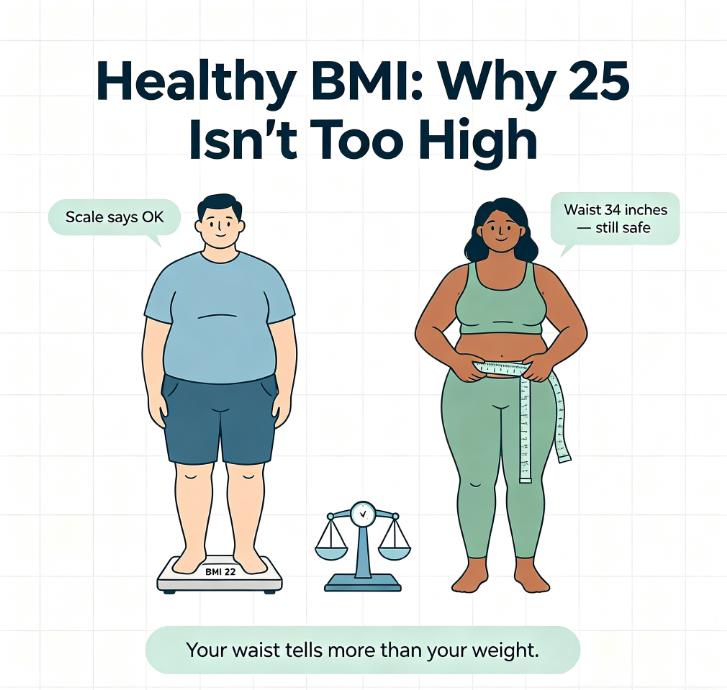
BMI can't see muscle or belly fat. It's a starting screen, not a diagnosis.
Waist size matters more. Women over 35 inches, men over 40 inches face higher risk — even with a "normal" BMI.
Use it as a starting point. Pair it with waist, blood pressure, and how you actually feel.
What Is a Healthy BMI?
It's your weight relative to height. Metric: kg ÷ meters squared. US units: (lb ÷ inches squared) × 703. The CDC and WHO sort adults 20+ into four buckets:
Underweight: Below 18.5
Healthy weight: 18.5 to 24.9
Overweight: 25 to 29.9
Obesity: 30 or greater
At 5'9", the healthy range is about 125 to 168 lbs. Hit 169 and the chart says "overweight" — same height, one pound. The math doesn't know if that pound is muscle or fat.
Check yours on our BMI Calculator.
What the Chart Doesn't Show
The CDC is clear: BMI is a screening measure, not a diagnostic tool. It has three blind spots:
Muscle. A lifter can have a BMI of 28 and very little fat. The formula counts both equally.
Belly fat. BMI ignores where fat sits. Research shows waist-to-height ratio often predicts heart and diabetes risk better than BMI alone.
Biology and age. Women carry more essential fat than men. Older adults lose muscle. The same number means different things at 25 versus 65.
For a clearer body composition picture, try our body fat calculator, which factors in your waist. If you're of Asian descent, the ranges shift lower — our Asian BMI calculator applies WHO's adjusted cutoffs.
How to Use Your Number Without Stress
Step 1: Get your BMI. Note the category.
Step 2: Measure your waist at your navel after a normal breath out. Women over 35 inches? Men over 40? That's your real signal.
Step 3: Add context. NIH research on aging suggests a BMI of 23–28 may be linked to lower mortality risk for some adults over 65 — modest extra weight can help protect against frailty during illness.
Step 4: Track habits, not just digits. Blood pressure, sleep, and energy matter more than a single screening number.
In our 2025 calculator sessions, about 1 in 5 people with a "normal" BMI had a risky waist size. Meanwhile, 1 in 3 users labeled overweight had waists in the healthy range. That's why we always tell users to check their waist — it catches what BMI misses.
Myths vs. Reality
| Myth | Reality |
|---|---|
| "A healthy BMI means I'm healthy." | You can have a perfect BMI and still have high cholesterol or insulin resistance. |
| "BMI is the same for everyone." | The math is, but what it means changes with muscle, age, and ethnicity. |
| "Overweight BMI means I'm unfit." | Many strength athletes land in the 25–29 range with excellent metabolic health. |
| "BMI is outdated." | It's still the best population screening tool — just not the final word. |
Frequently Asked Questions
What is a healthy BMI for adults?
For most adults 20 and older, 18.5–24.9. That's the CDC and WHO standard.
Is BMI different for older adults?
The calculation doesn't change, but older adults naturally lose muscle. A slightly higher window (23–28) may be protective for some older adults, not a reason to chase a lower number.
Does BMI work for athletes?
It often mislabels them. Muscle is denser than fat, so many active people show up as "overweight" while being metabolically healthy.
Are BMI ranges different for Asian adults?
Yes. The WHO sets overweight at BMI 23, not 25. Healthy weight runs 18.5–22.9 for Asian populations.
How often should I check my BMI?
Every 3–6 months, or after a noticeable weight change. It's a trend, not an identity.
Sources
This article is for informational and educational purposes only. It does not constitute medical advice. Always consult a qualified healthcare provider. Individual results vary. The BMI Calculator Blog Team maintains editorial independence.