Editorial development: BMI Calculator Blog Team. Content aligned with CDC extended growth charts, AAP 2023 adolescent guidelines, and WHO physical activity standards.
Quick Summary: For U.S. teens aged 12–19, a BMI between the 85th and 94th percentile is classified as overweight on CDC growth charts. Roughly 1 in 3 adolescents fall into this category. It reflects a screening threshold, not a diagnosis—puberty, muscle mass, and height spurts shift the number constantly. This guide breaks down what the percentile means, why it often mislabels athletes, and three sustainable habit shifts that actually support teen health without restrictive dieting.
Quick Reference Key Takeaways
✅ Teen overweight = BMI-for-age 85–94th percentile (CDC)
✅ BMI is a screening tool, not a medical label; trends matter more than a single reading
❌ Avoid calorie-restricted diets that interfere with growth and bone development
✅ Focus on drinks swaps, social movement, and protecting sleep
What "Overweight" Actually Means for a Teen
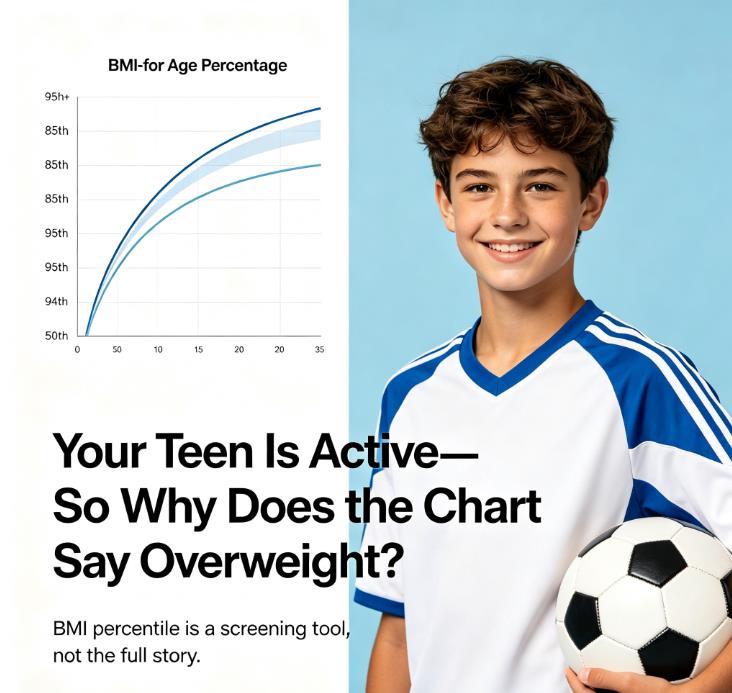
It's not about how a teen looks in a mirror. It's a statistical position. The CDC defines overweight for ages 12–19 as a BMI-for-age between the 85th and 94th percentile. That means the teen weighs more than 85% of peers of the exact same age and sex.
Adult BMI uses fixed cutoffs. Teen BMI is relative. A 14-year-old mid-growth-spurt might hit the 86th percentile, then drop six months later as height catches up. Pediatric guidelines emphasize watching the trajectory over time, not reacting to one number.
The Numbers Behind the Label
CDC survey data (2017–2020) shows the scale:
22.2% of U.S. teens have obesity (95th percentile or higher)
~15% are in the overweight range
Combined, about 1 in 3 teens land above the healthy percentile zone
Anonymized data from users of our online BMI calculator shows nearly 1 in 3 teens in this percentile play competitive school sports. Same chart category, completely different bodies.
What This Means for Long-Term Health
This percentile is linked to higher odds of elevated blood pressure and insulin resistance, but those are probabilities—not certainties. Many teens here have excellent fitness from daily activity.
The American Academy of Pediatrics (AAP) recommends family-based healthy behavior support as the first-line response, not medication or crash diets. Beyond physical markers, teens in this group also face higher rates of bullying and self-esteem hits. Compassionate conversations at home matter as much as any screening.
Why the Scale Gets It Wrong
BMI doesn't distinguish muscle from fat. At a suburban Chicago high school sports physical, a varsity linebacker might register "overweight" while carrying single-digit body fat. Meanwhile, a teen with low muscle and high visceral fat could sit in the "normal" range.
That's why the CDC pairs BMI with other context clues—like waist size and activity level. Puberty timing also plays a role: late bloomers often sit higher on the chart before a growth spurt drops their percentile. For active teens, our teen BMI calculator is just a starting point; body composition matters more.
3 Shifts That Actually Stick
Most extreme teen diets fail by spring semester. Growing bodies need fuel. Instead, these low-friction changes work:
Swap the drink. One 12-oz soda swapped for water daily cuts ~150 empty calories. No meal prep needed.
Move with friends. The WHO recommends 60 minutes of daily activity. That's a YMCA pickup game or a bike ride to a friend's house—not a treadmill. Keep it social.
Protect sleep. Teens need 8–10 hours. Phones down 45 minutes before bed stabilizes hunger hormones better than any diet plan.
These are general lifestyle suggestions. If you have ongoing concerns about your teen's development, consult a qualified healthcare provider for personalized guidance.
To understand daily energy needs without restriction, pair your BMI check with our calorie calculator.
Frequently Asked Questions
My teen's BMI lands at the 87th percentile. Should I worry?
Not necessarily. If they're active, growing taller, and sleeping well, the number is just a screening signal. The AAP advises looking at the full picture—activity, waist size, and whether the percentile is trending up or staying steady.
How should I talk to my teen about their BMI without making them feel judged?
Focus on strength and habits, not weight. Frame it around energy for sports or sleep quality, not the chart. Keep the conversation private, avoid comparisons to siblings or friends, and emphasize that the number is just one small data point—not a judgment of who they are.
Can a teen be in the overweight category and still be fit?
Yes. Muscular athletes often land in this range. The CDC calls BMI a screening tool, not a diagnostic one. A teen with strong cardiovascular fitness and normal blood pressure can be perfectly healthy.
Should I put my teen on a low-calorie diet?
No. Restricting calories during puberty can stall growth and bone density. The goal is building lifelong habits—not shrinking the number on the scale.
Does this percentile always lead to adult obesity?
Risk is higher, but not guaranteed. Teens who build consistent sleep, movement, and hydration routines often grow into a lower percentile naturally as their height increases.
How is teen BMI different from adult BMI?
Adult BMI uses fixed numbers (25 for overweight). Teen BMI uses percentiles based on age and sex, because bodies change so fast during adolescence.
Sources
This article is for informational and educational purposes only. It does not replace professional medical advice. Always consult a qualified healthcare provider regarding your teen's health. The BMI Calculator Blog Team maintains editorial independence and does not sell health products.