High-calorie foods pack more than 200 calories per serving. But not all calories are equal — some fuel your body, others just fill it with empty energy. This guide breaks down which high-calorie foods are worth eating, which to limit, and how to use them strategically — whether you're fueling a workout, maintaining weight, or just trying to make smarter choices.
Key Takeaways
High-calorie = 200+ calories per serving. But calorie count doesn't tell the whole story.
Nutrient-dense high-calorie foods — nuts, avocados, olive oil, eggs, fatty fish — deliver vitamins, minerals, and healthy fats alongside the calories.
Empty-calorie high-calorie foods — pastries, fried snacks, and sugary drinks (even below 200 calories) — give you energy with little nutritional payoff.
Use high-calorie foods strategically. Before workouts for fuel, after for recovery, or during weight-gain phases for efficient calorie intake.
In our calculator community, the #1 mistake we see is people cutting out nuts and avocado while still drinking empty-calorie soda. They drop the good calories and keep the bad ones — and then wonder why they're hungry all the time.
What Are High-Calorie Foods?
A high-calorie food is any food that packs a significant amount of energy into a small volume. For this guide, we use a practical threshold: 200+ calories per serving. A medium avocado? 240 calories. A single tablespoon of olive oil? 120 calories (not quite 200, but still dense). A 12-ounce can of soda? 150 calories — all sugar, no substance.
But calories aren't the only thing that matters. The source matters just as much — and sometimes more.
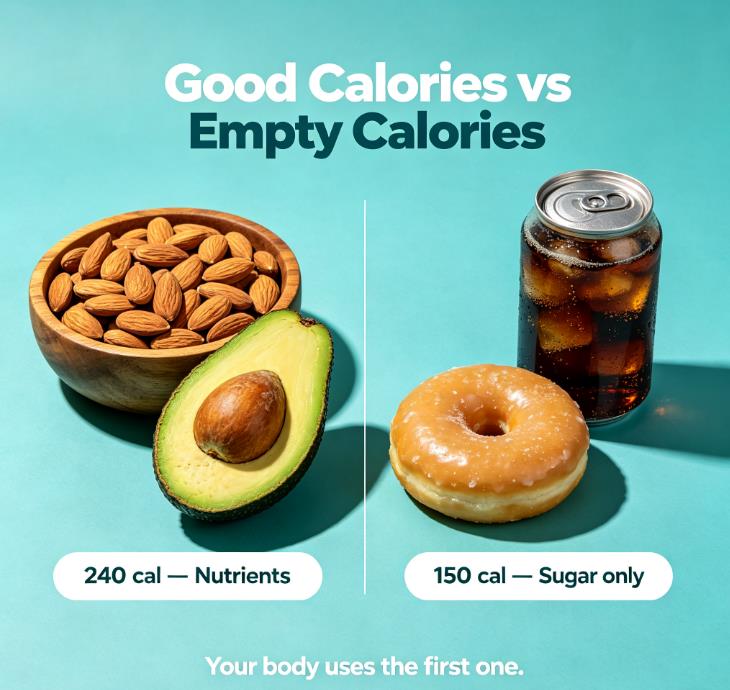
The Two Types of High-Calorie Foods
Not all high-calorie foods are created equal. Here's the short version:
Nutrient-Dense High-Calorie Foods
These are foods that deliver vitamins, minerals, healthy fats, protein, or fiber alongside the calories. Think nuts, seeds, avocados, olive oil, eggs, fatty fish, and full-fat dairy.
Empty-Calorie High-Calorie Foods
These foods give you energy but little else. Processed snacks, sugary drinks, pastries, fried foods, and most fast food fall into this camp. The calories add up quickly — without delivering the nutrients your body actually needs. A 150-calorie soda isn't "high-calorie" by our threshold, but it's a worse choice than a 240-calorie avocado because it gives you nothing but sugar.
High-Calorie Foods That Are Actually Good for You
If you're looking to add calories without compromising nutrition, here's your list:
Nuts and nut butters. Almonds: 160 calories per ounce. Peanut butter: 190 calories per 2 tablespoons. Packed with healthy fats, protein, and fiber.
Avocados. One medium avocado: 240 calories. Loaded with heart-healthy monounsaturated fats and potassium.
Olive oil. One tablespoon: 120 calories. A staple of the Mediterranean diet, rich in antioxidants and healthy fats — the PREDIMED study linked this pattern to reduced cardiovascular events.
Eggs. One large egg: 72 calories on the label. But because of the thermic effect of food (TEF), your body only absorbs about 50-58 calories from it — the rest goes to digestion. The yolk contains most of the nutrients: vitamins A, D, E, and choline.
Fatty fish. Salmon: 200-250 calories per 3-ounce serving. Packed with omega-3 fatty acids that support brain and heart health.
Full-fat dairy. Whole milk: 150 calories per cup. Greek yogurt: 200 calories per cup. Good sources of protein and calcium.
Dried fruits. Dates: 120 calories per 2 dates. Raisins: 130 calories per ounce. Concentrated fruit energy with fiber.
These foods are calorie-dense by design — they evolved to provide concentrated energy. The difference is they come with a nutritional package.
High-Calorie Foods to Watch Out For
These foods are high in calories but low in nutritional value. They're not toxic — they're just not doing you any favors:
Sugary drinks. Soda, sweetened tea, and fruit juice pack 150-200 calories per serving — all from sugar, zero fiber. Even under 200 calories, they're empty-calorie traps.
Pastries and baked goods. A typical medium croissant: 230 calories. Most of it from refined flour, sugar, and saturated fat.
Fried foods. French fries: 350 calories per medium serving. Fast food tends to pack more calories than home-cooked equivalents.
Candy and sweets. A chocolate bar: 250 calories — mostly sugar and fat, with minimal nutritional benefit.
The occasional treat is fine. But if you're eating these daily, the calories add up without the nutrients to match.
How to Use High-Calorie Foods Strategically
There are three situations where higher-calorie foods are actually a smart choice:
Pre-workout fuel. A banana with peanut butter (200+ calories) 30-60 minutes before exercise gives you energy.
Post-workout recovery. A smoothie with full-fat yogurt and fruit helps repair muscle after training.
Weight gain phases. If you're underweight (BMI below 18.5) or trying to build muscle, nutrient-dense high-calorie foods help you hit your calorie target efficiently. For a full understanding of where you stand, check your BMI first.
For a more personalized look at your calorie needs, try our calorie calculator to figure out your daily target.
How to Choose the Right High-Calorie Foods
Here's the rule we tell our users: choose foods that deliver more than just calories. Ask yourself:
Does this food contain protein, healthy fats, or fiber?
Are there vitamins or minerals I'm getting from this?
Is this a whole food or a processed product?
The answer to the first question should be yes. The second and third? The more "yes" answers, the better.
Knowing your daily calorie target is also essential. A BMI Calculator can give you a baseline for your body size, which you can then pair with your calorie needs.
Myths vs. Reality
| Myth | Reality |
|---|---|
| "High-calorie foods are always bad." | Nuts, avocados, and olive oil are high-calorie and good for you. Calories aren't the enemy — nutrient quality is. |
| "Low-calorie foods are always healthier." | A 100-calorie pack of processed crackers isn't necessarily healthier than a 200-calorie serving of almonds. |
| "Eating high-calorie foods will make you gain weight." | Weight gain depends on total calorie balance, not individual foods. You can eat high-calorie foods and maintain weight if your overall intake matches your burn. |
| "All fats are equally bad." | Healthy fats from olive oil, avocado, and fatty fish are essential for brain function and hormone regulation. |
Frequently Asked Questions
What are the healthiest high-calorie foods?
Nuts, avocados, olive oil, eggs, fatty fish (like salmon), full-fat dairy, and dried fruits are excellent choices. They deliver vitamins, minerals, and healthy fats alongside their calorie content.
How many calories are in a typical high-calorie food?
Most high-calorie foods range from 200 to 500 calories per serving. A medium avocado has 240 calories, a 3-ounce salmon fillet has 250 calories, and a chocolate bar often has 250-300 calories.
Can high-calorie foods be part of a weight-loss diet?
Yes — in moderation. Nutrient-dense high-calorie foods like nuts and avocado can keep you full and satisfied, which may actually help with weight management. But portion control matters.
Are eggs high in calories?
A large egg has about 72 calories on the label — but your body only absorbs about 50-58 calories due to the thermic effect of food. For the full breakdown, see our egg calorie guide.
How many calories are in a banana?
A medium banana has about 105 calories. It's not a high-calorie food, but it's a great pre-workout fuel because of the quick-digesting carbohydrates and potassium. For the full breakdown, see our banana calorie guide.
What high-calorie foods are good for muscle gain?
Peanut butter, whole eggs, full-fat Greek yogurt, salmon, and almonds are excellent choices. They combine calories with protein and healthy fats to support muscle repair and growth.
Sources
This article is for informational and educational purposes only. It does not constitute medical advice, diagnosis, or treatment. Always consult a qualified healthcare provider regarding your individual health and nutrition needs. Individual results will vary. The BMI Calculator Blog Team maintains editorial independence and does not sell health products.